
Where to look
Wildlife guide
Where to see Yellow-bellied Water Skink in Blue Mountains National Park
Use reported sighting patterns to learn where to look and when observations are most common—without treating wildlife like a fixed destination.Eulamprus heatwolei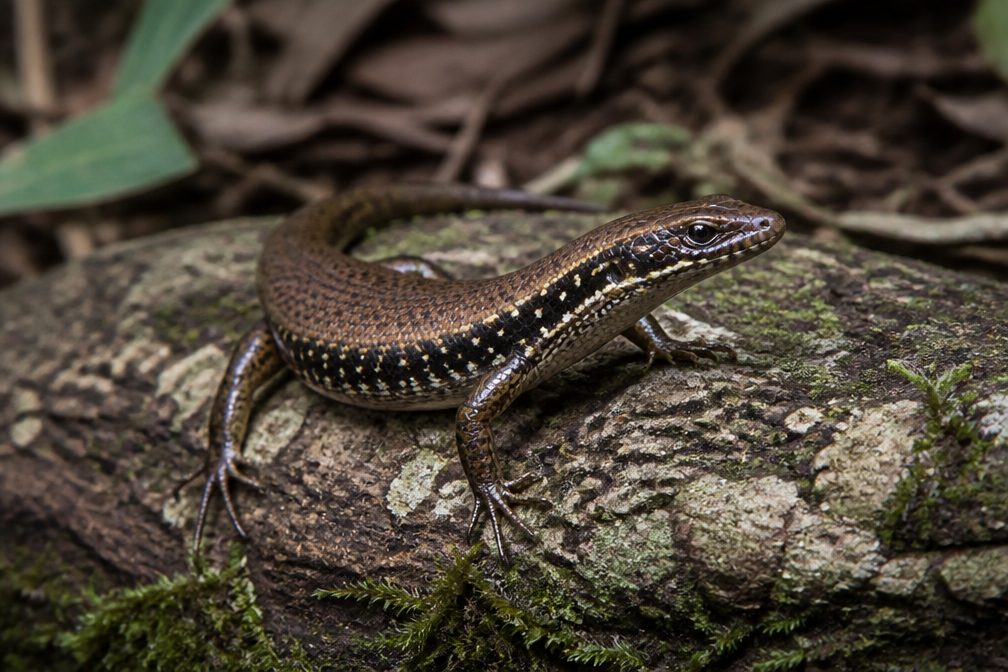
Where to startLook for the darkest heatmap areas
Best reported timelate morning, around 11 AM
Yellow-bellied Water Skink map
Yellow-bellied Water Skink sightings in Blue Mountains
This map summarizes past public observations. It is not a live tracker, and an empty area does not mean the species is absent.
When to look
Yellow-bellied Water Skink sightings peak in the late morning
Observation timing for Blue Mountains is strongest around 11 AM. Arrive a little earlier, stay patient, and keep seasonal weather and daylight in mind.Wildlife safety
Yellow-bellied Water Skink viewing safety
Always follow park rules, ranger directions, posted closures, and local laws. Never approach, feed, call, touch, or crowd wildlife. Stay inside your vehicle when required or whenever animals are near the road; never stop or stand in a travel lane, and pull completely off the roadway only where legal and safe. Keep the required distance and leave immediately if an animal changes its behavior because of you.Keep exploring
More wildlife in Blue Mountains
 Sighting map
Where to look
Grey Kangaroo
Macropus giganteusReports peak in the early morning, around 6 AMOpen wildlife map Sighting map
Where to look
Wombat
Vombatus ursinusReports peak in the early evening, around 6 PMOpen wildlife map Sighting map
Where to look
Red-necked Wallaby
Notamacropus rufogriseusReports peak in the early evening, around 6 PMOpen wildlife map Sighting map
Where to look


