Overview
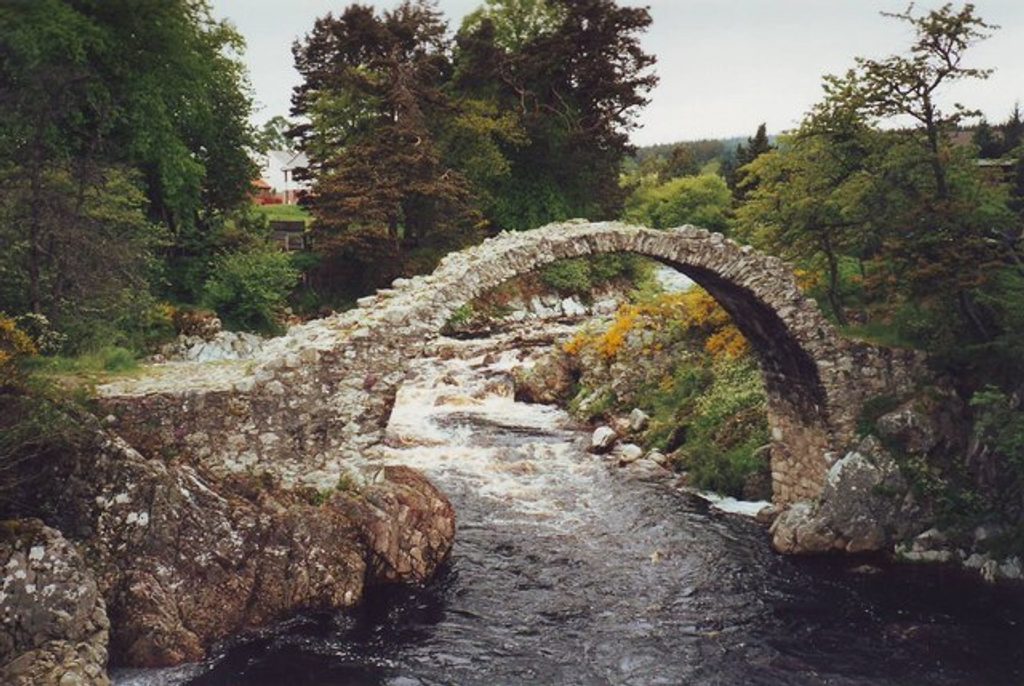
This tiny, dramatic stone arch over the River Dulnain packs a lot of story into a quick stop. Built in 1717 and nicknamed the “coffin bridge,” it gave villagers a reliable crossing to the church when the river ran high. Floods in 1829 tore away its parapets, leaving the bare, slender spine you see today—part ruin, part sculpture, and wholly photogenic.
What You’ll See
- A high, single-span arch with no side rails, perched above a lively river.
- A designated riverside viewing area with steps down for safer, closer photos.
- Central village setting—easy to reach, with amenities nearby in Carrbridge (not at the bridge itself).
History Snapshot
- 1717: Completed for pedestrians and packhorses, crucial for funeral processions in spate conditions.
- 1829: The “Muckle Spate” flood stripped away the parapets, creating today’s dramatic silhouette.
- Now: A protected historic landmark and one of the park’s most photographed sights.
Best Time to Visit
- Light: Go early or late for soft, angled light on the stone—the arch pops against the water and pines.
- Crowds: Midday is busiest, especially Fridays and weekends; mornings are typically quiet.
- Year‑round: Open at all hours and atmospheric in every season—frost, autumn color, or summer greens all work.
Wildlife
This is a village‑side stop, so wildlife isn’t the draw. You may spot river birds, but treat it as a quick historic/photo stop rather than a wildlife venue.
Practical Tips
- Do not climb or attempt to cross the arch—there are no parapets and it’s not safe.
- Use the riverside platform or the modern road bridge for the best angles.
- Park in the small car park just beyond the bridge and walk over; avoid clogging the main street.
- Expect basics only at the site; toilets and cafés are in the village, a short walk away.
- Pair it with a short riverside or woodland stroll if you’ve got extra time.
Is It Worth It?
Absolutely—for a quick, memorable photo and a dose of Highland history. Plan 10–20 minutes unless you linger for photos or a short walk.