Overview
About Northwest Arctic Heritage Center
Why stop
- A free museum connects Arctic wildlife and geology with Iñupiaq culture.
- Rangers help plan remote trips and loan bear-resistant food containers.
Heads up
- It’s in Kotzebue, about 80 miles west of Kobuk Valley itself.
Map
Where it is
The highest, rockiest slopes around here are a summer buffet for grizzly bears.
Kobuk Valley Tour Guide
Your drive to Northwest Arctic Heritage Center, narrated.
Parkwolf is a GPS audio tour guide for Kobuk Valley National Park. As you drive, it chimes in with what’s ahead: hidden gems, upcoming stops, history, geology, and wildlife, right through your car’s speakers.
- 45 audio storiesacross Kobuk Valley’s roads, triggered by GPS as you drive
- Works offlinemaps, 5 places, and audio download before you lose signal
- CarPlay readysimple controls built for the drive
“Fantastic app with many points of information… It’s great to just turn on while you’re driving and it gives you an audio tour of the national Park. We love it!!!!”


Guide
More about Northwest Arctic Heritage Center
Start here in KotzebueThe Northwest Arctic Heritage Center is the official visitor center and headquarters for Kobuk…
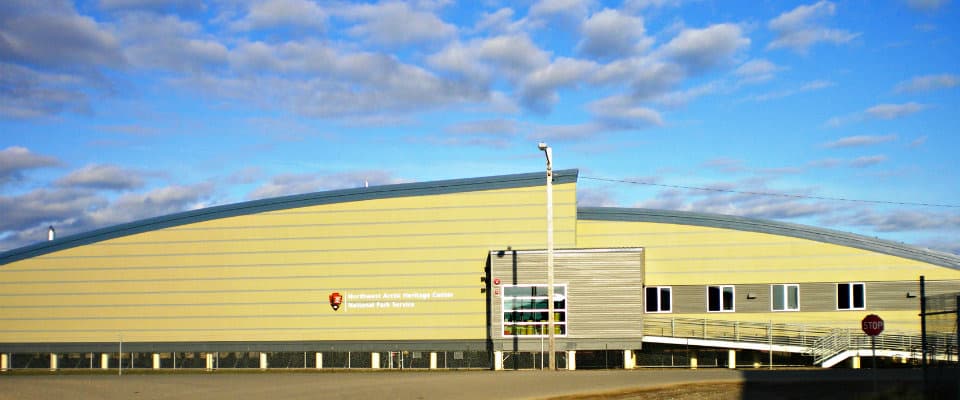
The Northwest Arctic Heritage Center is the official visitor center and headquarters for Kobuk Valley National Park, Noatak National Preserve, and Cape Krusenstern National Monument. It sits in Kotzebue, about 80 miles west of Kobuk Valley itself. The park has no traditional visitor facilities, so this is a town stop, not an in-park visitor center. I’d make time for it before a remote trip: the free museum gives you a grounded sense of the region, and rangers can help with the practical planning.
Make room for the museumThe main museum is a 55-by-20-foot oval, with displays around its perimeter and through the…
The main museum is a 55-by-20-foot oval, with displays around its perimeter and through the center. It covers Arctic wildlife and geology alongside Iñupiaq culture and subsistence, tying the landscape to the people who live in it. The center also serves two other parklands, so it can orient a wider Arctic trip too.
Ask about the trip you want to takeRangers help visitors plan camping and floating trips and loan bear-resistant food containers…
Rangers help visitors plan camping and floating trips and loan bear-resistant food containers on request. If you’re sorting out a remote trip, ask while you’re still in town. This is more than a museum stop: it’s a chance to talk through plans before you head into a place with very little visitor infrastructure.
Put a layover to useIt’s a five-minute walk from Kotzebue airport.
It’s a five-minute walk from Kotzebue airport. A sitting area, films, books, puzzles, and free Wi-Fi can make a flight delay or poor-weather spell useful; there’s also a bookstore for books and souvenirs. The entrance has a ramp, and the center lists an accessible restroom, drinking water, restrooms, and parking.
The exhibits came from hereElders from around the region helped shape the exhibit planning.
Elders from around the region helped shape the exhibit planning. The center grew from a partnership with NANA: a shared facility was proposed in 2000 and the agreement was signed in 2001, building on the former NANA Museum of the Arctic. Pieces acquired from local residents included a woman’s parka, a red fox-fur hat, an umiak frame, and a fish net.
Look upA traditional wooden umiaq hangs about 15 feet above the sitting area.
A traditional wooden umiaq hangs about 15 feet above the sitting area. The entry also has a polar bear and mammoth tusk, while the exhibits use animal sculptures, a mountain mural, hands-on displays, and soundscapes to bring Arctic life into the rooms.
Built for frozen groundThe building’s foundation posts use a closed liquid-nitrogen system to keep the ground frozen.
The building’s foundation posts use a closed liquid-nitrogen system to keep the ground frozen. It’s a remarkable bit of practical engineering hidden under an otherwise welcoming visitor center.