
Place
Challenging
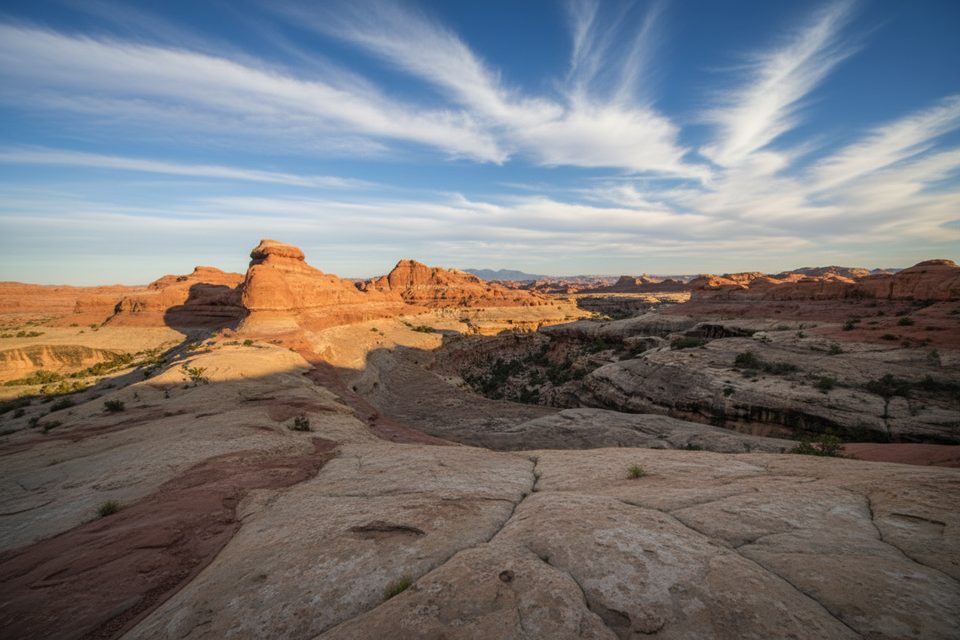
Lost Canyon Loop is a classic Needles District sampler: an 8.7-mile total lollipop that blends lush riparian walking, airy slickrock benches, and big-sky Canyonlands vistas. Expect a moderately strenuous day (4–6 hours) thanks to repeated ups and downs, some scrambling, and a short ladder. Net elevation change is modest, but the cumulative gain tops 1,000 feet as you bounce between canyon floors and sandstone rims.
Start from Squaw Flat and follow the Peekaboo Trail for roughly 1.1 miles to the loop junction. A short ladder descent and stretches of slickrock benches kick things off. Turning up Lost Canyon, the feel shifts: cottonwoods, grasses, and a seasonally wet creekbed thread through a narrow, deeper corridor. Sandbanks and occasional pools (sometimes a few feet deep) mean slower going—and wet shoes are common in spring.
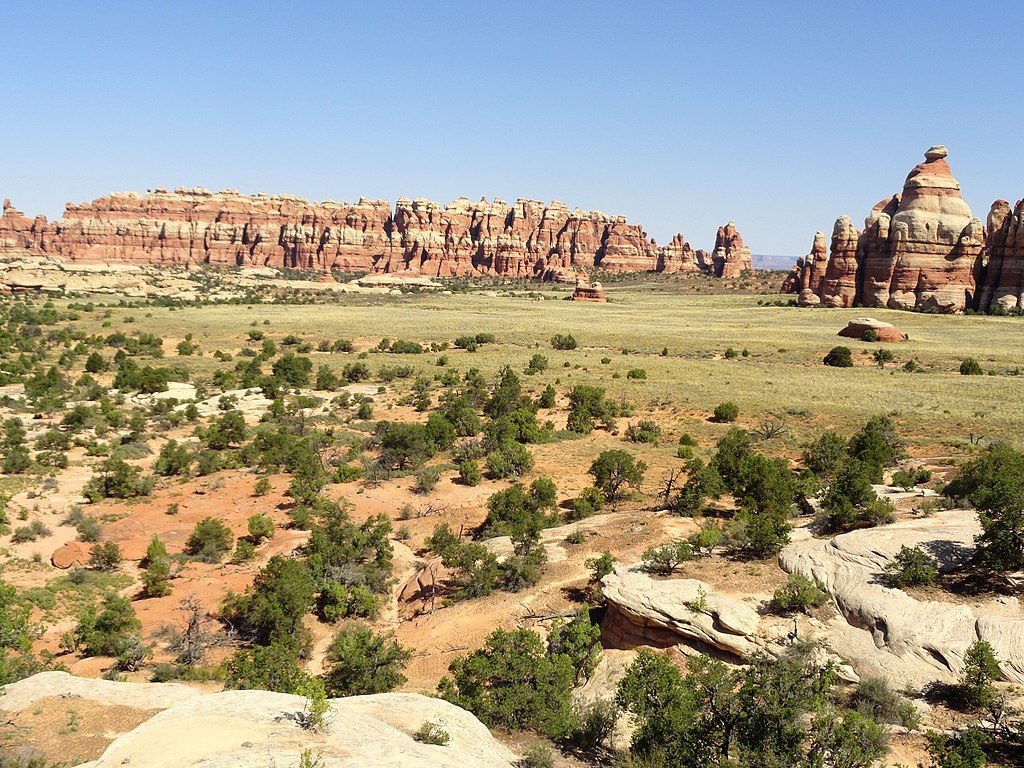
Watch carefully for the signed right turn to Squaw Canyon inside Lost Canyon; it’s easy to miss when you’re absorbed by the scenery. Squaw Canyon brings a welcome contrast—wider, drier, and more open—with classic Needles panoramas and long views across red-and-white Cedar Mesa Sandstone benches. Cairns guide the way across slickrock where the tread fades.
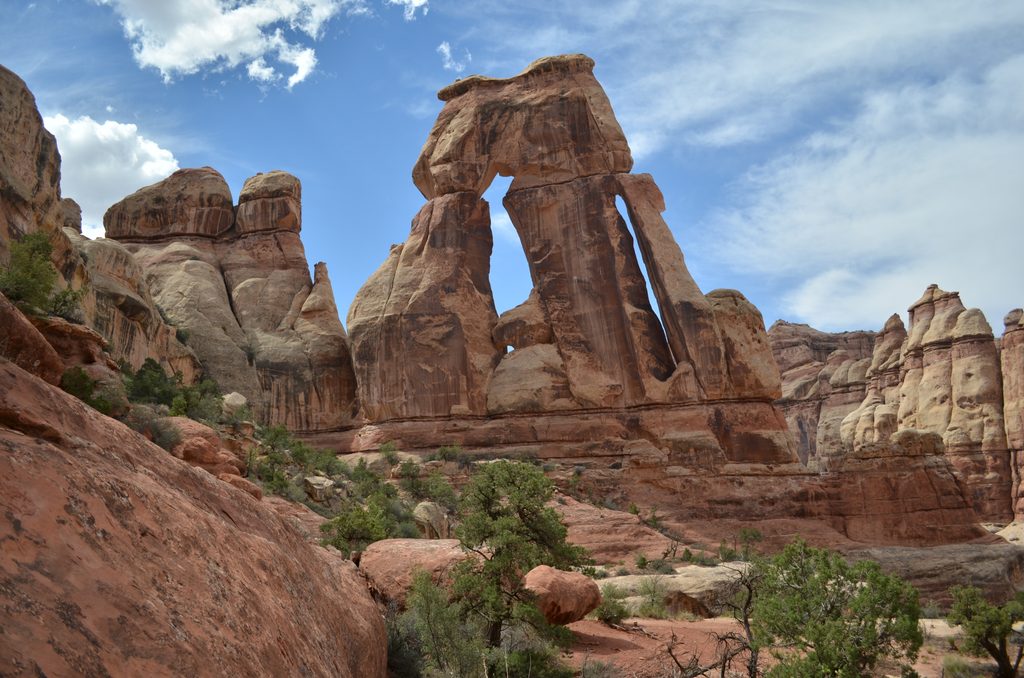
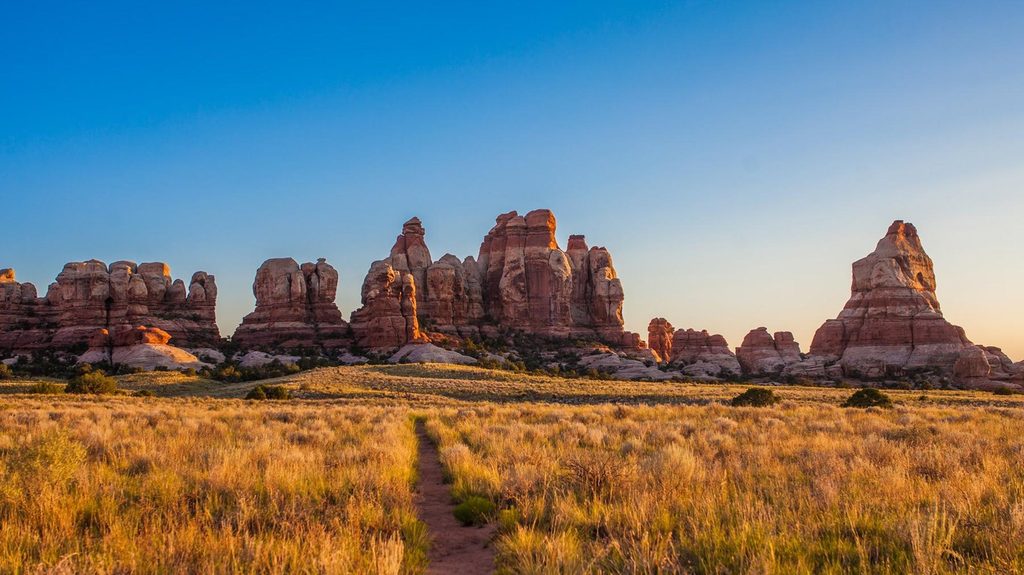
You’ll move through colorful layers of Cedar Mesa Sandstone—white dune-derived caps over red fluvial layers—etched with desert varnish, sculpted alcoves, and tall vertical walls. The rim sections deliver sweeping perspectives toward the Needles and, on clear days, distant ranges. Riparian stretches in Lost Canyon attract birds and other desert wildlife, and the overall usage is typically low to medium, so solitude is a real perk outside peak times.
Spring and fall are prime—comfortable temps, greener canyon bottoms, and the most pleasant travel. Summer brings intense heat with little shade on exposed benches. Winter can add snow and ice to slickrock and ladders; traction and extra caution are wise if you go.
If you want a shorter day, there’s a commonly referenced ~6.5-mile lower-loop variation that still links Lost and Squaw Canyons via the Peekaboo segment. For rock art and granaries, consider spending more time along the Peekaboo Trail segment—view respectfully and never touch or enter cultural sites.
Park at the Squaw Flat area in the Needles District and start on the Peekaboo Trail; the loop junction is about 1.1 miles from the campground.
Expect a short ladder, narrow bench exposure, cairn-dependent navigation, and slickrock that becomes treacherous when wet or icy; carry ample water as canyon sources are unreliable.
Place
Place
Place
Place
Challenging
Easy
Challenging
Moderate

Parkwolf Tour Guide
