
Place · 0 mi away
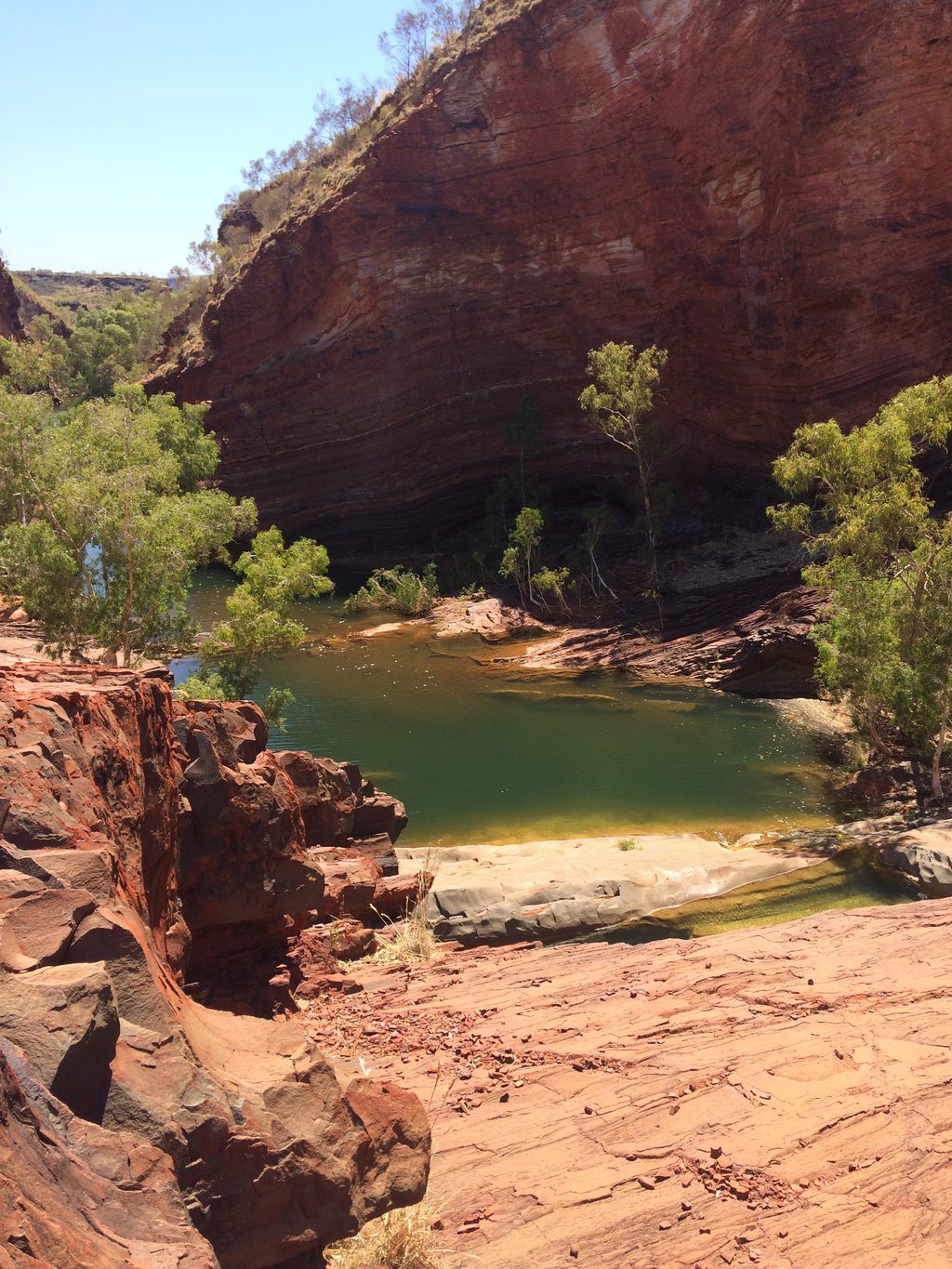
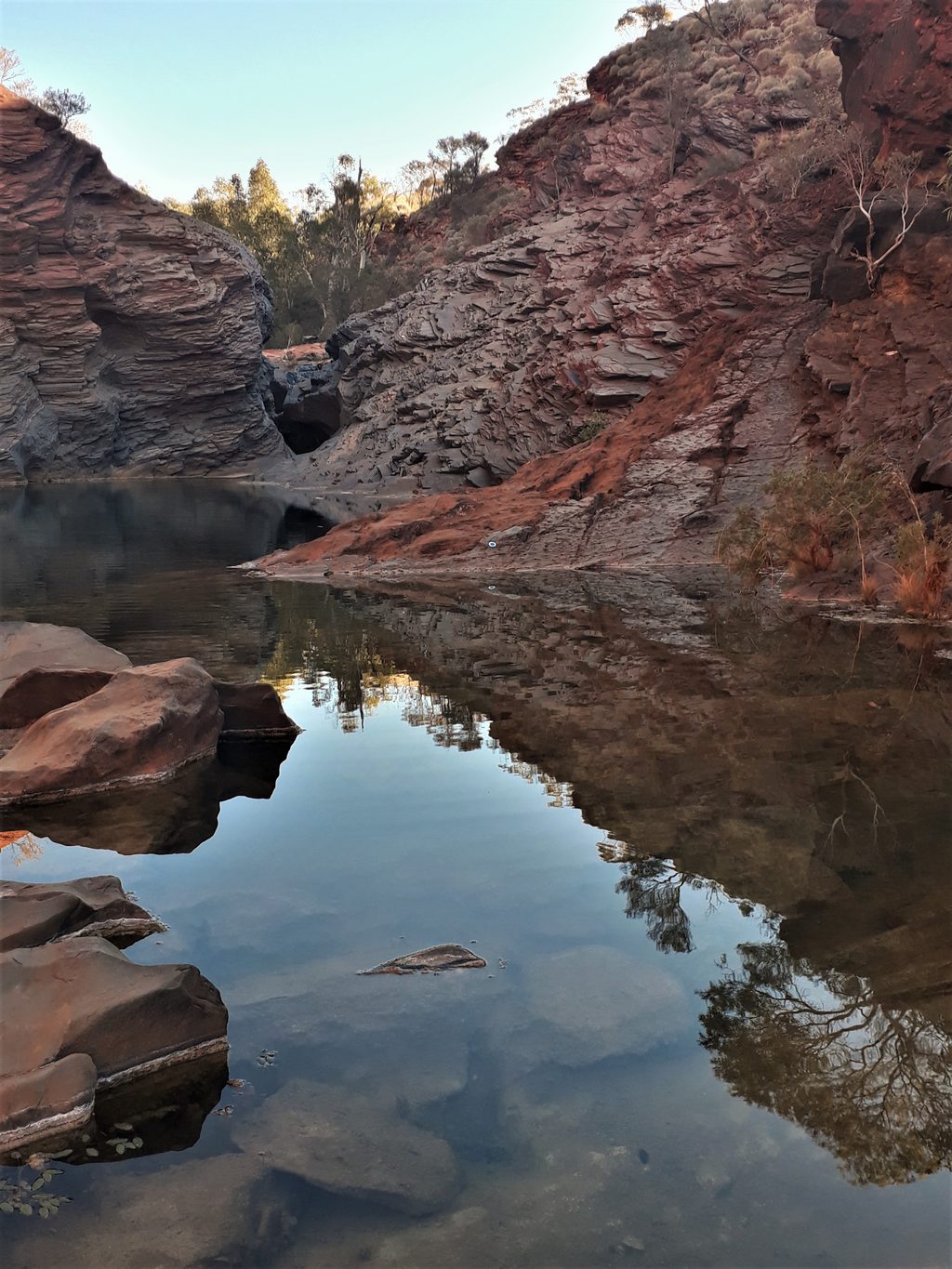
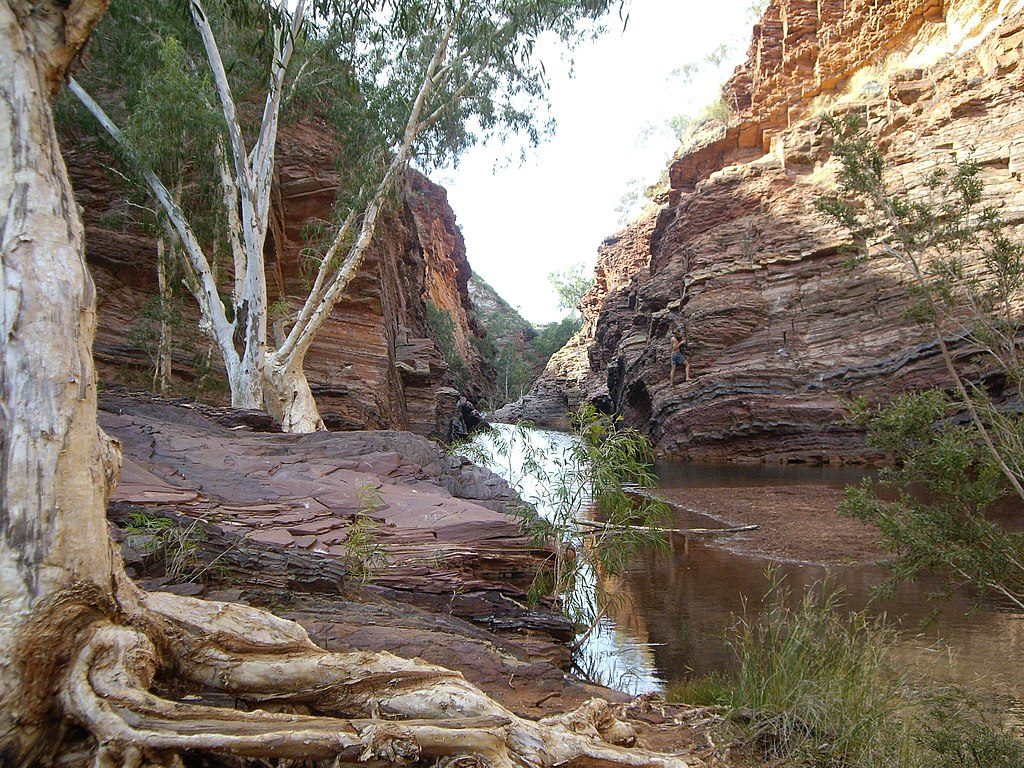
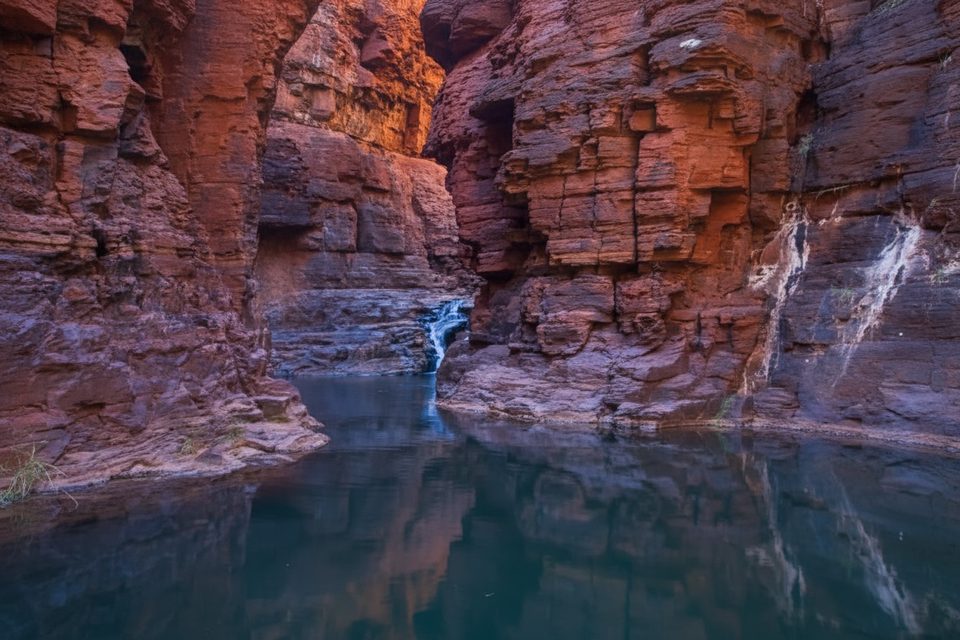
Think of the Main Pool as Hamersley’s living amphitheatre: a wide, jade‑blue basin tucked beneath dramatic, contorted stripes of banded ironstone. It’s the easiest place to dip into the gorge, and the views alone justify the detour.
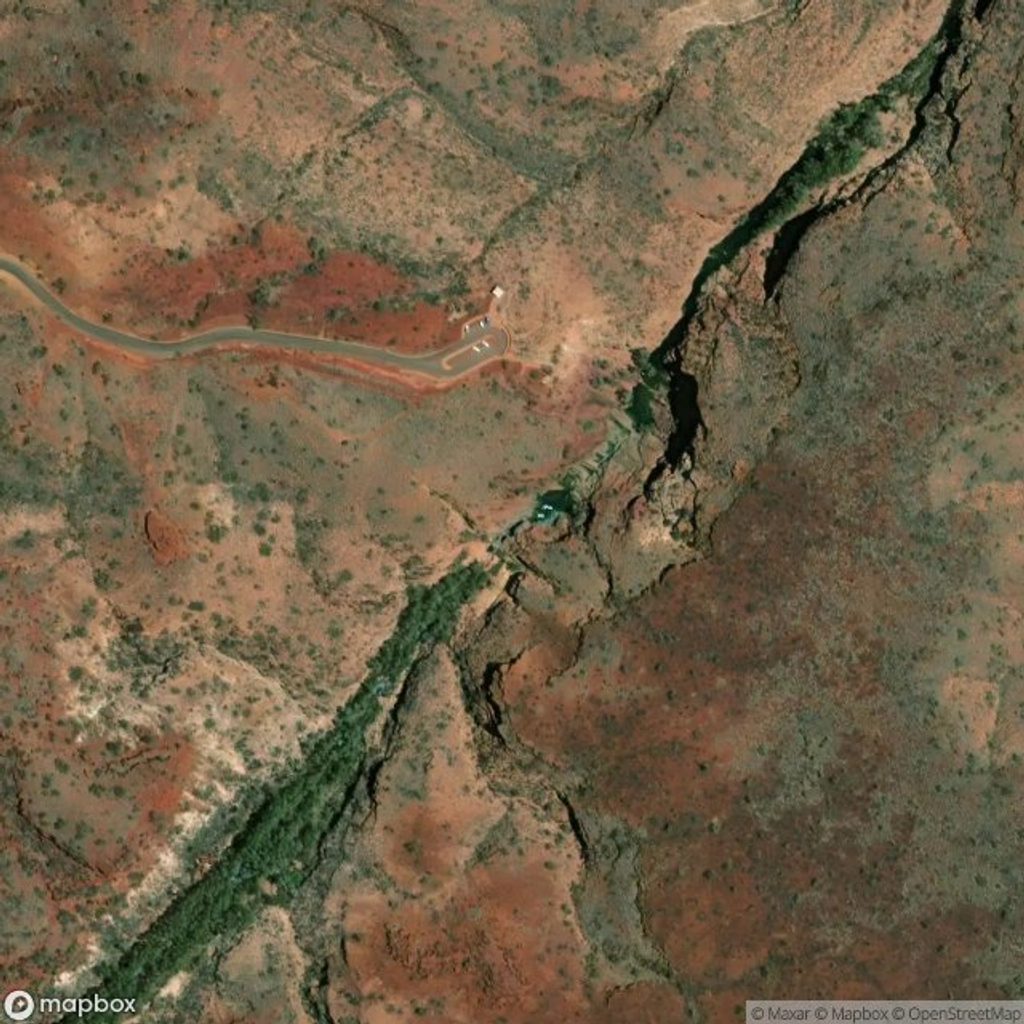
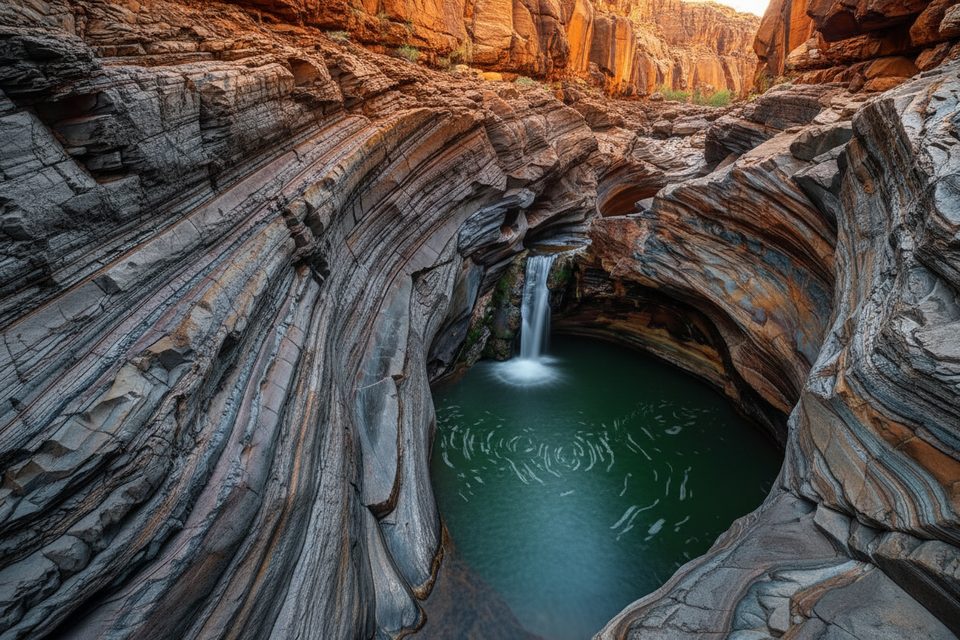
From the carpark, a short but steep descent (~400 m) drops you straight to the water. Expect polished rock ledges, a gentle flow feeding the pool, and that classic mirror‑calm surface for reflections when winds are light. Many people linger here to swim; stronger swimmers often continue upstream to the famous Spa Pool via rock scrambling and a short ladder section—only when conditions are safe, because those surfaces are slick.
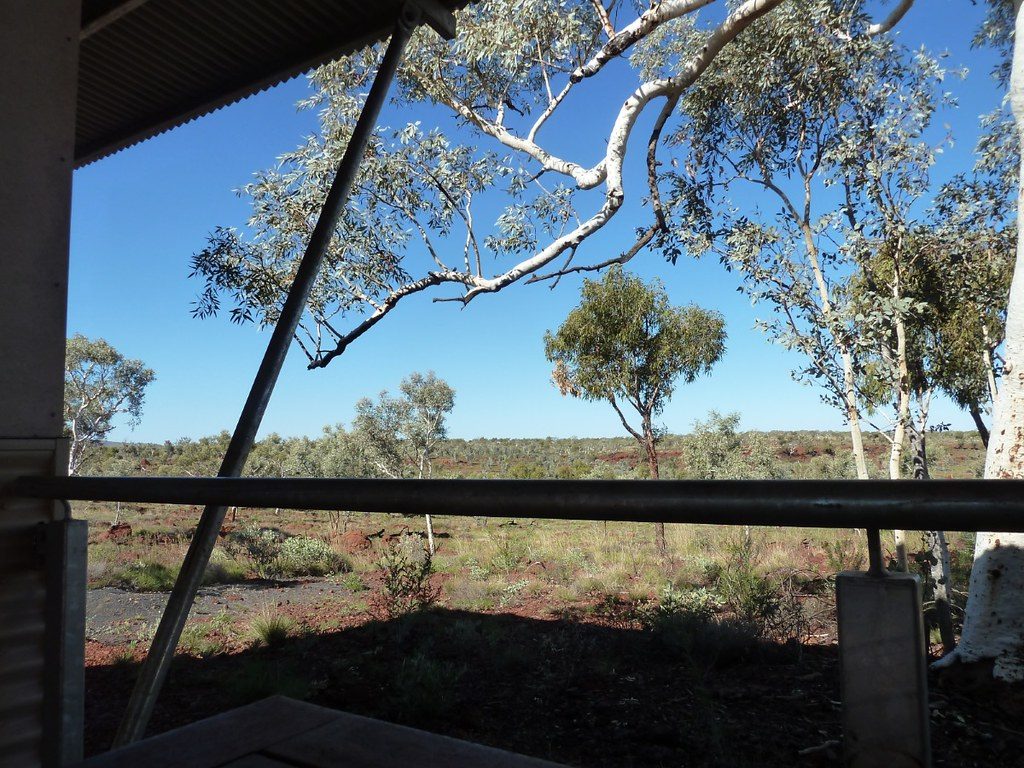
Hamersley sits on the park’s western side. Roads in the park are a mix of sealed and unsealed; the approach to the lower carpark has sealed sections, but you should still check conditions. At the carpark you’ll find toilets, an info shelter, and a purpose‑built lookout with sweeping views. There’s no drinking water—bring your own and plenty of it.
Flash floods are a real risk. Don’t enter the gorge if rain is forecast, and leave immediately if it starts raining. Rocks are extremely slippery; wear shoes with good grip, don’t jump or dive, and test the (very cold) water before committing to a swim.
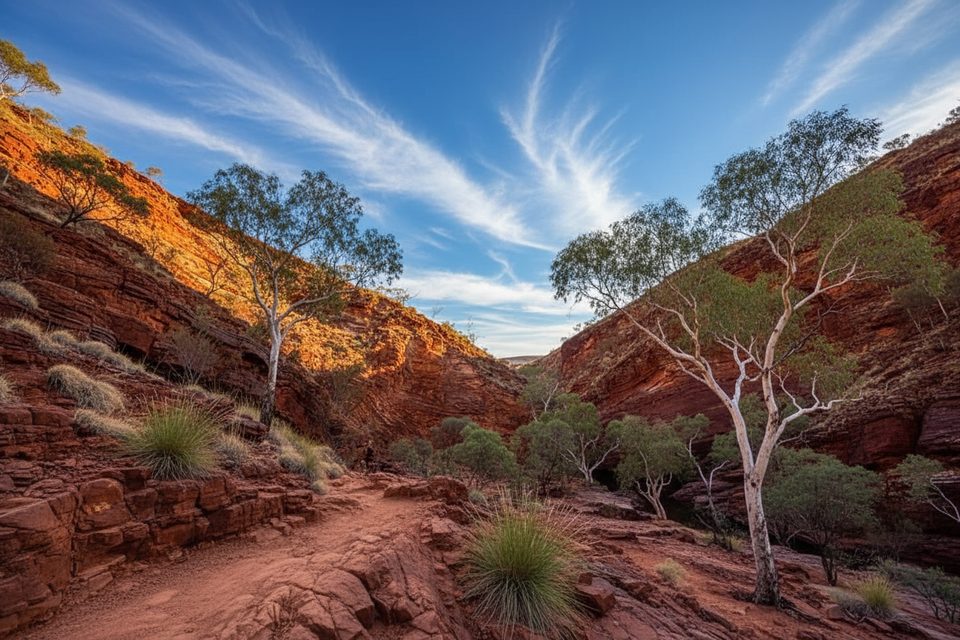
Those photogenic stripes are ancient banded iron formations laid down roughly 2.5 billion years ago, later folded and tilted into today’s undulating walls. You’re literally swimming beside a record of Earth’s early oceans.
Around the pools and spinifex slopes you might spot spinifex pigeons, honeyeaters, wedge‑tailed eagles overhead, and macropods like red kangaroos and euros. Reptiles—goannas, pythons, geckos—are common. No crocodiles here.
April–October brings milder temperatures and more comfortable hiking and swimming. For quiet, aim for early morning; sunrise can be blissfully empty. If you plan to scramble to Spa Pool for photos, late morning to early afternoon (around 11 am–1 pm) lights it best. Weekends and school holidays are busier.
Place · 0 mi away
Place · 0 mi away
Place · 19.8 mi away
Place · 19.8 mi away
Moderate · 0 mi away
Moderate · 0 mi away
Moderate · 0 mi away
Challenging · 20.3 mi away

Parkwolf Tour Guide
