Overview
About Spa Pool
Why stop
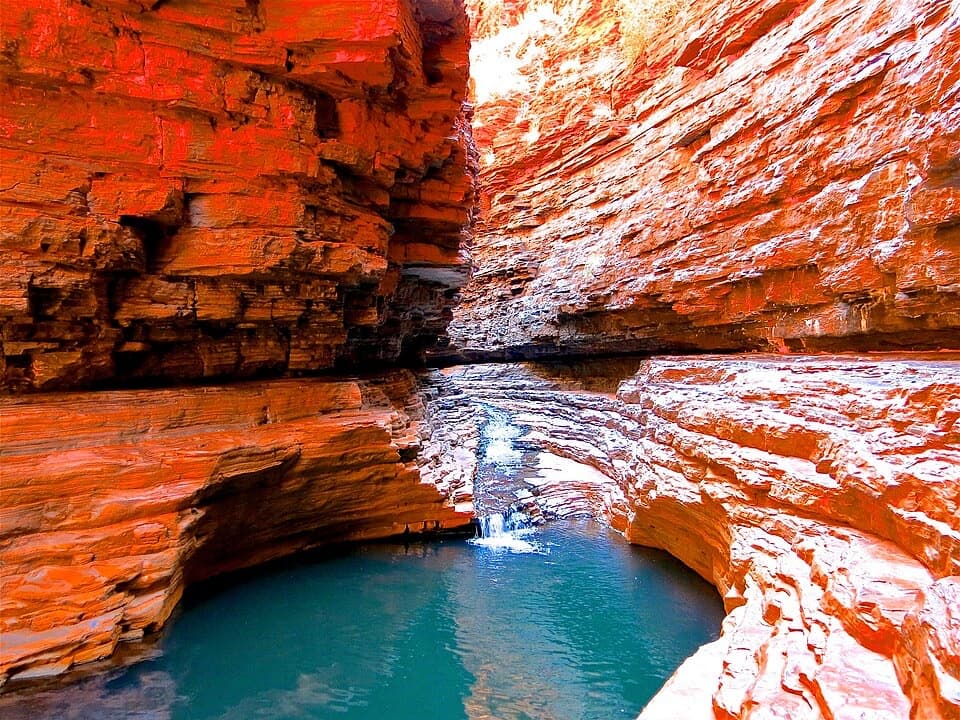
- A striking close-up of folded rock and a narrow waterfall.
Heads up
- The pool can be very cold, especially from April through September.
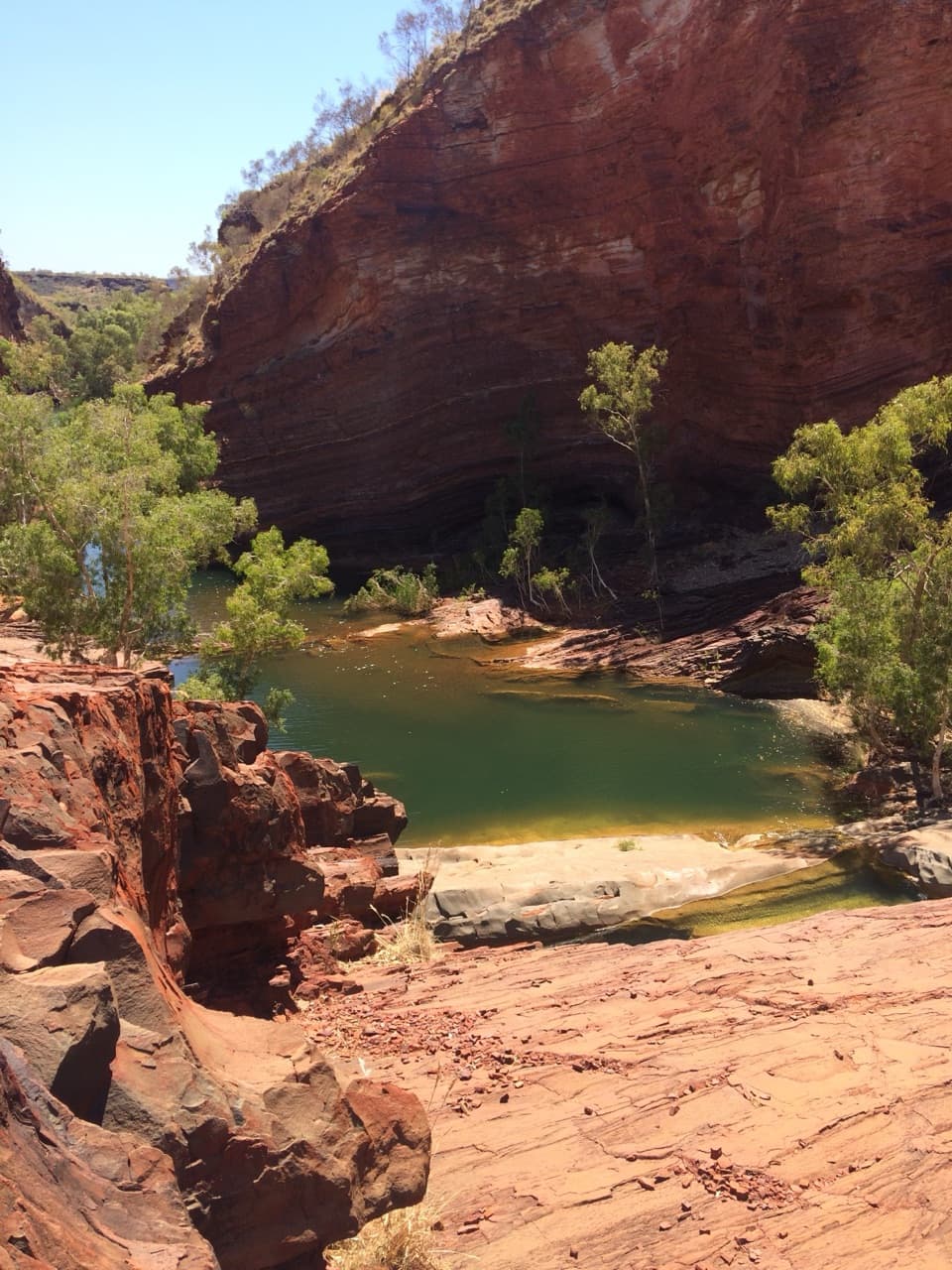
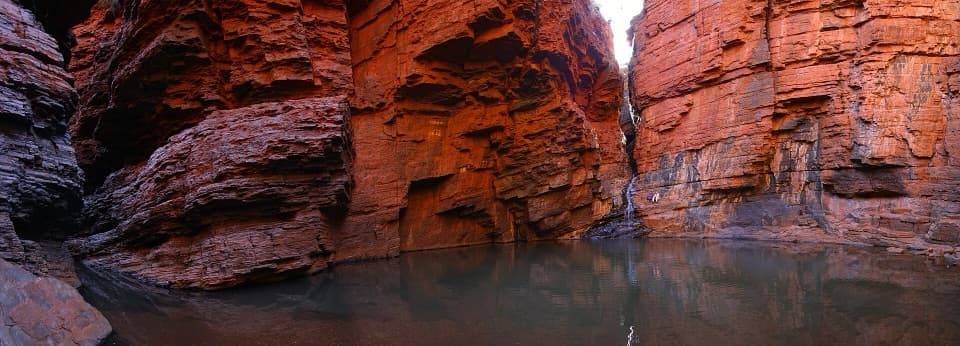
Spa Pool is a small, rounded rock pool tucked into a narrow chute above the main swimming area at Hamersley Gorge, in Karijini’s north-west. A little waterfall feeds it, and the close, folded walls make the bowl feel more dramatic than its size suggests. I’d keep it on your list if you’re steady on steep, slippery rock; if that scramble doesn’t suit you, the lower gorge and its lookout are still worthwhile.
 Parkwolf’s verdictThe upper pool is the payoff
Map
Where it is
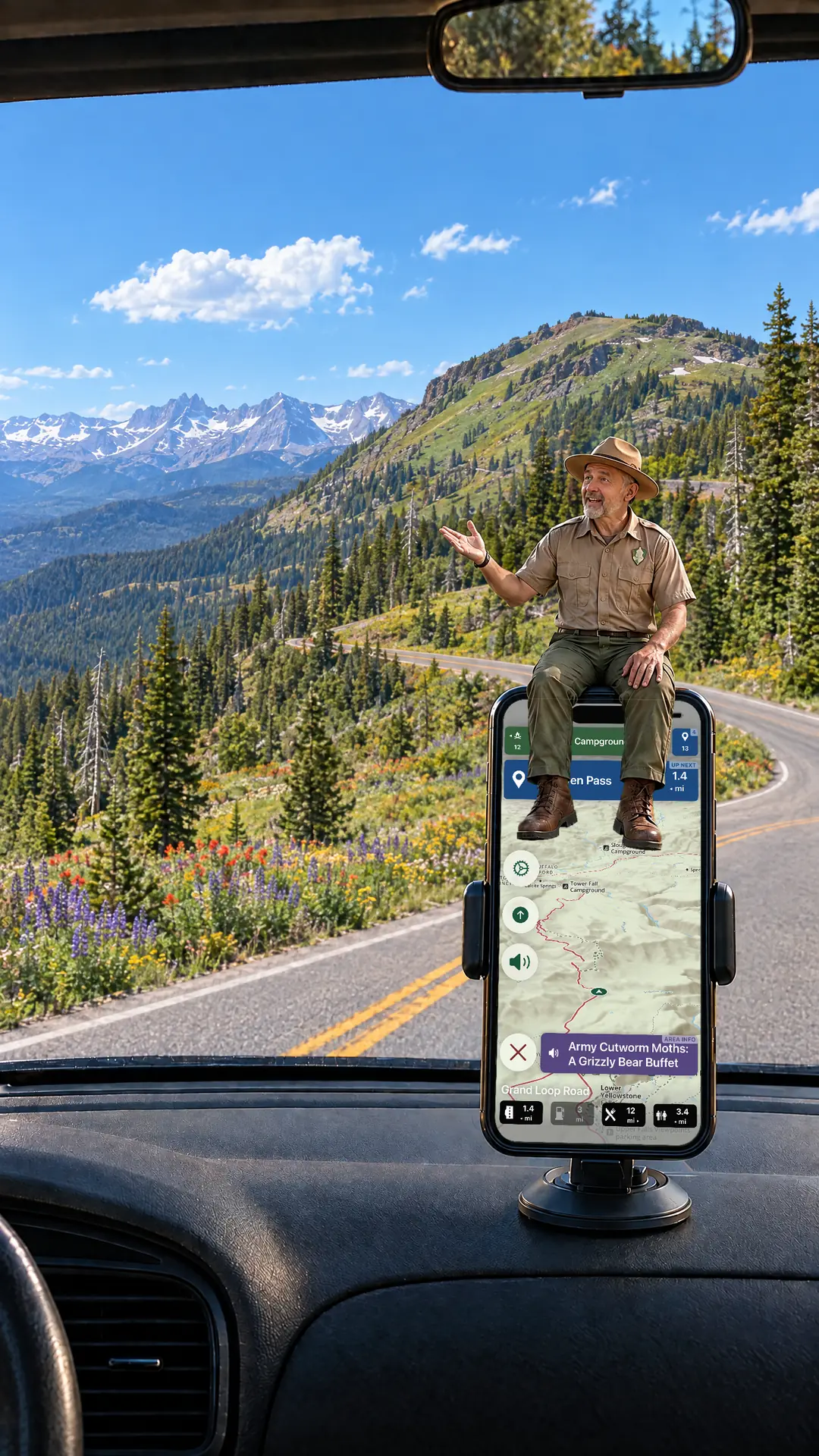
The highest, rockiest slopes around here are a summer buffet for grizzly bears.
Karijini Tour Guide
Your drive to Spa Pool, narrated.
Parkwolf is a GPS audio tour guide for Karijini National Park. As you drive, it chimes in with what’s ahead: hidden gems, upcoming stops, history, geology, and wildlife, right through your car’s speakers.
See the Karijini audio tourRecorded for this place
Hamersley Gorge: Follow the Folds“You're coming up on Hamersley Gorge, where the rock bands bend into sweeping folds around the waterfalls and pools. Look along those curves: ancient compression buckled layers that had once been flat.”
Plays as you drive up to Spa Pool in the Parkwolf Karijini Tour Guide.
More stories near here in the app
- The Milk Made by Pigeons
- Watch the Wings After Landing
- The Man Who Never Saw His Town
- The Water Cost of a Leaf
- 141 audio storiesacross Karijini’s roads, triggered by GPS as you drive
- Wildlife heatmapsfor Dingo, Rock Wallaby, Mulga Snake, and 13 more
- Works offlinemaps, 22 trails, 30 places, and audio download before you lose signal
- CarPlay readysimple controls built for the drive
“Fantastic app with many points of information… It’s great to just turn on while you’re driving and it gives you an audio tour of the national Park. We love it!!!!”


Guide
More about Spa Pool
Reaching the waterFrom the lower carpark, a steep 400-metre descent takes you to the gorge floor.
From the lower carpark, a steep 400-metre descent takes you to the gorge floor. Spa Pool lies farther along the watercourse, past a short ladder and a scramble over smooth rock. There’s no formal trail for that final section, and it’s best left alone when the rock is wet. The lower pool is a good stopping point if you don’t want the extra scramble.
Never enter a gorge if rain is in the area, and leave immediately if rain starts: flash floods can rise quickly here. Gorge water can be extremely cold, especially from April through September. Don’t jump or dive into Spa Pool; its safe depth hasn’t been established.
Follow the foldsThe striped walls are a close-up of the Pilbara’s old rock story. More than 2.
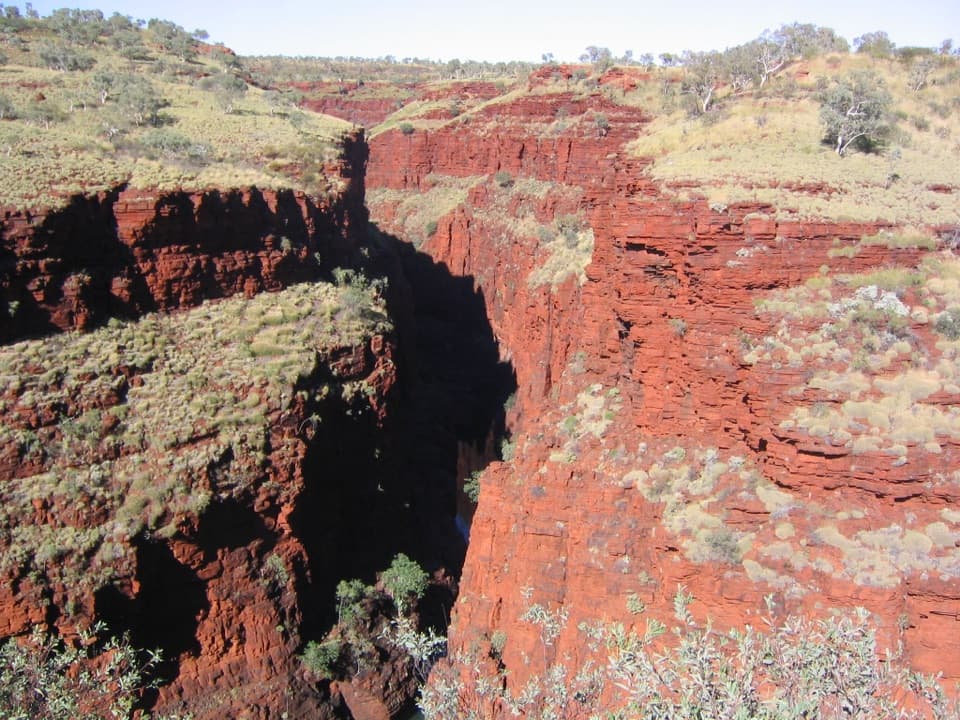
The striped walls are a close-up of the Pilbara’s old rock story. More than 2.5 billion years ago, iron-rich fine sediment settled on an ancient seabed. Burial and pressure turned those layers to rock; later compression folded and fractured them, and flowing water cut the gorges. Across the area you’ll see banded iron formation, dolomite and soft purple-pink shale.
Frame the waterFrom the pool, the narrow waterfall and dark water sit inside a frame of curved, folded rock.
From the pool, the narrow waterfall and dark water sit inside a frame of curved, folded rock. Before sunrise, directional light can pick out the layers while the pool stays much darker than the sunlit walls, so the scene has a big contrast range. You need to make the same scramble to get that close view.
What the name carriesKarijini is the Banyjima name for the Hamersley Range.
Karijini is the Banyjima name for the Hamersley Range. The park was established in 1969 around Dales Gorge, later expanded to include Hamersley Gorge, and renamed Karijini in 1991 to recognize Aboriginal history and continuing Traditional Owner connection. The park is on the traditional lands of Banyjima, Kurrama and Innawonga people.
Plan the stopHamersley Gorge is in the park’s remote north-west, about a 90-minute drive from Tom Price on a…
Hamersley Gorge is in the park’s remote north-west, about a 90-minute drive from Tom Price on a route with both sealed and unsealed sections. Road conditions and vehicle guidance can vary, so check current advice before setting out. There’s a toilet and a separate constructed lookout by the lower parking area; both are back at the start of the gorge visit.
Wildlife
Wildlife in Karijini
 44 sightingsDingoMost seen around 6 PMSighting map
 18 sightingsRock WallabyMost seen around 6 AMSighting map
 15 sightingsMulga SnakeMost seen around 7 PMSighting map
 36 sightingsHamersley Rock MonitorMost seen around 9 AMSighting map
 13 sightingsWestern BowerbirdMost seen around 7 AMSighting map
 34 sightingsChildren's PythonMost seen around 8 PMSighting map
Sighting maps show where each species has been reported across Karijini. Wildlife moves, so no sighting is guaranteed.