Overview
About Handrail Pool
Why stop
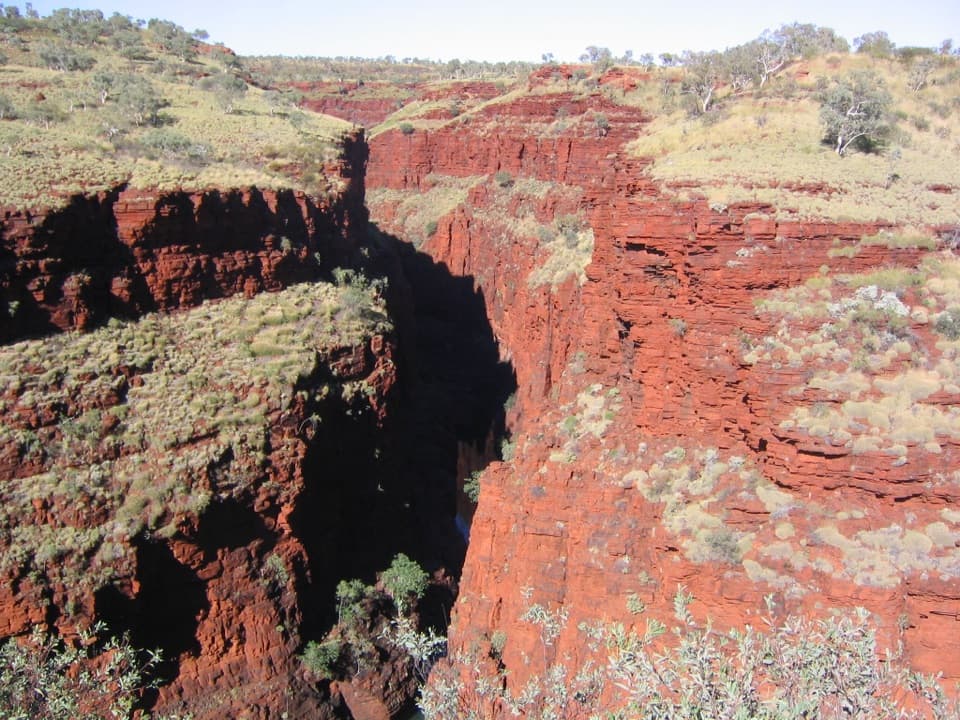
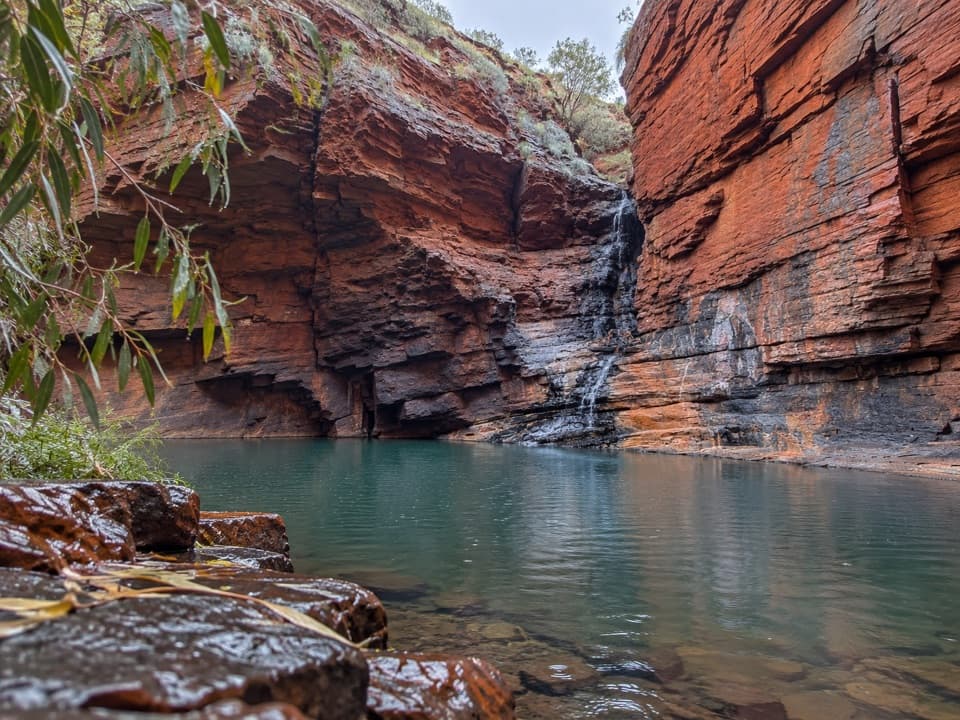
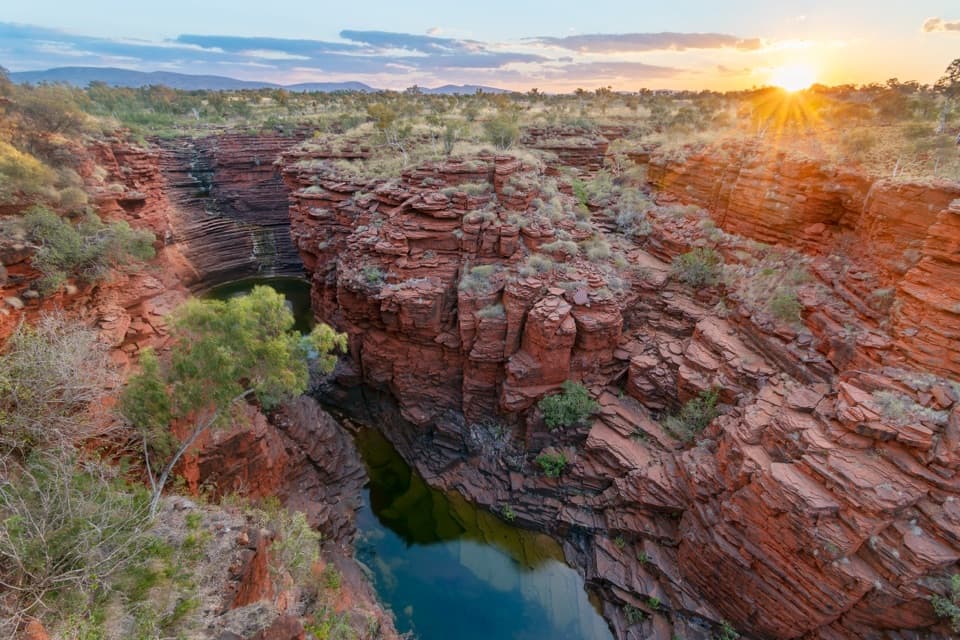
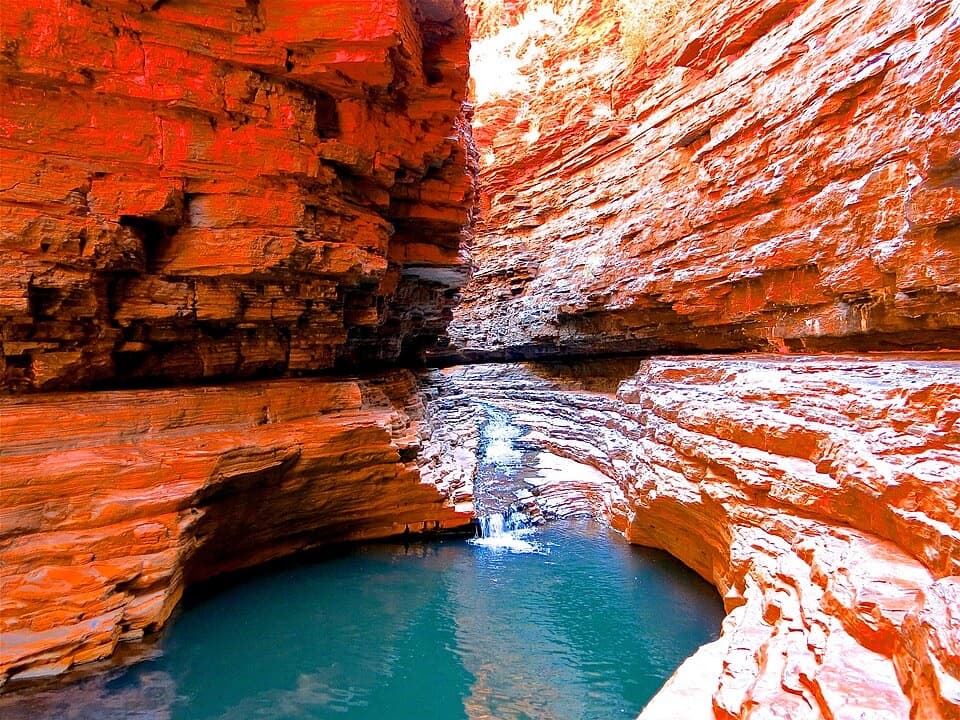
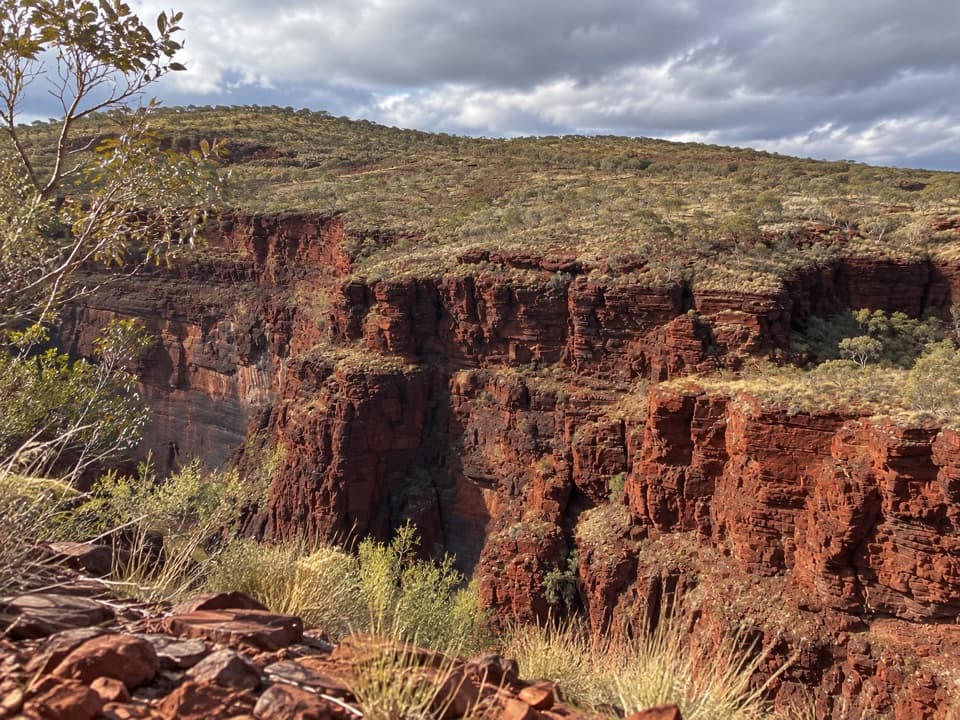
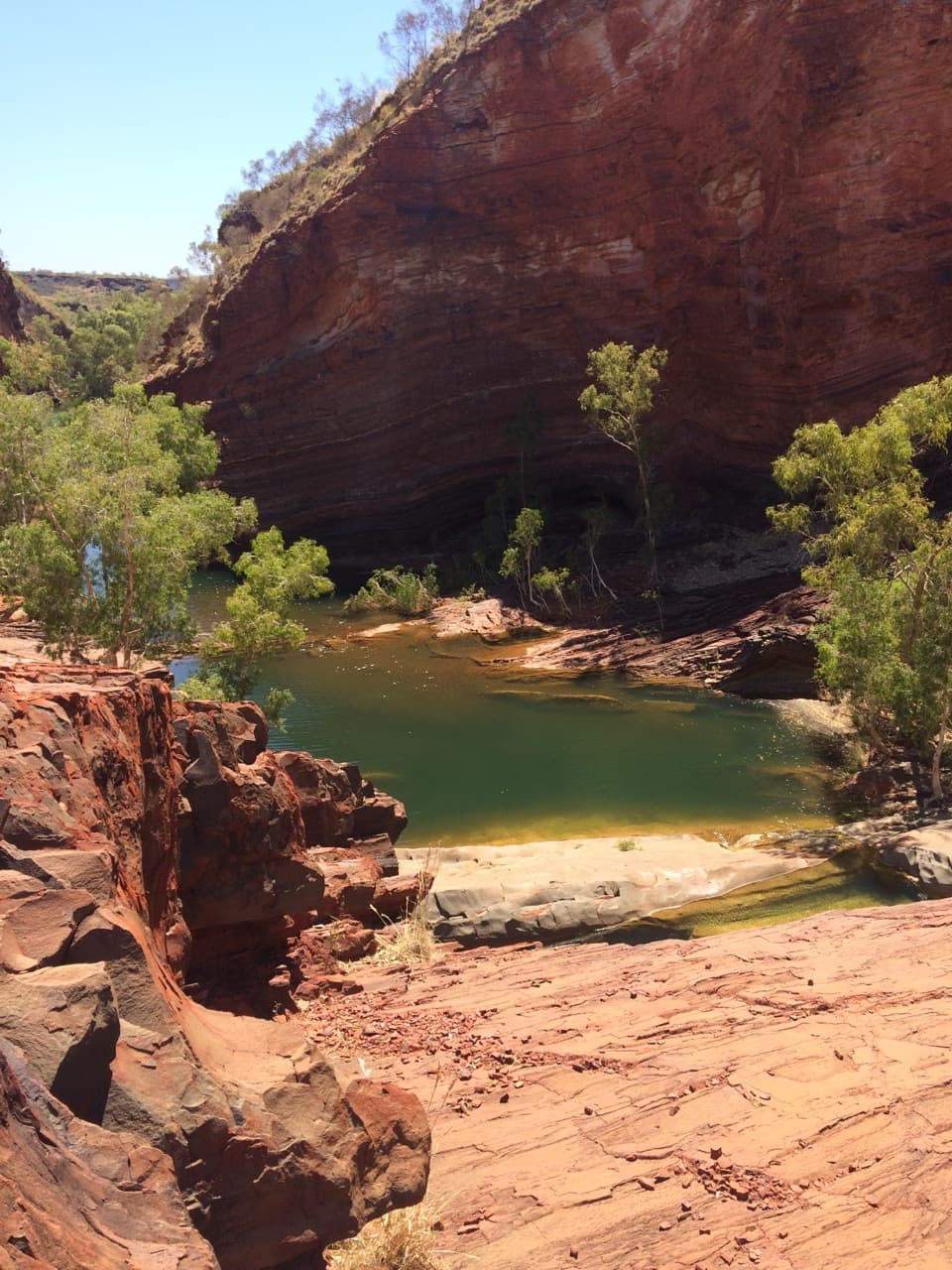
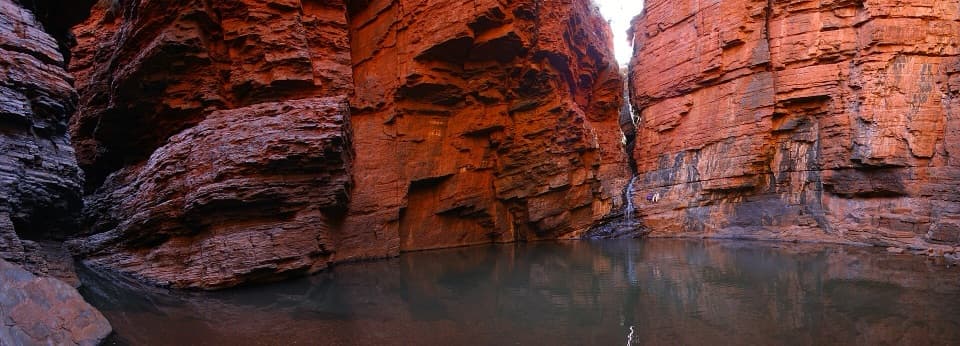
- A tight red-and-yellow gorge opens onto a natural pool.
Heads up
- Rough, sometimes wet scrambling can stretch a 1.5 km walk into a long outing.
Map
Where it is
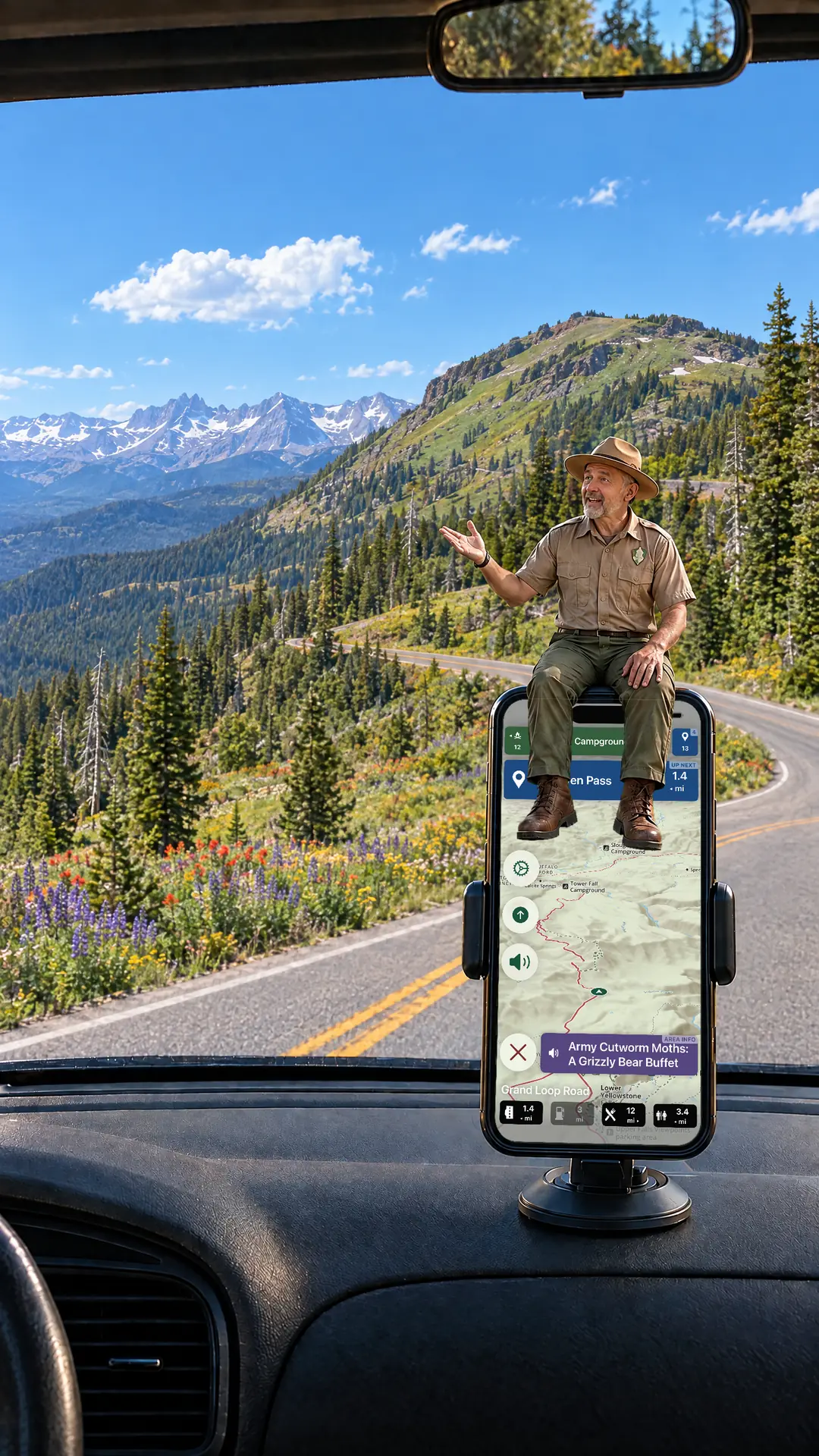
The highest, rockiest slopes around here are a summer buffet for grizzly bears.
Karijini Tour Guide
Your drive to Handrail Pool, narrated.
Parkwolf is a GPS audio tour guide for Karijini National Park. As you drive, it chimes in with what’s ahead: hidden gems, upcoming stops, history, geology, and wildlife, right through your car’s speakers.
See the Karijini audio tourRecorded for this place
Weano and Hancock Gorges“You're nearing Weano and Hancock gorges, where the routes to Kermit's Pool and Handrail Pool involve demanding scrambling. For Hancock, allow about two hours and go only if you're fit and experienced on wet rock.”
Plays as you drive up to Handrail Pool in the Parkwolf Karijini Tour Guide.
More stories near here in the app
- Oxer and Junction Pool Lookouts
- Knox Lookout: Two Gorges Meet
- The Scales in a Moth's Pattern
- How a Bee-eater Handles Lunch
- 141 audio storiesacross Karijini’s roads, triggered by GPS as you drive
- Wildlife heatmapsfor Dingo, Rock Wallaby, Mulga Snake, and 13 more
- Works offlinemaps, 22 trails, 30 places, and audio download before you lose signal
- CarPlay readysimple controls built for the drive
“Fantastic app with many points of information… It’s great to just turn on while you’re driving and it gives you an audio tour of the national Park. We love it!!!!”


Guide
More about Handrail Pool
The pool at the end of Weano GorgeHandrail Pool is a natural stream pool tucked into Lower Weano Gorge, reached by a 1.
Handrail Pool is a natural stream pool tucked into Lower Weano Gorge, reached by a 1.5 km return walk from the Weano Recreation Area. Allow one to three hours; wading and rough sections can make this outing take longer than the distance suggests. The trail starts north of the information shelter at the Weano car park. The approach road has unsealed sections, so 4WD is recommended; a 2WD car may be suitable depending on conditions, and roads to the gorges can close after heavy rain. It is a strong pick if you want to get inside Karijini's narrow red-rock country, but this is a gorge walk with a demanding finish, not a drive-up swim stop.
The handrail is the cruxThe route begins as a Class 3 walk, then becomes Class 5 as the gorge narrows, with boulders,…
The route begins as a Class 3 walk, then becomes Class 5 as the gorge narrows, with boulders, tight passages and slippery rock. The steep handrail descent is the hardest part. If you don't want to climb down, you can stop above the pool and look into it from there.
Water and weather change the effortDepending on water levels, you may need to wade, and that can slow the final stretch.
Depending on water levels, you may need to wade, and that can slow the final stretch. Gorge water can be very cold, especially from April through September; don't jump or dive. Flash floods are a serious risk: don't enter a gorge if rain is in the area, and leave immediately if it starts while you're inside. Dogs aren't allowed.
Look back at the wallsThe high, close-set walls shift from deep red to yellow around the pool.
The high, close-set walls shift from deep red to yellow around the pool. For a photo, frame the water with the layered walls; reflections can show when the surface is still. Reaching the pool means doing the gorge walk, though you can see it from above without taking the final handrail descent.
Two billion years in the rockThese gorges cut through ancient, iron-rich rock.
These gorges cut through ancient, iron-rich rock. More than two billion years ago, oxygen reacting with iron in the sea laid down the bands that give the Hamersley Range its distinctive striped stone. Later uplift and seasonal streams carved deep channels through the hard layers.
Wildlife
Wildlife in Karijini
 44 sightingsDingoMost seen around 6 PMSighting map
 18 sightingsRock WallabyMost seen around 6 AMSighting map
 15 sightingsMulga SnakeMost seen around 7 PMSighting map
 36 sightingsHamersley Rock MonitorMost seen around 9 AMSighting map
 13 sightingsWestern BowerbirdMost seen around 7 AMSighting map
 34 sightingsChildren's PythonMost seen around 8 PMSighting map
Sighting maps show where each species has been reported across Karijini. Wildlife moves, so no sighting is guaranteed.