Place
Moderate
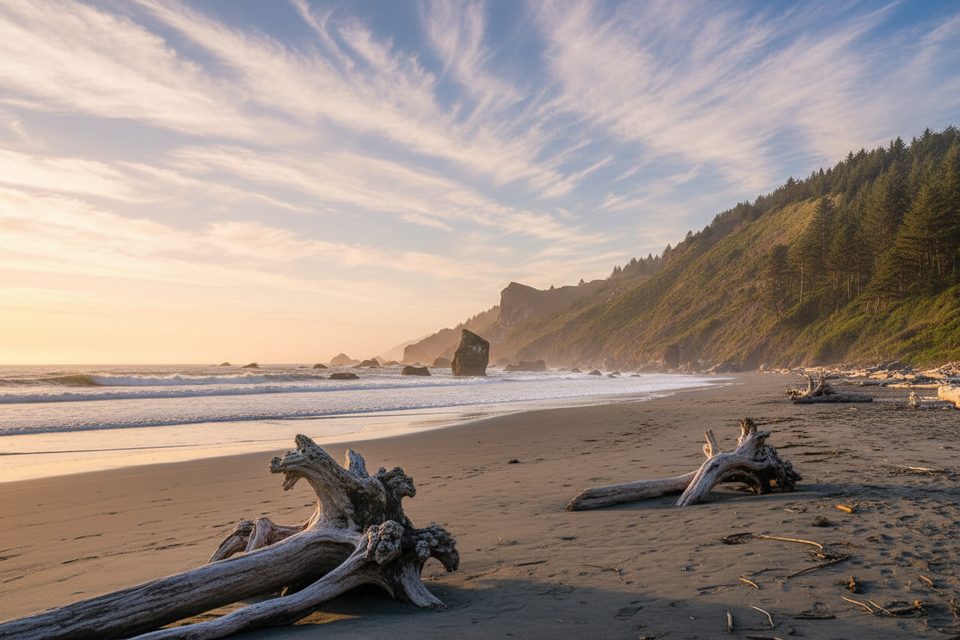
A short, steep out-and-back to a secluded cove on the park’s wild coast. Expect about 1.5 miles round trip with roughly 500+ feet of elevation change and a quiet, bouldery beach payoff. This is not a redwood-grove stroll; the hillside is coastal spruce and alder with thickets of berry and brush. The ocean is audible on the descent, and crowds are rare, which is the point.
The path follows an old skid road before narrowing through lush, shady coastal spruce. Near the bottom, it grows brushy and overgrown in places, with stinging nettles. The beach itself is a dramatic scene of big driftwood (including huge bleached redwood stumps) and scattered boulders. Seasonal sand levels can swing dramatically, changing how the shoreline looks—and whether you can move around the larger rock piles.
It’s short but honest: a steep drop to the beach and a stout climb back. Tread can be narrow and tilted with eroded sections, including a washed-out “dip” lower down. Sturdy footwear is a must, and long pants help with brush and nettles. Despite the rough edges, solitude and coastal atmosphere make it a satisfying quick hit.
Roosevelt elk are frequently seen in this area, including on the beach—give them lots of space. You’ll likely spot seabirds; seals are sometimes offshore, and whales can show in summer. Banana slugs are common in the damp forest. Elephant seals may sporadically haul out on park beaches during their summer molt; if you encounter any marine mammals, keep your distance.
Reaching the beach is straightforward, but traveling along it is another story. Getting past the boulder fields or connecting to other Coastal Trail segments is often only possible at very low tide with calm surf. Plan this as an out-and-back and be ready to turn around.
April through October is the sweet spot. Summer and early fall can feel surprisingly warm on this slope (often in the 80s), while mornings offer quieter conditions and softer light. It’s hikeable year-round, but rain makes the steep, eroded sections slick and brushier.
The trailhead is off Coastal Drive, roughly a mile from the Newton B. Drury Scenic Parkway junction. It’s easy to miss—a small pullout and a modest “Coastal Trail” sign—so slow down as you approach. Parking is very limited, especially for RVs or trailers. No dogs on this trail.
You’re standing on the edge of the park’s restless Pacific margin, where active geology (frequent uplift, landslides, and relentless surf) sculpts the coastline. The cove’s big driftwood piles and shifting sand levels are a visible reminder that this beach is constantly rearranged by tides, storms, and seasons.
Do this if you want a brief, steep hike to a quiet, photogenic cove with wildlife and few people. Skip it if you’re chasing cathedral-like redwoods—this one’s about the coast.
Small pullout on Coastal Drive about 1 mile from the Newton B. Drury Scenic Parkway junction; tiny trailhead sign; very limited parking and poor options for RVs/trailers.
Short but steep with narrow, tilted, eroded tread and nettles; a washed-out dip near the bottom; beach beyond the cove is often impassable except at very low tide and calm surf; elk can be aggressive during calving (late May–June) and rut (late Aug–Oct); no dogs.
Moderate
Challenging
Easy
Easy

Parkwolf Tour Guide