
Place · 0.6 mi away
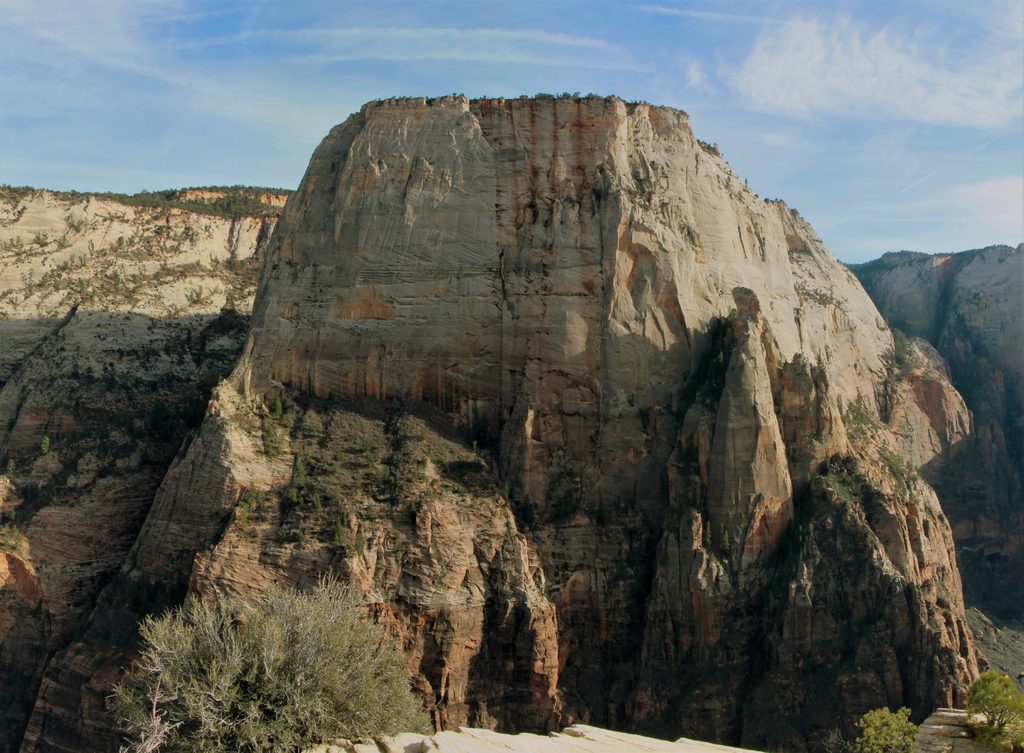
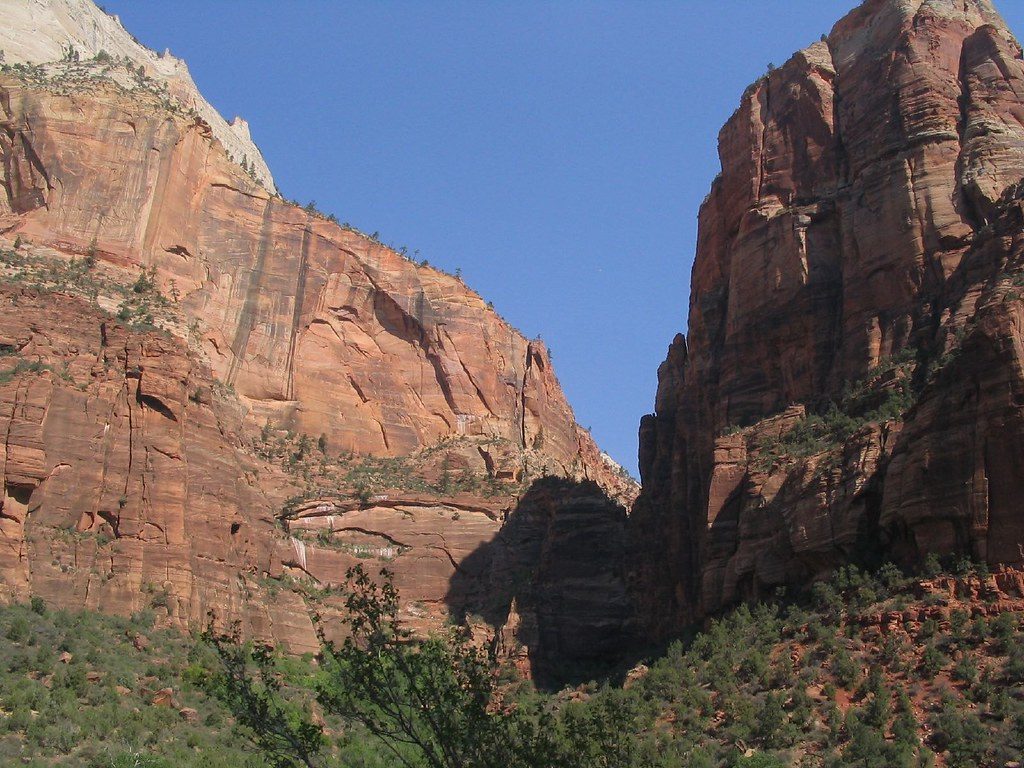
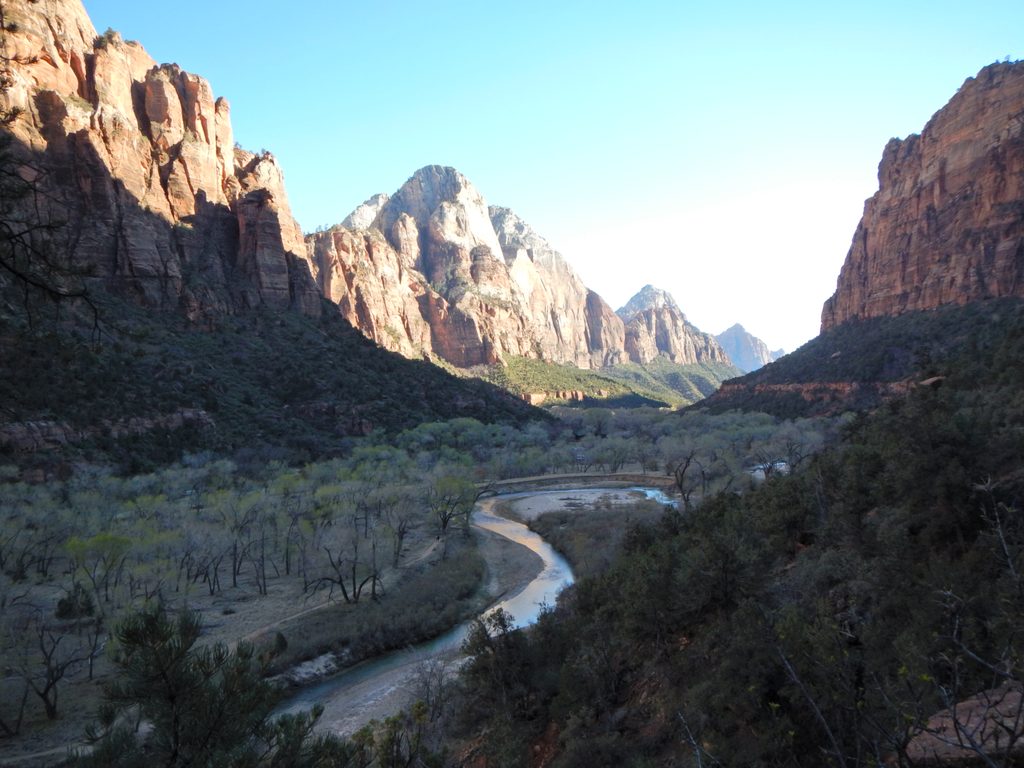
The Great White Throne is one of the canyon’s signature monoliths: a near-vertical white-capped sandstone giant rising roughly 2,500 feet above the canyon floor. A Methodist minister, Frederick Fisher, gave it its memorable name, and it’s been a park icon ever since. You don’t hike to the Throne itself—you admire it—so think of this as a must-see viewpoint objective rather than a destination with facilities.
This tower is mostly Navajo Sandstone—ancient Jurassic desert dunes turned to stone—carved by the Virgin River. Its pale “crown” is a cap of the Temple Cap Formation (the White Throne Member) resting atop lighter upper Navajo Sandstone, which contrasts with the redder, iron-stained layers below. Zion Canyon’s downcutting has been geologically fast; the upper half of the Throne only emerged within about the last million years, and the river is still at work.
The Throne’s soaring north-face routes can run to 25 pitches. The base tends to be more solid than the upper sections, and some west-facing base routes have morning shade. Expect seasonal closures for peregrine falcon nesting (often March through mid-summer); fixed anchors now exist on some lines where older guides mention tree rappels. The Grotto area is the usual access for approaches.
Keep an eye on the cliffs and benches for desert bighorn sheep, and watch for raptors—the same birds that can prompt seasonal closures. Hanging gardens where water seeps through the sandstone add pockets of green and attract birdlife along this stretch of canyon.
Place · 0.6 mi away
Place · 0.6 mi away
Place · 0.7 mi away
Place · 0.7 mi away
Challenging · 0.6 mi away
Challenging · 0.6 mi away
Challenging · 0.6 mi away
Moderate · 0.6 mi away

Parkwolf Tour Guide
