

Place · 0.2 mi away
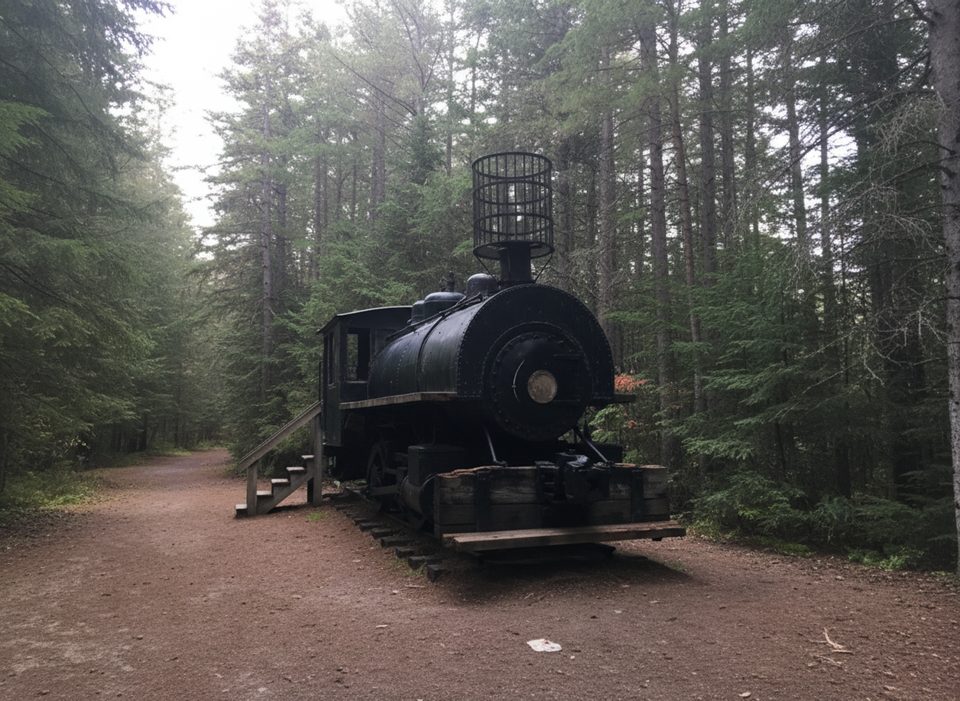
This is the showpiece of the Algonquin Logging Museum: a hulking, steam-powered “alligator” tug that once hauled log booms across lakes and winched itself over portages. It’s the artifact everyone lingers on, because you can climb aboard and see the mechanics up close—great for photos and for wrapping your head around how logging actually worked here.
Invented by John Ceburn West, alligator tugs used a steam engine (about 20 horsepower on early models) to power paddles and a winch. Crews would set the anchor ahead, then the boat winched itself forward, towing massive booms or creeping over short portages. It’s ingenious, rugged, and uniquely Algonquin.
The loop trail traces logging here from the square‑timber era (beginning around 1830, peaking in 1864, with the last square timber cut near the Petawawa River in 1912) through horse power and into steam and trucks. The alligator marks the turning point when steam changed what was possible on Algonquin’s lakes and rivers.
Parts of the loop skirt a marsh—good for casual wildlife spotting and moody reflections on calm days. It’s a surprisingly peaceful place to learn history without feeling stuck indoors.
Place · 0.2 mi away
Place · 0.2 mi away
Place · 0.5 mi away
Place · 3.9 mi away
Easy · 0 mi away

Moderate · 5 mi away

Easy · 6.1 mi away

Moderate · 6.8 mi away

Parkwolf Tour Guide
