
Place · 1.6 mi away
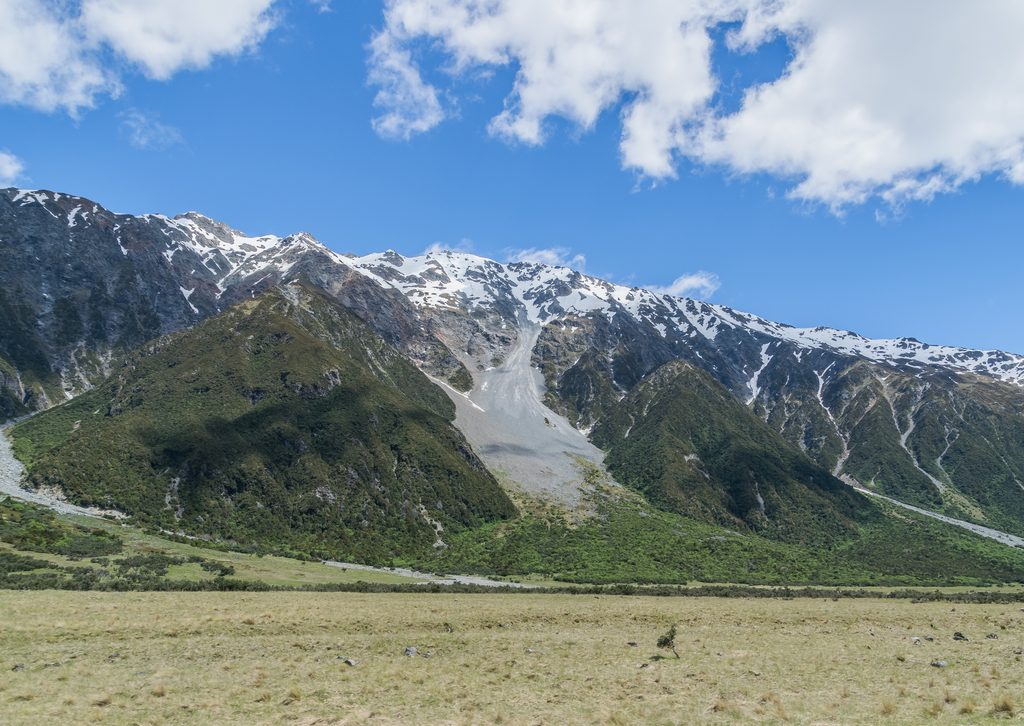
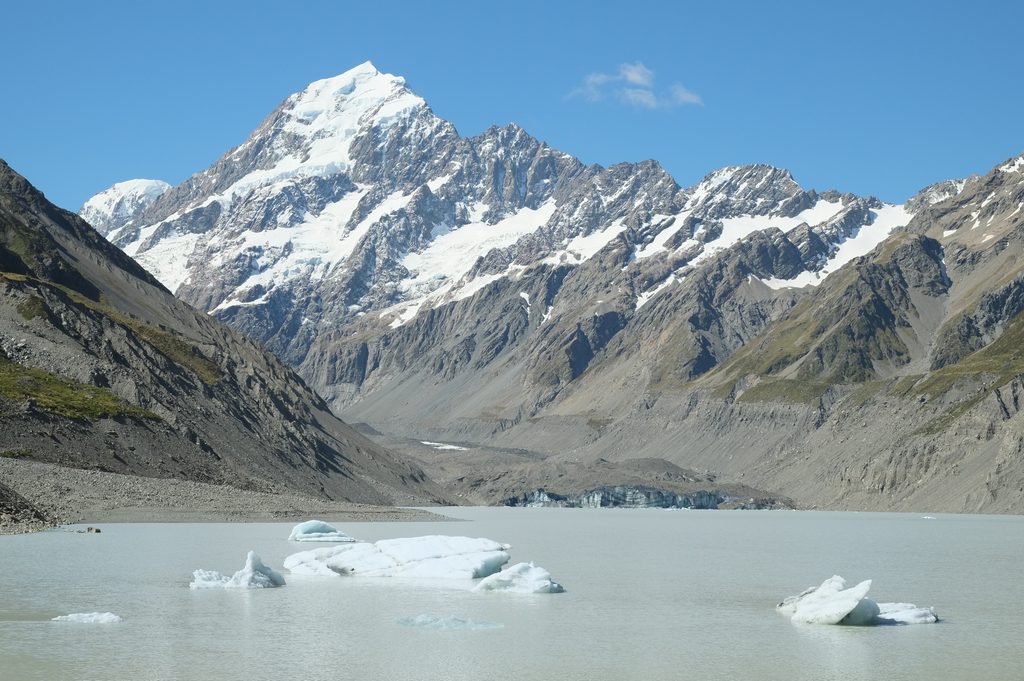
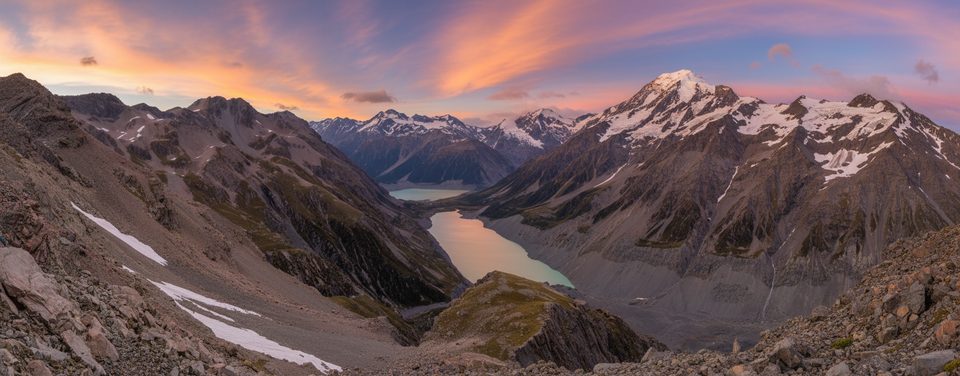
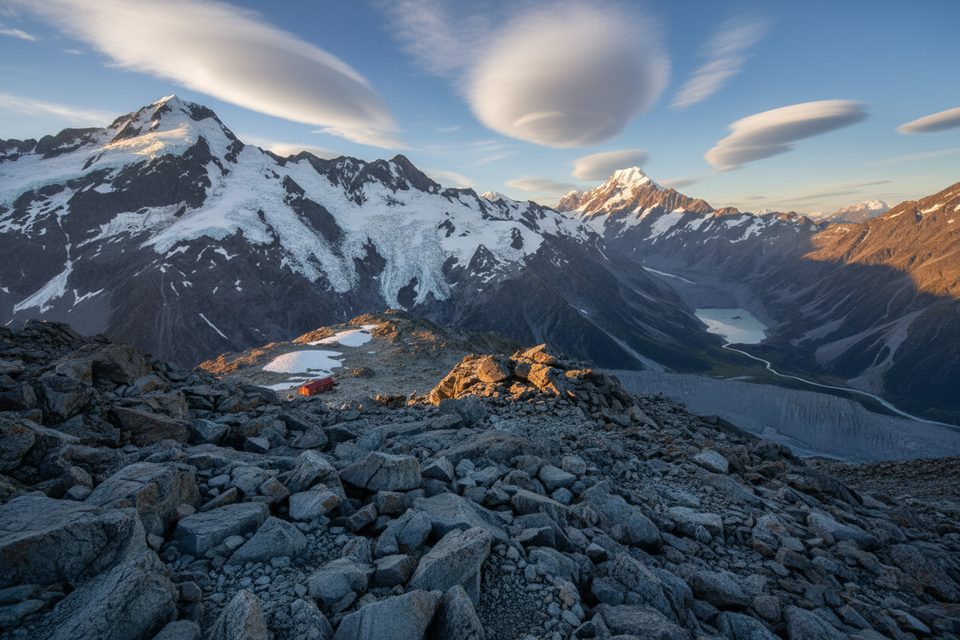
Kirikirikatata / Mount Cook Range forms the dramatic skyline at the head of the Hooker Valley. It’s the alpine backdrop most people picture when they think of this park: serrated peaks, hanging ice, and glacier‑fed lakes. The park spans 707 km², and about 40% of it is glaciated, including the Haupapa / Tasman Glacier, New Zealand’s largest.
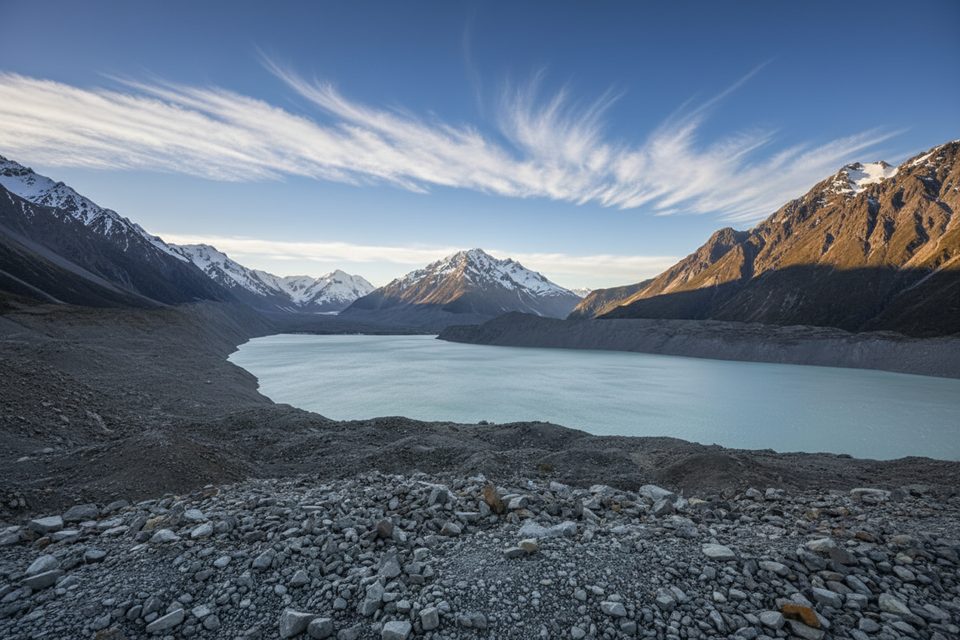
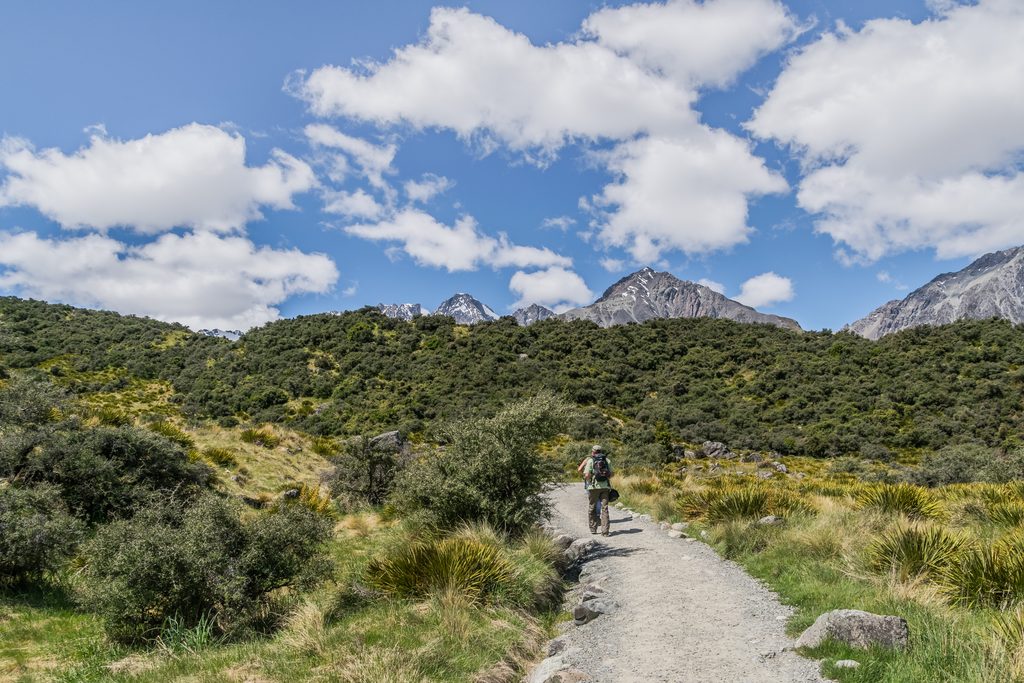
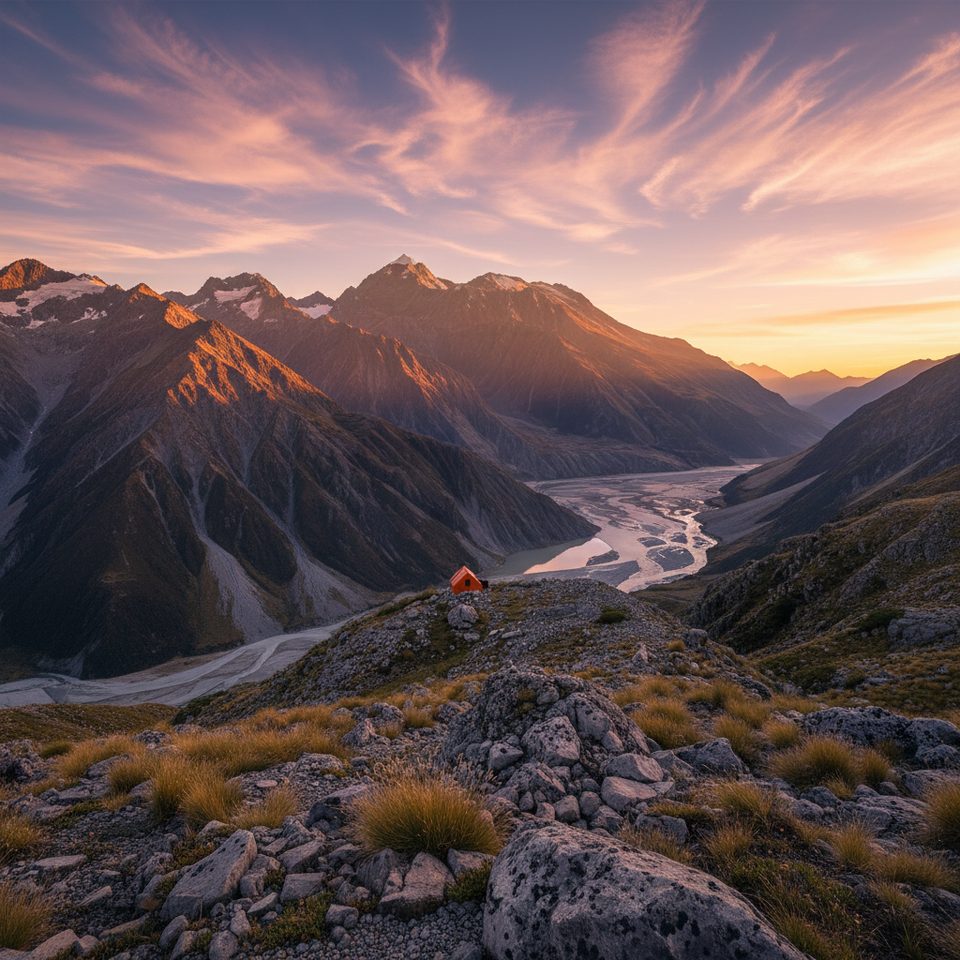
You don’t need mountaineering gear to appreciate the range—walk to the views. The Hooker Valley Track (about 3 hours return) threads boardwalks and swing bridges to Hooker Lake with constant views of the range. For a stiffer workout, the Sealy Tarns Track climbs steep stairs to a grand panorama; fit, experienced parties continue to Mueller Hut (an advanced alpine route, conditions‑dependent). Shorter options in the Tasman Valley lead to glacier‑lake viewpoints, with seasonal boat tours operating on the lake.
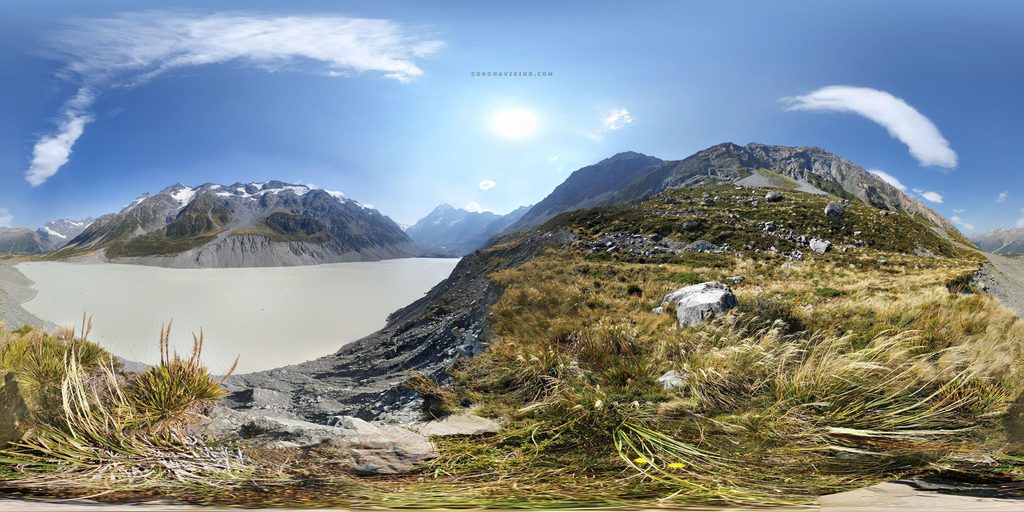
Around 13,000 years ago, ice hundreds of metres thick filled both Hooker and Tasman Valleys. As the glaciers retreated they sculpted classic U‑shaped valleys and left moraines and today’s proglacial lakes—features you’ll see from the tracks that face the range.
Over 400 plant species and roughly 35 bird species live here. Keep an eye out for endangered kakī/black stilt in valley wetlands and the tiny alpine pīwauwau/rock wren among boulder fields. Kea are famously curious—secure your gear and never feed wildlife. Stay on formed tracks to protect fragile alpine habitats.
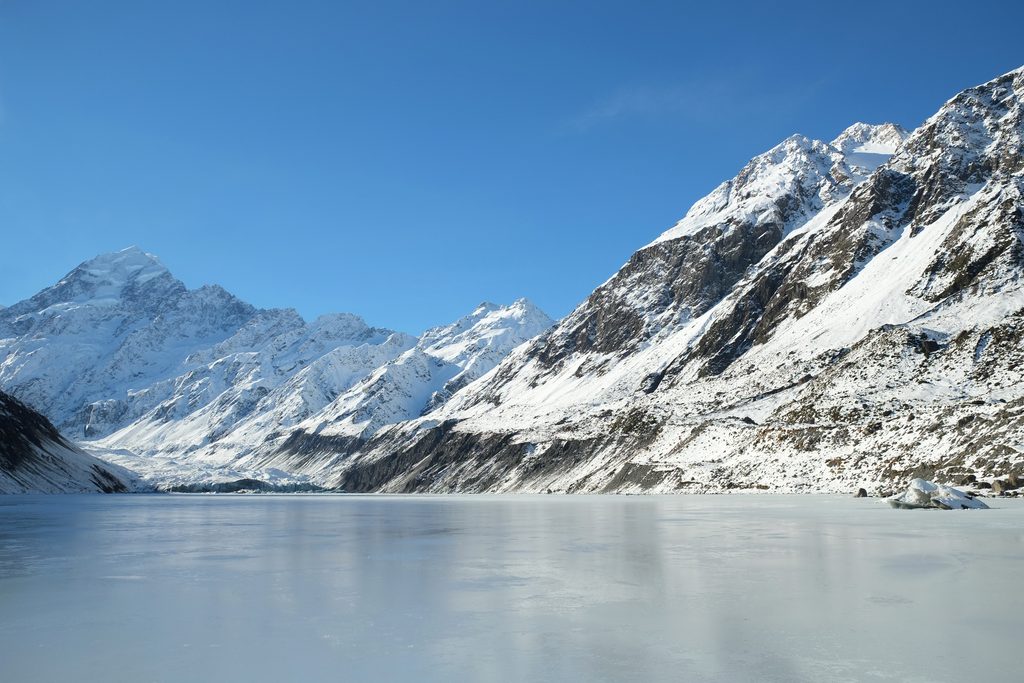
Summer (Dec–Feb) brings the warmest weather and the most services—but also the biggest crowds. Shoulder seasons (Mar–May and Sep–Nov) are quieter with changeable conditions. Winter (Jun–Aug) offers crisp clarity but expect snow and ice, and possible closures. For fewer people on popular walks, go early or late in the day.
Access is via State Highway 80 along Lake Pukaki to Aoraki/Mount Cook Village. Most amenities (toilets, water, bins) sit in the village and at major trailheads—not on the alpine ridgelines—so go self‑contained when heading up high. The DOC Aoraki/Mount Cook National Park Visitor Centre provides current track status, avalanche advisories, and bookings, with seasonal opening hours.
Weather turns quickly; carry layers, a rain shell, hat and gloves year‑round. UV is strong—use sun protection. In winter and shoulder seasons, expect icy sections and consider traction if advised by DOC. Keep well back from glacier‑lake edges where ice calving can trigger waves.
As part of the Te Manahuna Aoraki pest‑eradication project, aerial operations are scheduled to expand across the Kirikirikatata / Mount Cook Range with temporary track closures expected between mid‑November 2025 and March 2026. Check DOC alerts before you go.
Dual place names (e.g., Kirikirikatata / Mount Cook Range and Aoraki / Mount Cook) were formally recognised in 1998 through the Ngāi Tahu Claims Settlement Act, reflecting the area’s cultural significance.
Place · 1.6 mi away
Place · 1.6 mi away
Place · 1.7 mi away
Place · 1.8 mi away
Easy · 2.3 mi away
Easy · 2.3 mi away
Challenging · 4.2 mi away
Challenging · 4.2 mi away

Parkwolf Tour Guide
