
Place · 0 mi away
Challenging
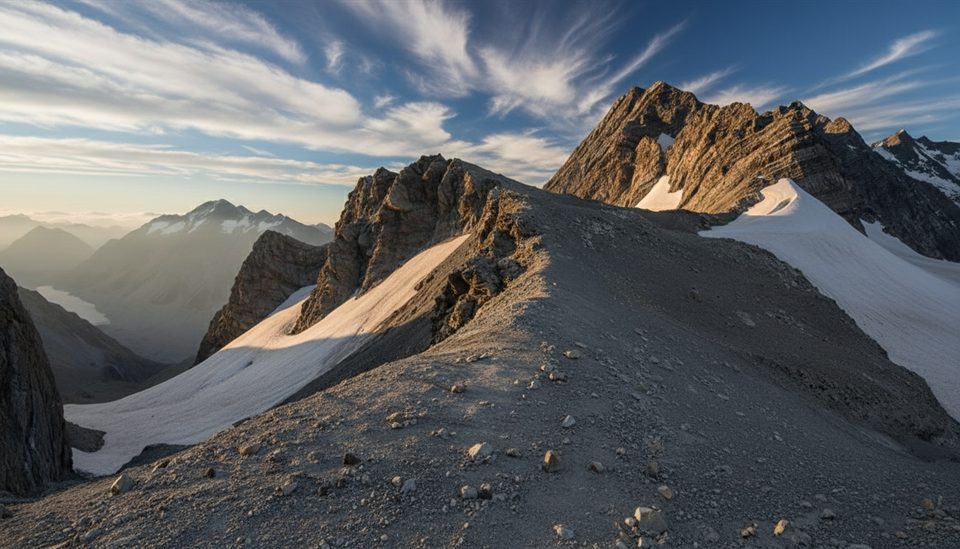
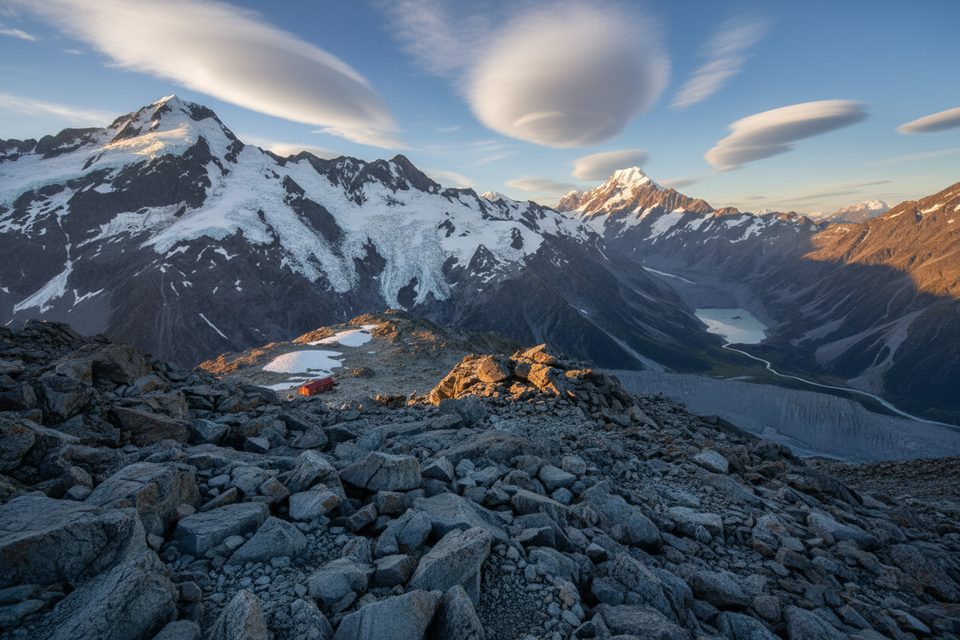
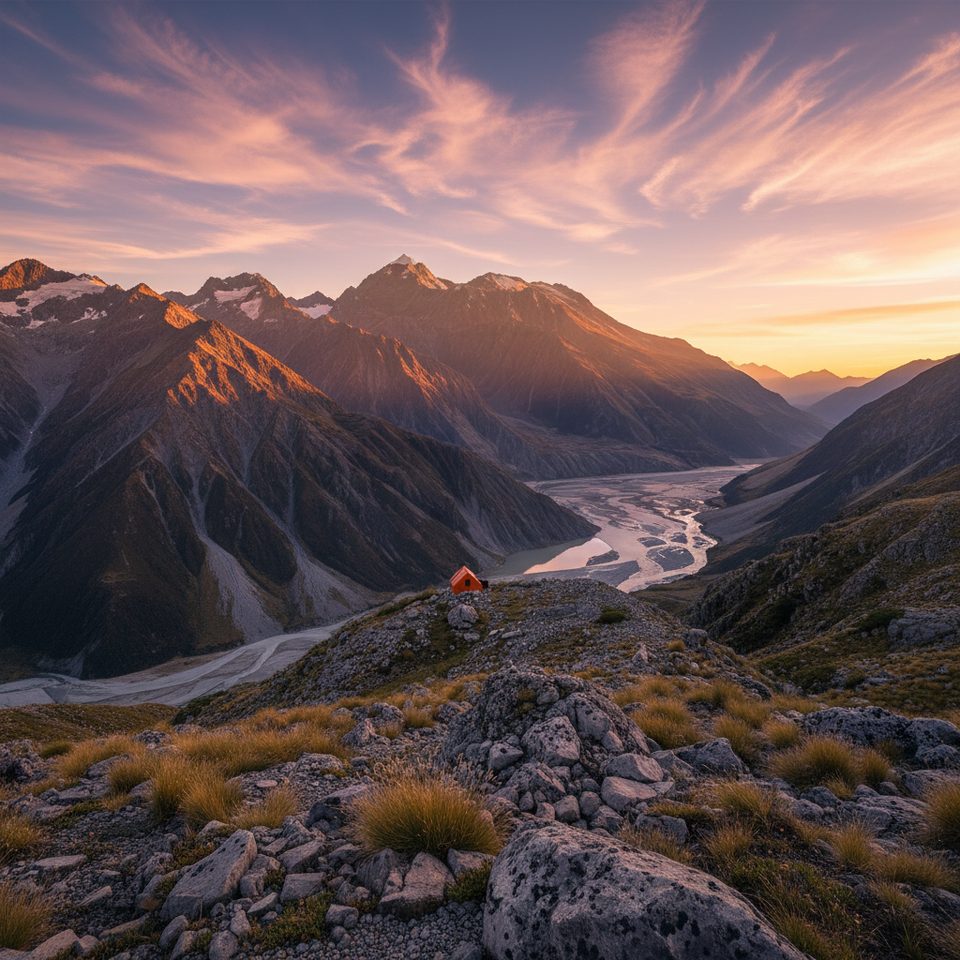
Ball Pass is Aoraki/Mount Cook’s classic alpine crossing—an unmarked, expert-only route that links White Horse Hill in the Hooker Valley to the Tasman/Blue Lakes car park. It’s about 18.44 miles (29.68 km) one way between trailheads and usually done in 2–3 days; very strong parties sometimes squeeze it into a very long day. Expect real mountaineering flavor: steep shingle, bluff systems, short snow/ice travel, and huge views of the South and Caroline Faces of Aoraki.
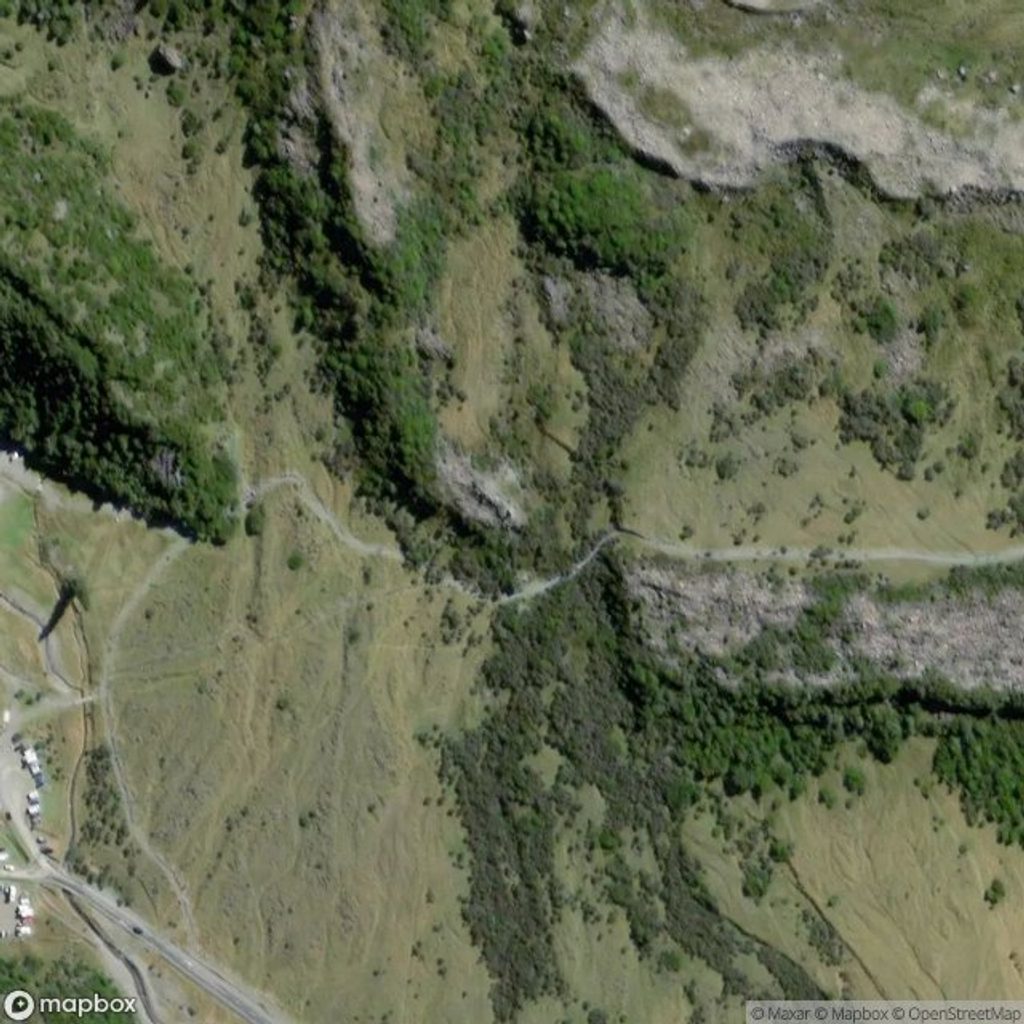
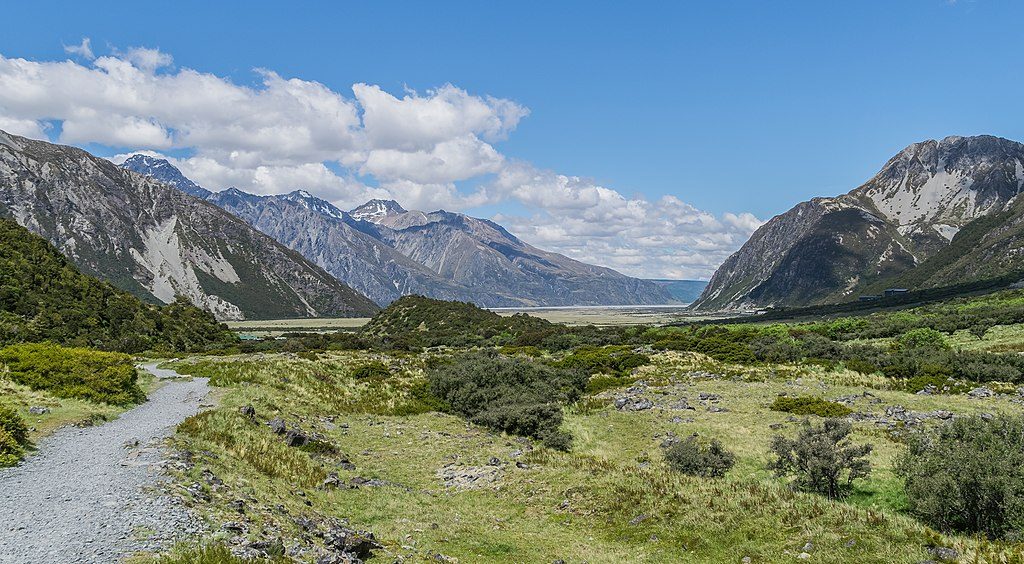
Most parties go clockwise: White Horse Hill → Hooker Valley Track → along the rougher East Hooker side → up the gully to the flat “Playing Fields” → a big Z-shaped climb through bluffs to reach snow/ice beside Ball Glacier → over Ball Pass → descend to Ball Ridge → past the private Caroline Hut area → down to Ball Flat/Ball Hut area → formed track to the Tasman/Blue Lakes car park. Segment times commonly quoted: 3–4 hr to the East Hooker shingle-fan camp; 1.5 hr to the Playing Fields; ~4 hr to the pass; ~2 hr to the Caroline area; ~2 hr to Ball Flat; 3–4 hr out to the car park. The two trailheads are roughly 10 km apart by road—walk, hitch, or arrange a shuttle.
DOC grades this as an Expert/Route. Navigation is on you, the terrain is exposed, and conditions change fast. The East Hooker side has slips/washouts and detours that slow travel. Below and near the pass you’ll deal with loose shingle, rock slabs, and rockfall zones (a helmet is smart). A short but consequential snow/ice section near Ball Glacier is typical; crampons and an ice axe are often needed, especially in spring/early summer. Avalanches are possible year-round. Water is scarce near the pass; plan to carry from below. Do not venture onto unstable moraine walls on the Tasman side. Sign in/out at the Aoraki/Mt Cook Visitor Centre and avoid poor weather—this route is no place to gamble.
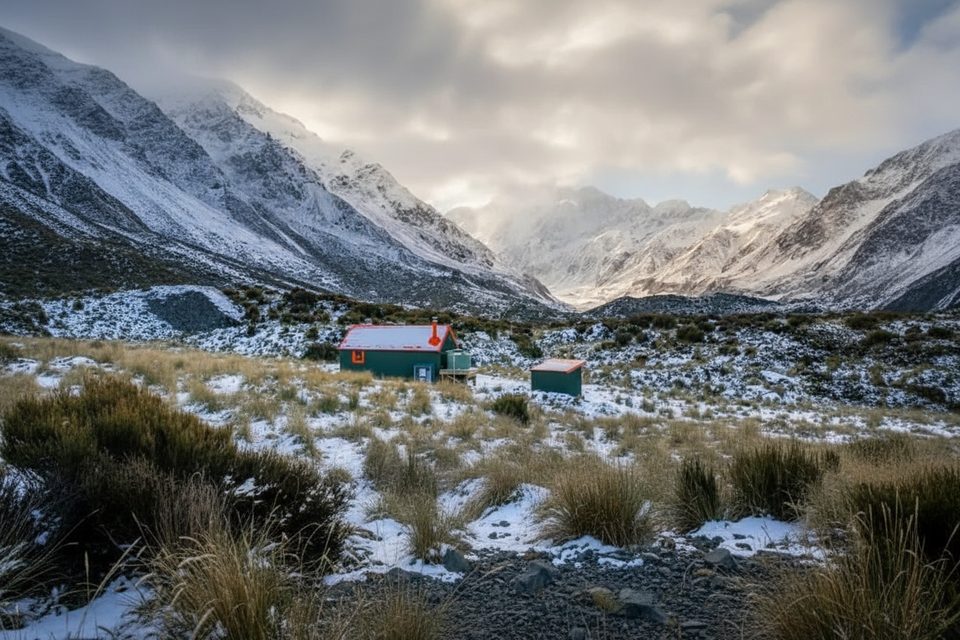
Wild camping is broadly allowed along the route (a rarity for a crossing this dramatic). Favored spots include the East Hooker shingle fan, the Playing Fields, just below the pass on the east side (no water), benches along Ball Ridge, and the Ball Flat area. Do not camp within 150 m of Caroline Hut. Ball Hut is a small, first-come DOC hut (3 bunks; small fee). Caroline Hut is private; there’s an attached emergency shelter but it is not for routine overnighting.
Late summer (roughly December–March) brings the least snow and the most stable footing, though snow/ice can linger on Ball Glacier even then. November commonly still requires traction and an ice axe. Build in weather margins—wind, cloud, or fresh snow quickly turn this from committing to foolish.
Beyond the headline ice and rock, keep an eye out for the alpine flora show in the East Hooker: giant buttercups (Mount Cook lilies) can bloom from late October to mid-November, along with snow tōtara and big white daisies. The traverse over Ball Ridge gives a front-row geology lesson—active slopes, lateral moraines, and the stark divide between the Hooker and Tasman glacier valleys.
If you’re comfortable moving efficiently on steep, loose alpine ground and have solid snow skills, this is one of the South Island’s most rewarding walk-ups. If you’re after a marked track, frequent water, and zero exposure, skip it—or consider a day mission from the Tasman side up Ball Ridge toward Caroline and back.
Carry a map/GPS and know how to use them; helmet, crampons, ice axe, and the skills to use them are commonly required. Warm/wet-weather layers and sun protection are essential. Water up before the pass. Both trailheads have parking; public transport reaches the village, and gear rentals are available in the area.
Park at White Horse Hill (Hooker Valley) or the Tasman/Blue Lakes car park; both offer free parking.
Unmarked expert route with exposure, rockfall, slips, and a short snow/ice crossing near Ball Glacier; avalanches possible year-round; water scarce near the pass; no camping within 150 m of Caroline Hut; avoid unstable Tasman moraine and do not attempt in poor weather.
Place · 0 mi away
Place · 0.1 mi away
Place · 0.1 mi away
Place · 0.2 mi away
Challenging · 0 mi away
Easy · 0 mi away
Easy · 0 mi away
Challenging · 0 mi away

Parkwolf Tour Guide
