
Place · 0.2 mi away
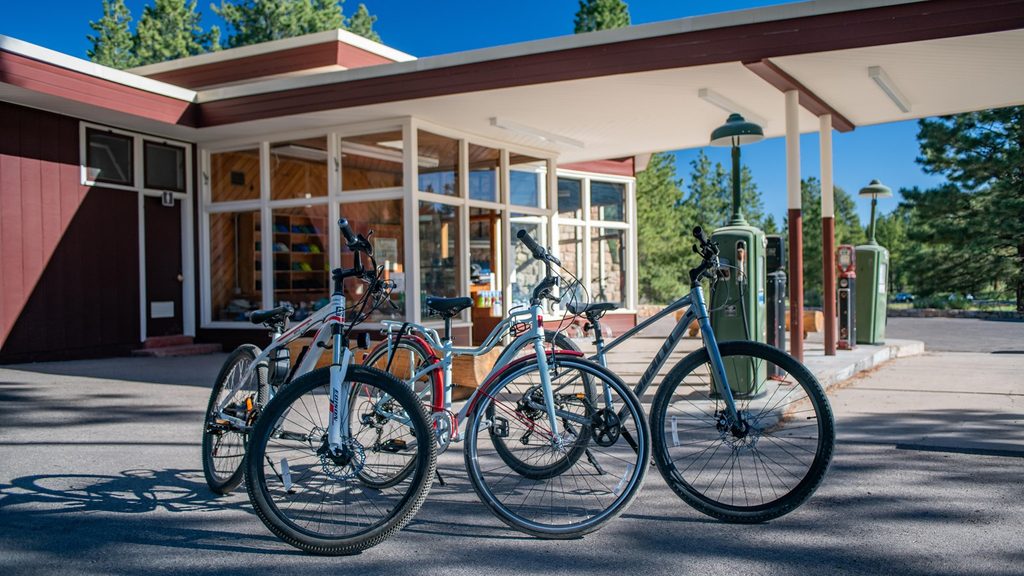
Tucked between the Lodge and Sunrise Point along the main park road, the Historic Service Station is a compact slice of postwar park history. Built in 1947 by the Utah Parks Company to serve the rising tide of automobile visitors, it stands out for its early Modern Movement design—flat roof planes projecting from a sweeping sandstone wall, lots of glass, and a simple canopy where the pumps once stood. It’s a small stop, but if you care about park architecture and how Bryce adapted to the car era, it’s catnip.
This was part of a trio of similar stations built for the region’s parks and foreshadowed the sleeker Mission 66 era. The structure is listed on the National Register of Historic Places (since 1995), and it reflects how Bryce pivoted from rail-based tourism to private cars. The Utah Parks Company assets in the park—including this station—were later donated to the National Park Service in 1972 after the company’s liquidation, tying it directly to the Lodge complex’s story.
This isn’t a wildlife hotspot, but its central location means you might spot mule deer or ravens passing through early or late in the day while you’re snapping photos.
Place · 0.2 mi away
Place · 0.2 mi away
Place · 0.2 mi away
Place · 0.2 mi away
Moderate · 0.2 mi away
Moderate · 0.2 mi away
Moderate · 0.2 mi away
Moderate · 0.4 mi away

Parkwolf Tour Guide
