
Place · 6.3 mi away
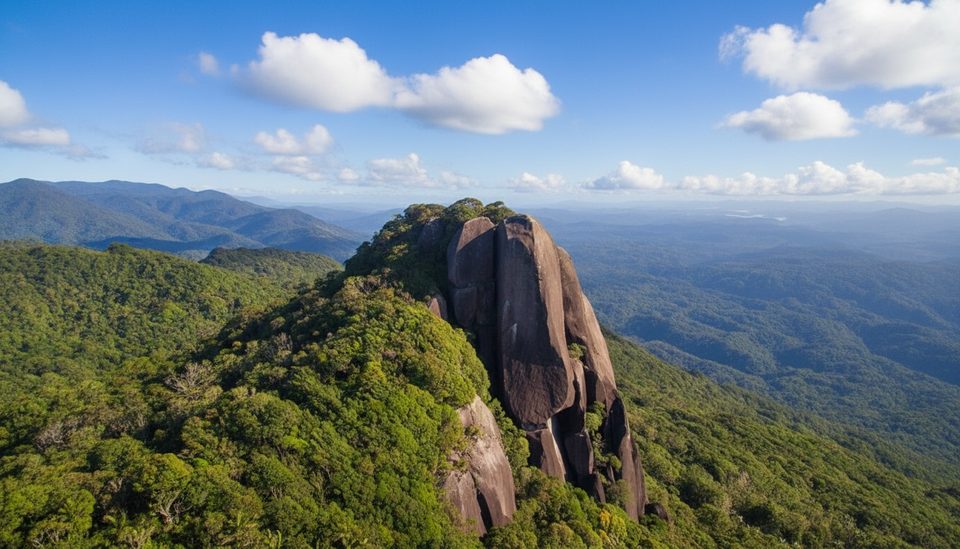
This is the Daintree’s big, bruising rainforest climb: a Grade 4, roughly 10.6 km return slog that earns you vast views over the coast and reefs when the weather plays nice. It’s a culturally significant Eastern Kuku Yalanji site, so stick to the formed track and tread respectfully.
The route punches straight up through ancient rainforest to a granite outcrop on the Thornton Range. As you gain height, the forest shifts—look for coral fern patches, native rhododendron and blue kauri near the top—and, on clear days, expect sweeping vistas toward Cape Tribulation and offshore islands.
Access is via Little Falls Creek in the Whyanbeel Valley (north of Mossman). You’ll park roadside near a cattle grid, then walk about 700 m to the signed start. From there the track climbs past Little Falls Creek to a coral fern opening, then Split Rock, before a lookout just below the ridge. Distance markers appear each kilometre, and there are often large, damp boulders near the top. A side stop at Karnak Falls offers a potential mid‑hike water refill.
Make no mistake—this is a tough ascent with sustained gradient. Expect slick roots and mud after rain. Leeches can be intense in the wetter months, and you’ll share the forest with stinging trees and lawyer vine (“wait‑a‑while”). Cassowaries are possible. Parts of the path can be faint and rely on ribbons and your own navigation. Near the final pinnacle there’s a fixed-rope traverse with real fall consequences—turn around if conditions or confidence aren’t right. Phone reception is generally poor until near the top.
Rangers realigned access and officially reopened the trail on 16 April 2025. Always check park alerts before committing to the hike.
Manjal Jimalji is a significant place for the Eastern Kuku Yalanji people. Keep to the track and avoid climbing onto culturally sensitive rock features; follow any onsite guidance or signs.
There are no toilets, water taps, or other facilities at the access or on the mountain, and there’s no camping. Plan a daylight out‑and‑back only. Start early, bring ample water (3–4 L per person), long sleeves, and a compression snake bandage.
Aim for the dry season (May–November) and clear-weather days for views. Start at first light to beat the heat, storms, and afternoon cloud that can smother the summit. Photography is best when morning light cuts across the coast; crowds aren’t an issue, but parking space is limited along the roadside.
Place · 6.3 mi away
Place · 6.3 mi away
Place · 6.5 mi away
Place · 6.8 mi away
Challenging · 2.8 mi away
Easy · 6.5 mi away
Easy · 13.6 mi away
Moderate · 13.8 mi away

Parkwolf Tour Guide
