
Place · 1.3 mi away
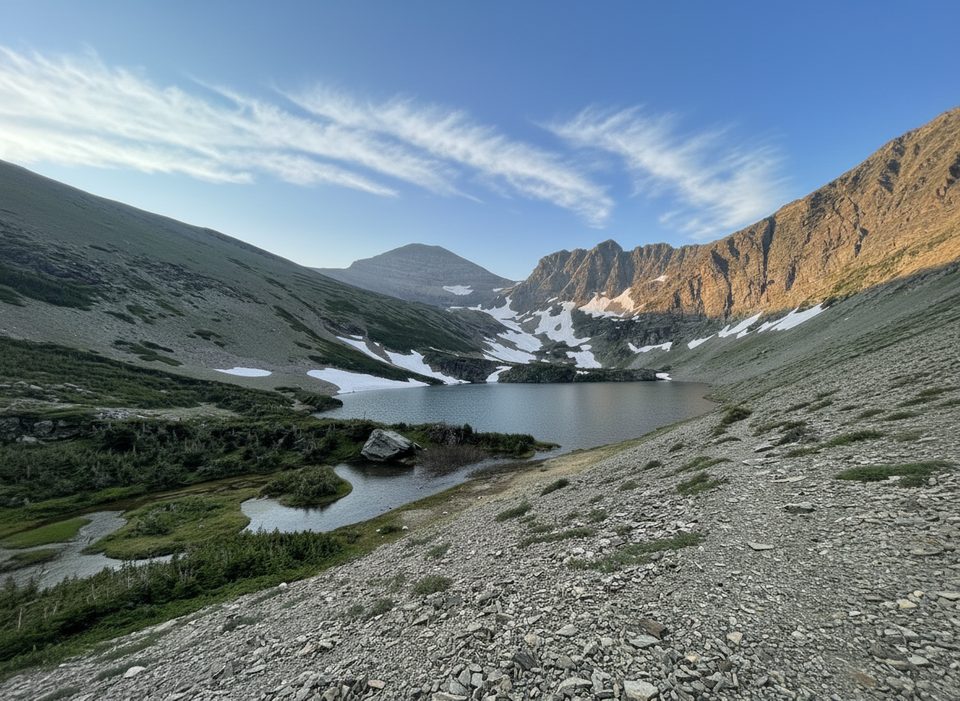
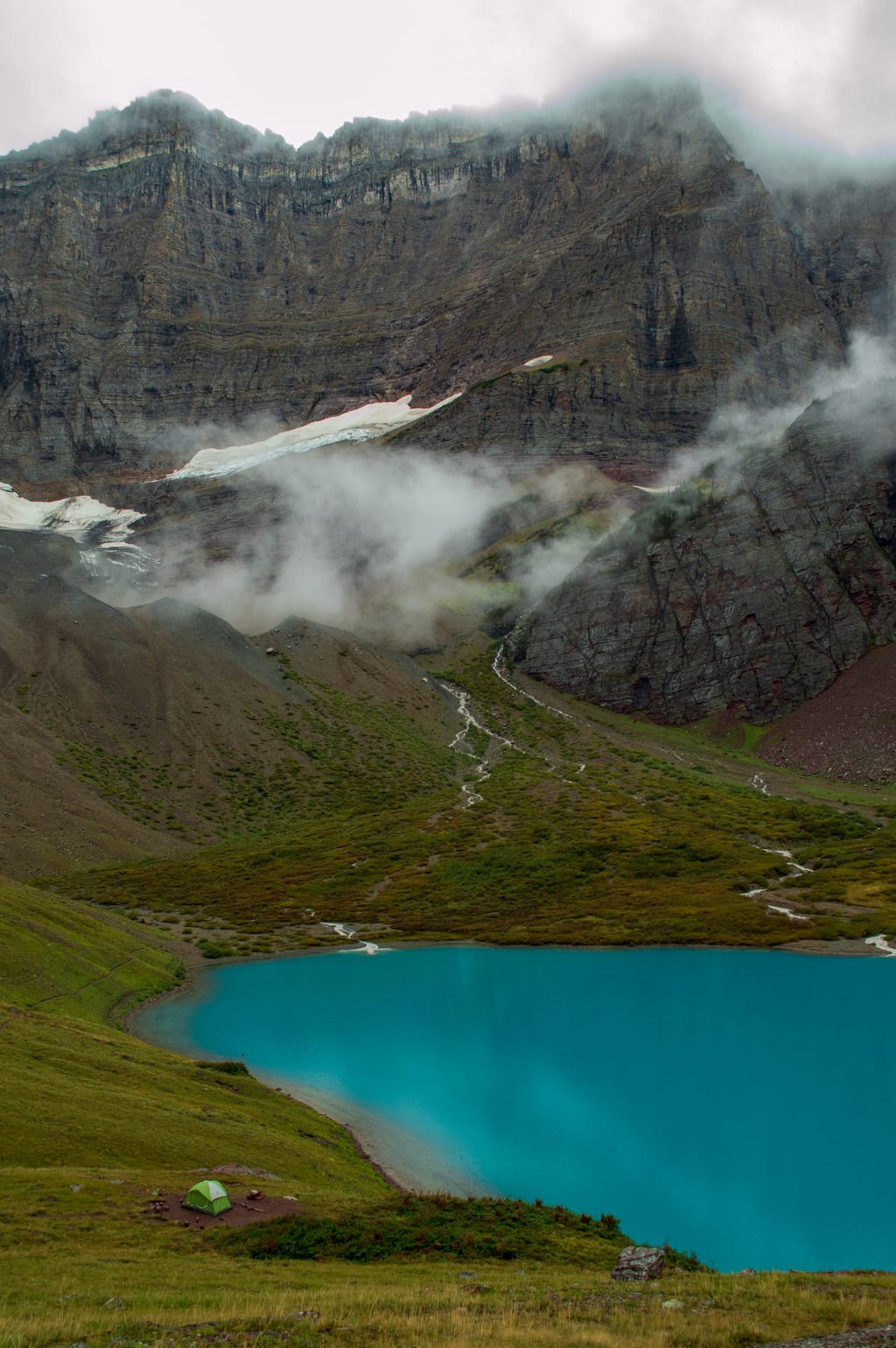
Snow Moon Lake is a tucked-away alpine tarn perched above the Many Glacier area. There’s no signed, maintained trail—reaching it is an all‑day, off‑trail scramble through talus and steep, rugged slopes. If you’re comfortable with navigation and loose rock, you’re rewarded with a quiet cirque basin that feels worlds away from the park’s busier front-country.
Think mountaineering-lite rather than a standard day hike: intermittent game paths, sidehilling, hands-on moves on stable-ish rock, and a whole lot of careful footwork across talus. It’s not technical, but it is committing. Plan your line in advance, give yourself a wide time buffer, and turn around if conditions or visibility deteriorate.
There isn’t a dedicated Snow Moon Lake trailhead or any facilities at the lake—no water, signage, or restrooms. Your bathroom and parking options depend on the established trailhead you use to begin the approach in the Many Glacier corridor. For 2025, day-hiker access into Many Glacier is supported by a reservation-based shuttle; always check the latest details before you go ([nps.gov](https://www.nps.gov/glac/planyourvisit/mg-construction-2025.htm)).
High-country travel here is highly seasonal. Early season brings lingering snow, variable water crossings, and occasional need for traction/ice axe on steep snow. By late summer, most snow hazards melt out, though afternoon storms can change that fast. In autumn, new snow can obscure your route, and daylight shrinks. Winter conditions render this a backcountry objective, not a summer trail. Always review current trail and area status, and expect mountain weather to flip the script on short notice ([nps.gov](https://www.nps.gov/glac/planyourvisit/trailstatusreports.htm); [nps.gov](https://www.nps.gov/glac/planyourvisit/conditions.htm)).
You’re in prime bear country. Make noise in brushy sections, carry bear spray where you can grab it instantly, and give wildlife space—at least 25 yards from most animals and 100 yards from bears and wolves ([nps.gov](https://www.nps.gov/glac/planyourvisit/conditions.htm)). Ptarmigan sometimes haunt these rocky basins, so step lightly and keep your eyes peeled among the talus.
Snow Moon Lake sits in a classic glacial cirque—a bowl carved by Pleistocene ice. These basins, now filled by meltwater to form tarns, are set in ancient Belt Supergroup rocks uplifted along the Lewis Thrust. It’s a front-row seat to the park’s glacial story and deep-time geology ([usgs.gov](https://www.usgs.gov/geology-and-ecology-of-national-parks/geology-glacier-national-park); [nps.gov](https://www.nps.gov/glac/learn/nature/glacial-geology.htm)).
Late August through early September usually offers the clearest paths and views after seasonal snow has melted. Start at dawn for the longest, safest daylight window and more stable morning weather. Midweek sees fewer people on the approach routes, but expect solitude regardless—this is well off the beaten path.
Place · 1.3 mi away
Place · 1.6 mi away
Place · 1.6 mi away
Place · 1.6 mi away
Moderate · 1.5 mi away
Challenging · 1.6 mi away
Moderate · 1.6 mi away
Challenging · 1.6 mi away

Parkwolf Tour Guide
