
Place · 0 mi away
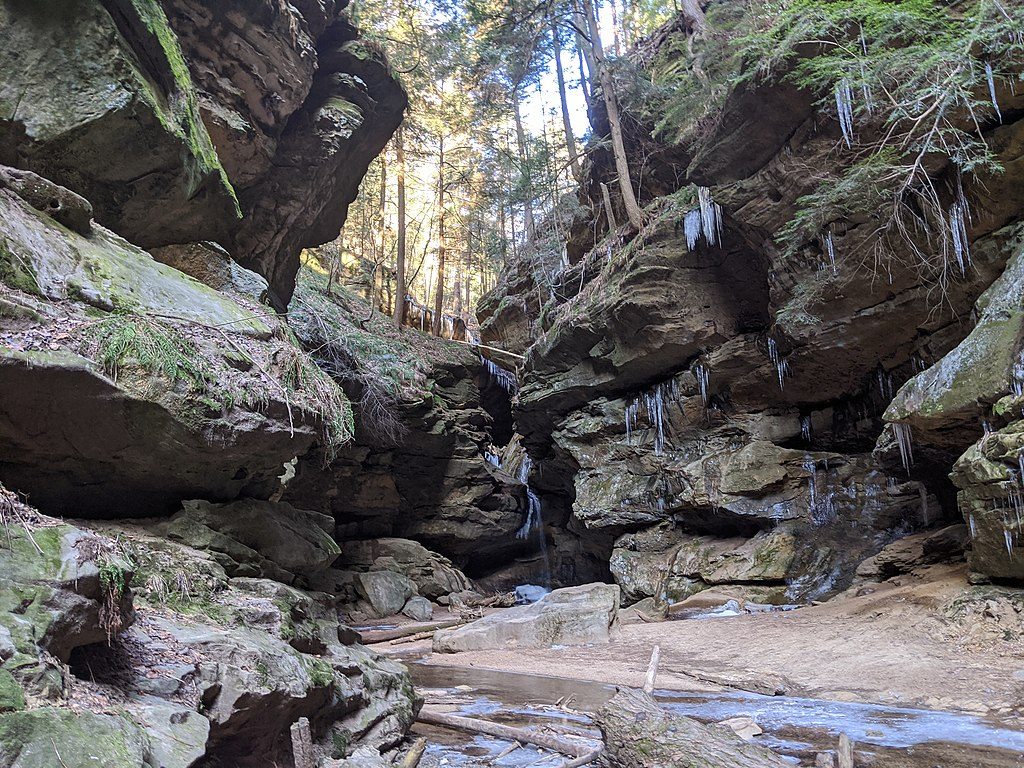
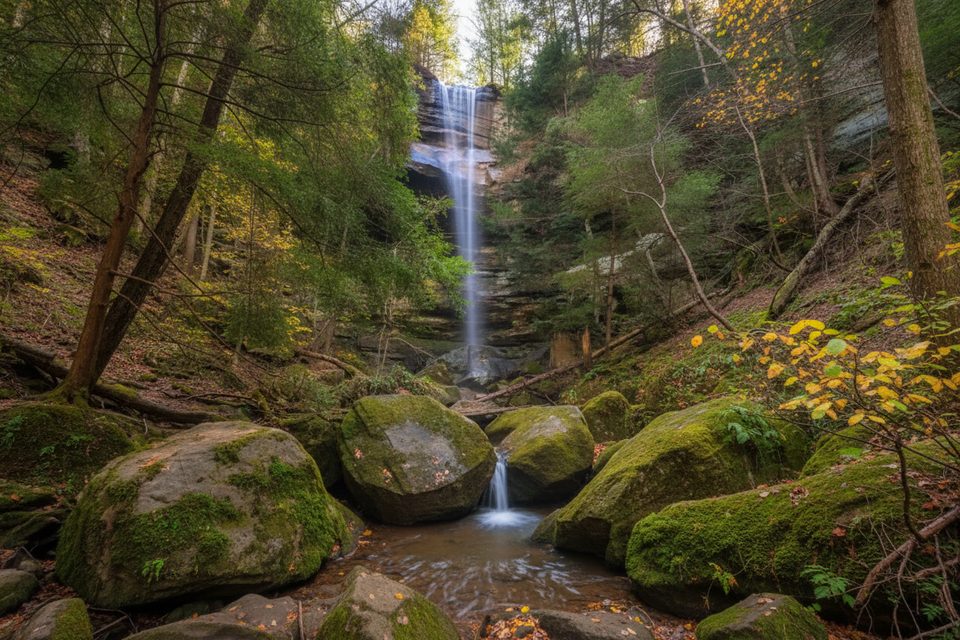
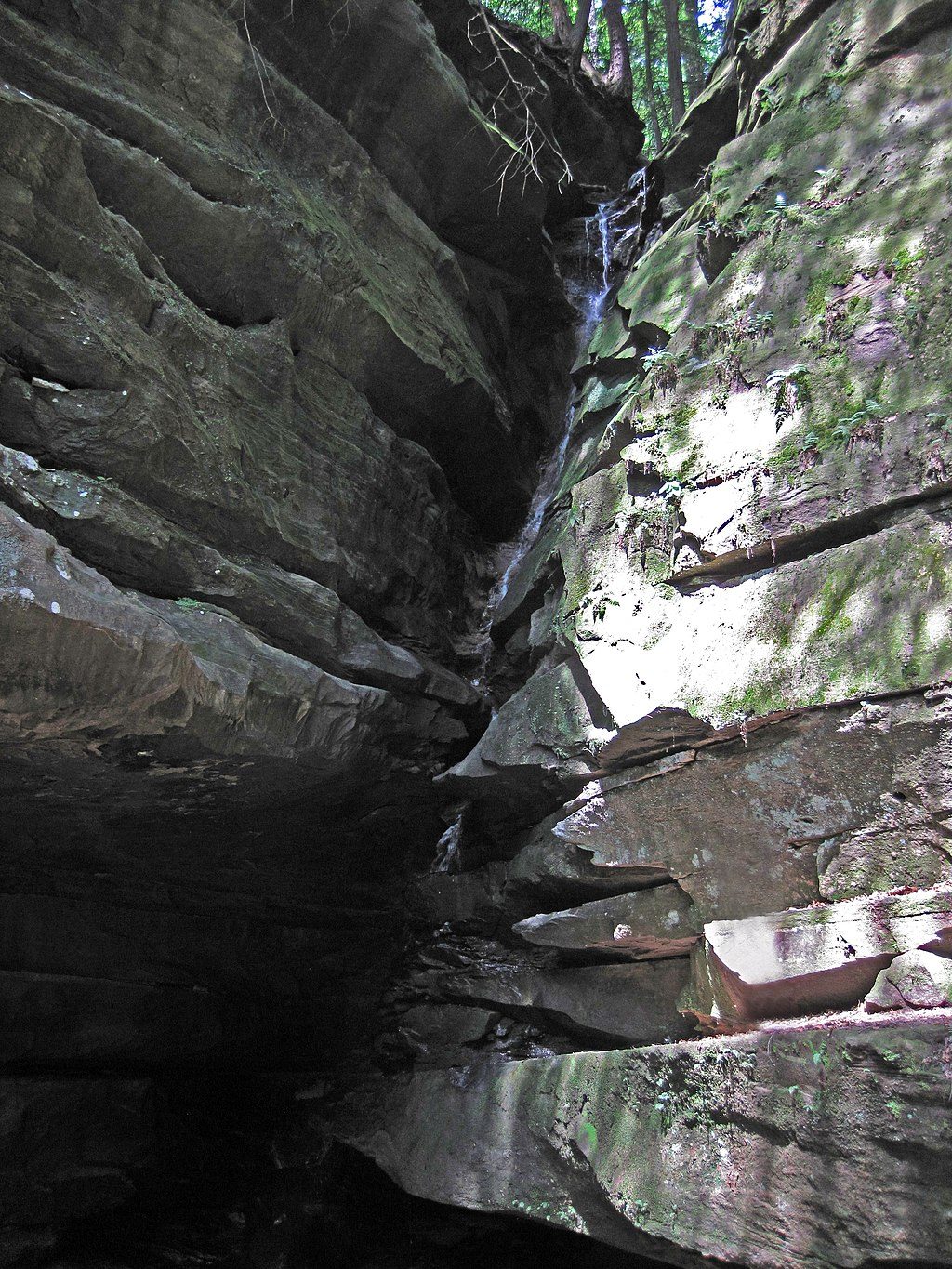
Conkles Hollow is the drama of Hocking Hills condensed: a deep, narrow gorge carved into Black Hand Sandstone, where sheer walls rise as much as 200 feet and the floor stays cool, lush, and green. It’s a separate state nature preserve dedicated to protecting sensitive habitats, which keeps it serene and a touch stricter than the surrounding park.
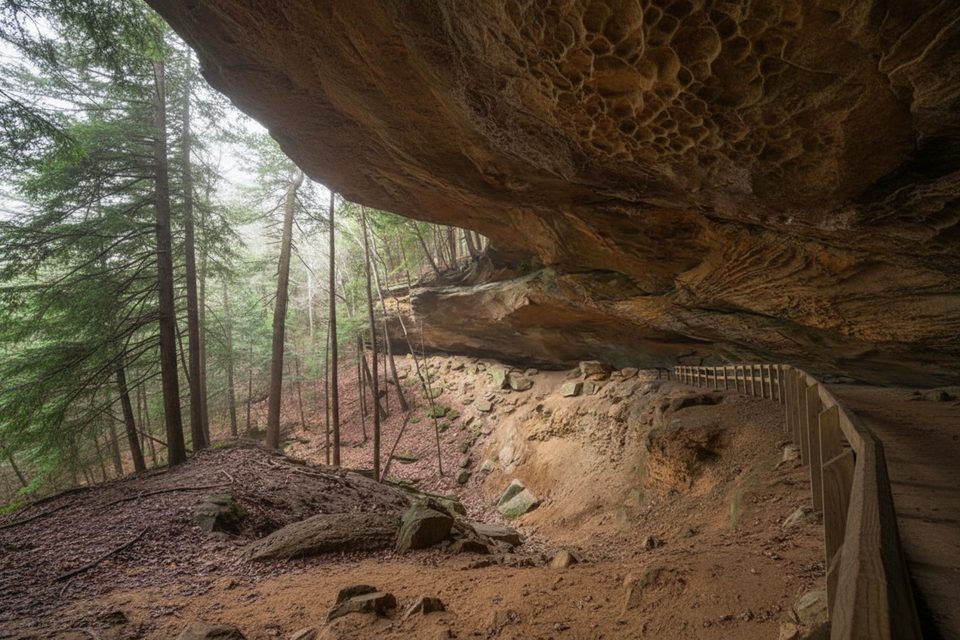
The celebrated Black Hand Sandstone—formed from ancient river deposits—shows off in layered cliffs, grottos, slump blocks, and mossy overhangs. Ferns, hemlock, and wildflowers thrive in the cool gorge microclimate, and you might spot small wildlife like chipmunks or even deer browsing near the trail after the day cools.
The site’s name traces to an early inscription by W. J. Conkle (“1797”) and its scientific value led the state to acquire land here in 1925; it was formally dedicated a state nature preserve in 1977. Erosion continues to sculpt the gorge, so staying on trail isn’t just a rule—it’s part of protecting a living, changing landscape.
This is a nature preserve: stay on designated trails and don’t enter the creeks or pools. Pets aren’t permitted, and the rim has unguarded drop‑offs—watch your footing and supervise kids closely. Surfaces get slick after rain or ice, and bridges can be slippery.
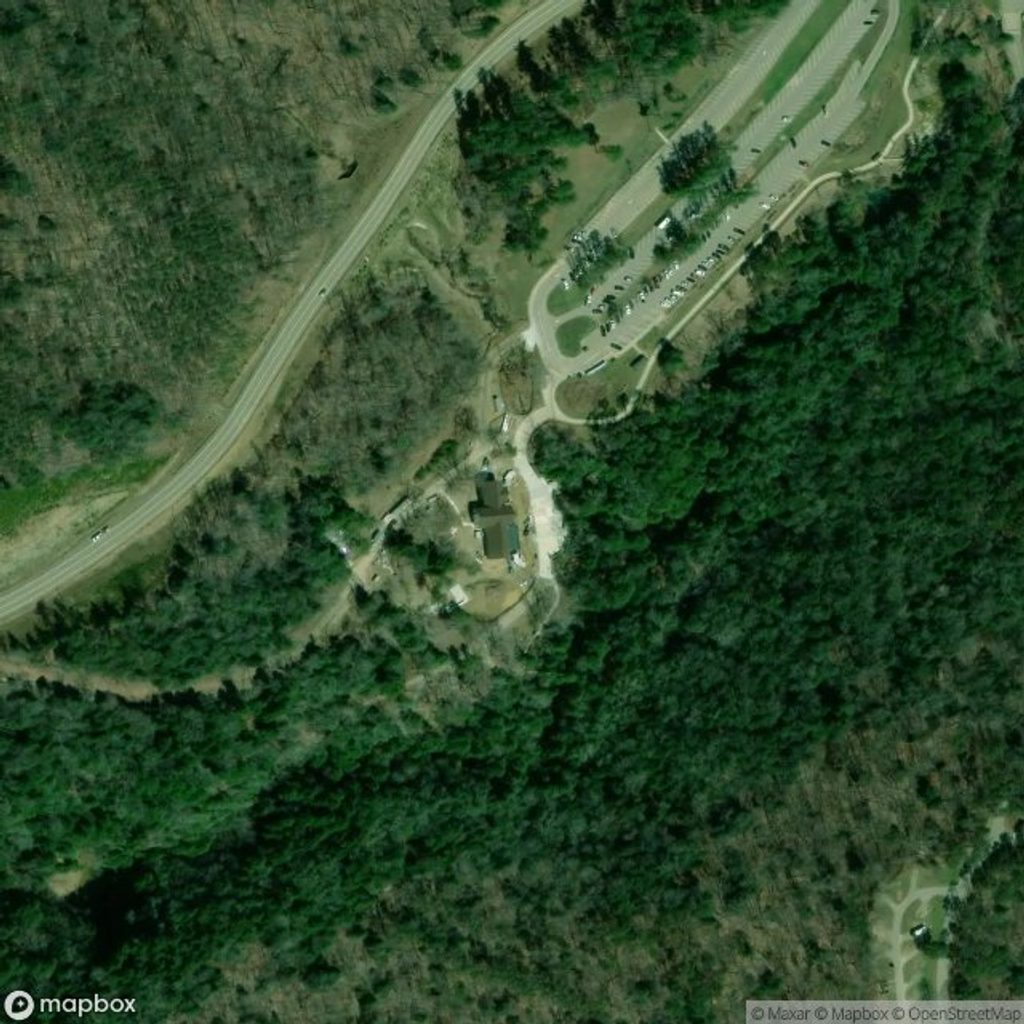
There’s an on‑site parking lot, restrooms near the entrance, picnic tables, and posted maps/waypoints at intersections to keep you oriented. The Gorge Trail’s paved sections make it one of the area’s easiest high‑reward walks; the last stretch to the falls is natural tread.
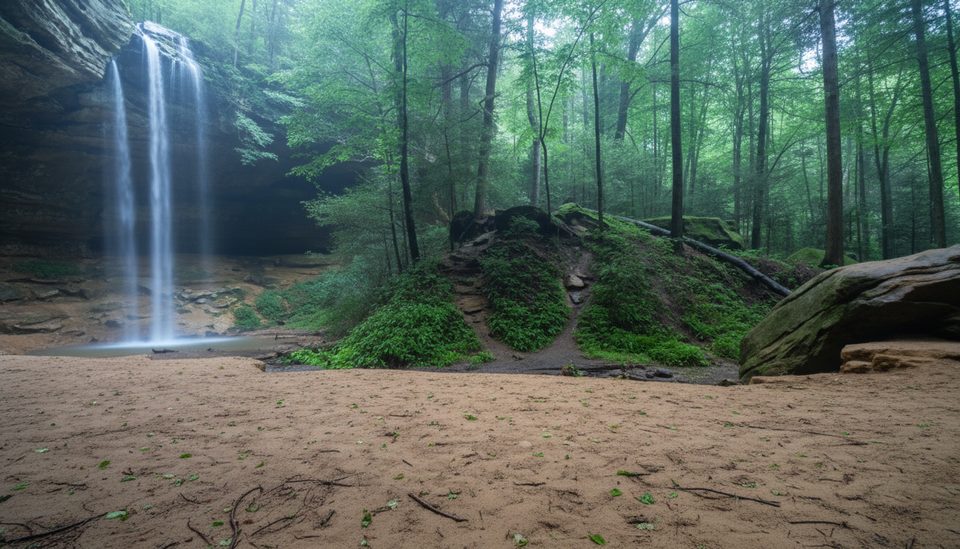
Go early or on weekdays to sidestep crowds and secure parking. The rim loop is best tackled in the cool of morning; the gorge glows beautifully in late‑day light. Spring wildflowers and fall color are prime seasons. For waterfalls, aim for spring or the day after a good rain—summer droughts often reduce flow to a trickle. Official hours run from a half‑hour before sunrise to a half‑hour after sunset.
Place · 0 mi away
Place · 0 mi away
Place · 0.5 mi away
Place · 0.6 mi away
Moderate · 2.1 mi away
Moderate · 2.1 mi away
Moderate · 2.1 mi away
Moderate · 2.1 mi away

Parkwolf Tour Guide
