
Place · 1.8 mi away
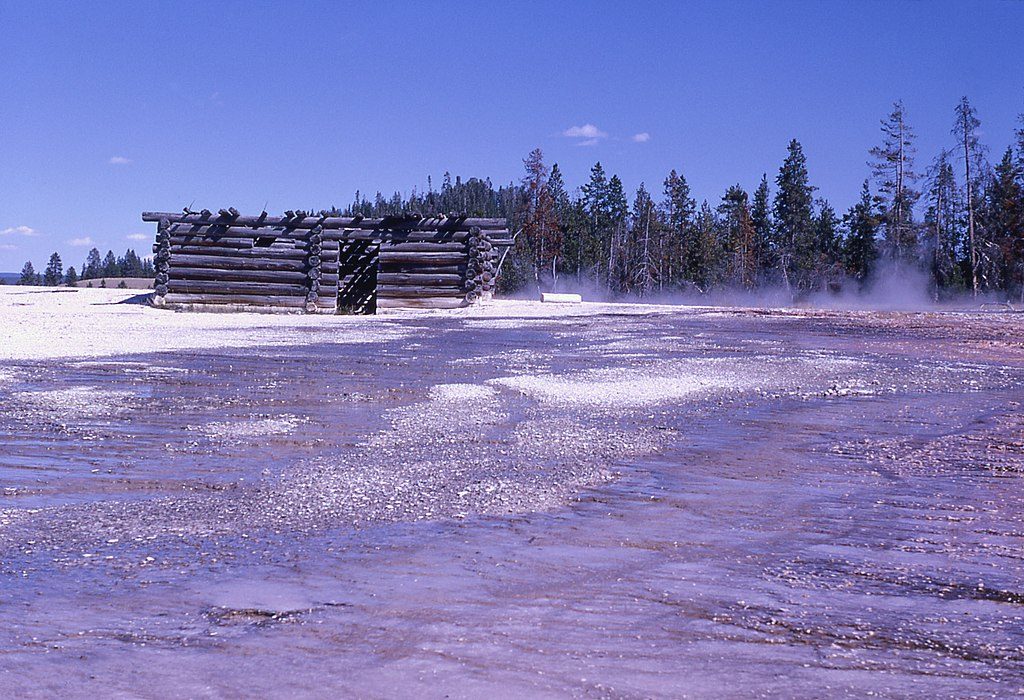
Tucked into Sentinel Meadows in the Lower Geyser Basin, the unfinished log “bathhouse” from 1881 is a time capsule of Yellowstone’s earliest days. Built under Superintendent Philetus Norris as a public bath facility, it was abandoned mid-project and slowly became mineral-impregnated by nearby hot spring runoff—a big reason it’s still standing.
It’s widely considered Yellowstone’s oldest surviving historic building and was the first federal structure intended for public use in any national park. The two-room cabin never fully opened, yet it tells a vivid story of the park’s early push to make hydrothermal features part of a public bathing experience—an idea long since retired.
Reach it via the Sentinel Meadows route from the end of Fountain Flats Drive (between Madison Junction and Old Faithful). Expect mostly flat walking through big, open meadows with thermal features along the way. A popular family-friendly loop is about 5.4 miles from the Fountain Flats/“Freight Road” trailhead. The site itself sits roughly two miles from the nearest road and the official trail passes within about 500 yards of the structure.
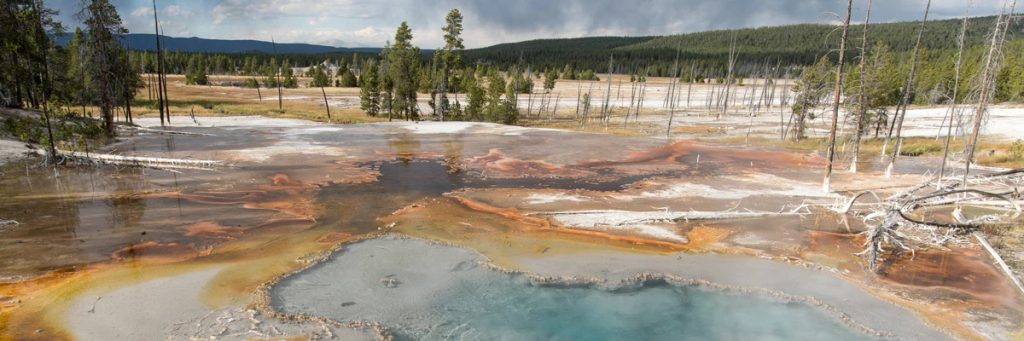
Beyond the weathered cabin, you’ll cross broad grasslands punctuated by steaming vents and springs. The approach showcases features like Ojo Caliente and other cones and mounds—classic Lower Geyser Basin textures without the boardwalk crowds.
This meadow complex regularly hosts bison and attracts birds like sandhill cranes, hawks, and herons. Deer and ravens are common, and hikers have noted wolf tracks on occasion. Give all wildlife a wide berth and expect to reroute briefly if bison are on the trail.
Stay on the designated trail—thermal ground can be thin and dangerous, and it’s illegal to leave the path in hydrothermal areas. Admire the bathhouse from a distance; do not enter or touch it. There are no services here: no water, shelter, trash cans, or restrooms. In backcountry zones, follow park food-storage rules, keep campfires only in designated sites, and leave what you find.
Mornings are cooler, quieter, and better for wildlife. Summer afternoons can be hot with little shade and occasional storms; shoulder seasons feel more tranquil. After wet weather, expect muddy sections in the meadows. Always check for area or thermal-closure notices before you go.
Place · 1.8 mi away
Place · 2.1 mi away
Place · 2.2 mi away
Place · 2.2 mi away
Moderate · 2 mi away
Easy · 2.9 mi away
Easy · 3.3 mi away
Easy · 3.7 mi away

Parkwolf Tour Guide
