
Place · 0.1 mi away
Challenging
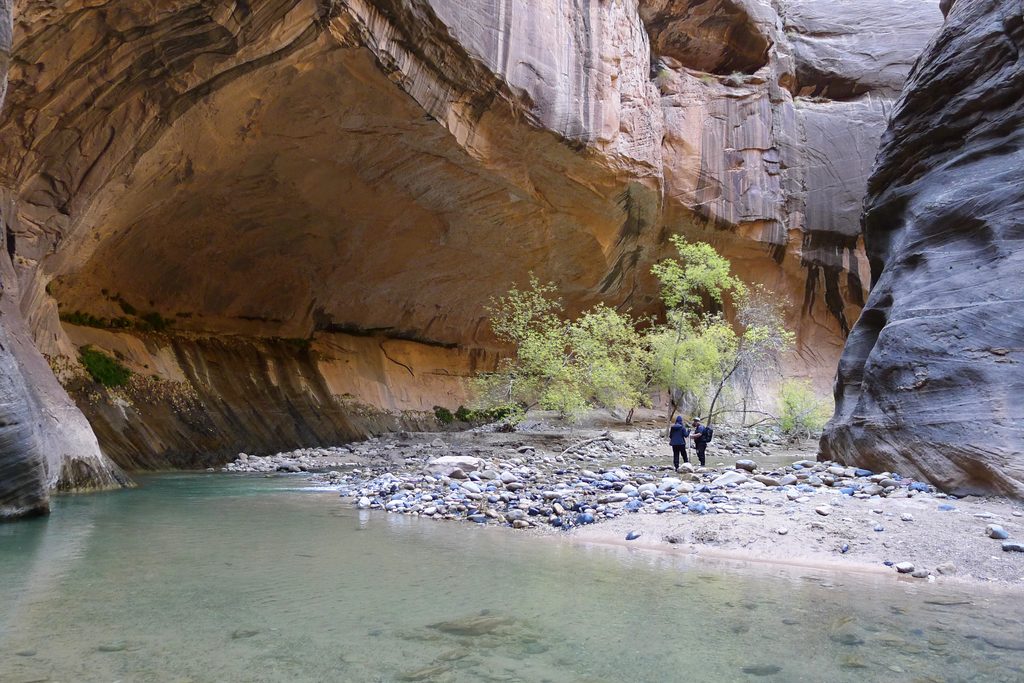
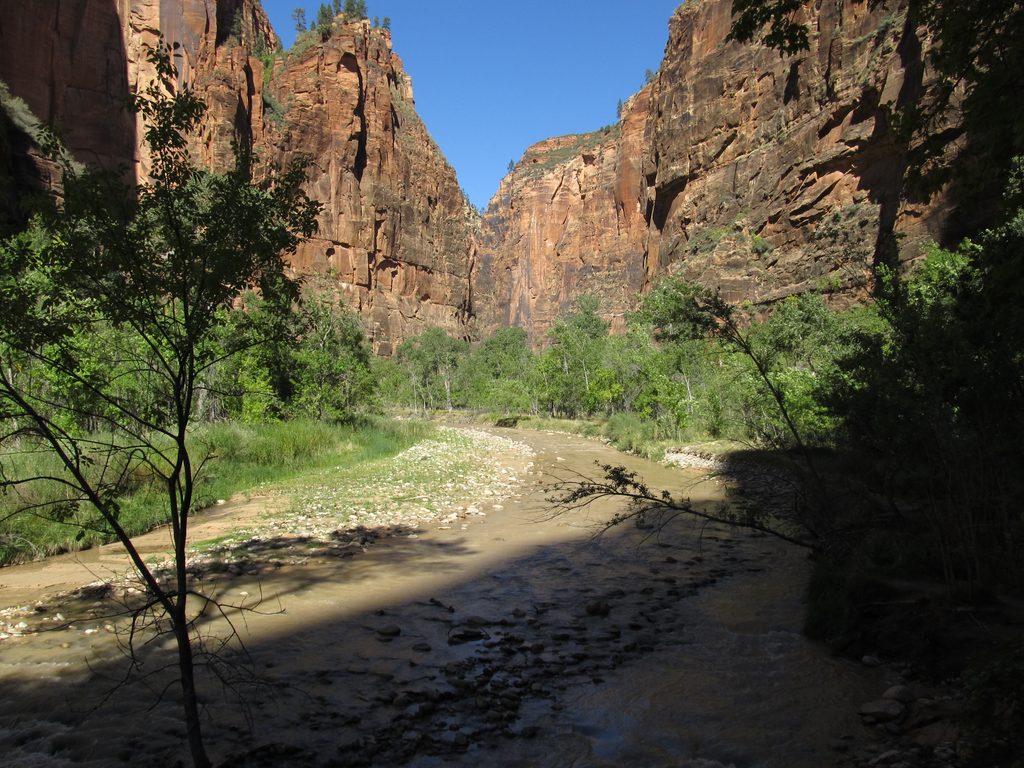
This is Zion’s signature river hike: you’ll leave the pavement of the 1‑mile Riverside Walk at the Temple of Sinawava and step straight into the Virgin River. From there, you wade upstream through a corridor that narrows to 20–30 feet across while cliffs rise hundreds to thousands of feet above. Expect slick, uneven rocks underfoot, current pushing at your legs, and water depths that can range from ankle to chest depending on conditions.
Most hikers do this Bottom‑Up as an out‑and‑back with no permit required. Go as far as you like and turn around. The formal turnaround is Big Spring, making the full effort about 10 miles total for the day. Plan your turnaround by time (half your day out, half back), not by mileage—the river makes progress slow and variable.
Sheer sandstone walls, sinuous bends, and beautiful reflected light reward you almost immediately—there’s no “boring approach.” As you push farther, crowds thin and the canyon feels more immersive. The canyon stays cool even on hot days, which is glorious in summer but can chill you quickly if you’re wet and unprepared.
Summer through early fall generally brings warmer water and lower flows, making travel easier. Mid‑to‑late summer also overlaps with monsoon season, so you must watch the flash‑flood forecast closely. Spring snowmelt can raise flows high enough to close the route. Winter and early spring are cold and often require full cold‑water protection; only experienced, well‑equipped hikers should consider it then.
Park at the Zion Canyon Visitor Center and ride the free shuttle to Stop 9 (Temple of Sinawava). Restrooms are at the trailhead; there are none in the canyon. Start early to beat crowds and to give yourself daylight for a safe return. Set a hard turnaround time so you don’t miss the last shuttle.
Wear sturdy closed‑toe footwear that handles hours in water, plus insulating (non‑cotton) layers. A stout hiking stick or strong trekking poles are a game‑changer for stability on slick rocks. Pack a small dry bag for warm layers, food, and electronics. In cooler seasons, neoprene socks and dry pants/bibs (or a dry suit in winter) help prevent dangerous chills.
Conditions drive difficulty. Under roughly moderate flows, expect frequent knee‑ to waist‑deep wading; as flows rise, the current strengthens and pools deepen. The route closes if river flow exceeds a preset threshold or any flash‑flood warning is issued. Check the day’s flow and weather before stepping in. Toxic cyanobacteria occur in the Virgin River—do not drink untreated river water; if you must refill, use springs and properly filter/treat. There are no bathrooms—use facilities at the trailhead and pack out all waste. Bottom‑Up travel must turn around at Big Spring, and upstream travel into side canyons like Orderville is limited.
If you’re comfortable moving on uneven, submerged terrain and can commit to careful footwork all day, this is a bucket‑list experience. If you want a dry trail, try the paved Riverside Walk to the river’s edge or pick a different hike. Go prepared, start early, and you’ll understand why this one is legendary.
Park at the Zion Canyon Visitor Center and ride the free shuttle to Temple of Sinawava (Stop 9). Restrooms at trailhead; none in the canyon.
Flash floods are a serious hazard; the route closes during warnings or high flows. Difficulty increases rapidly with rising CFS. Expect slick, uneven footing and cold water. Do not drink from the river due to cyanobacteria. No bathrooms—pack out all waste. Bottom‑Up hikers must turn around at Big Spring and are limited to short distances in side canyons.
Place · 0.1 mi away
Place · 0.1 mi away
Place · 0.4 mi away
Place · 0.6 mi away
Easy · 0.1 mi away
Challenging · 1.8 mi away
Challenging · 1.8 mi away
Challenging · 1.8 mi away

Parkwolf Tour Guide
