
Place · 0.2 mi away
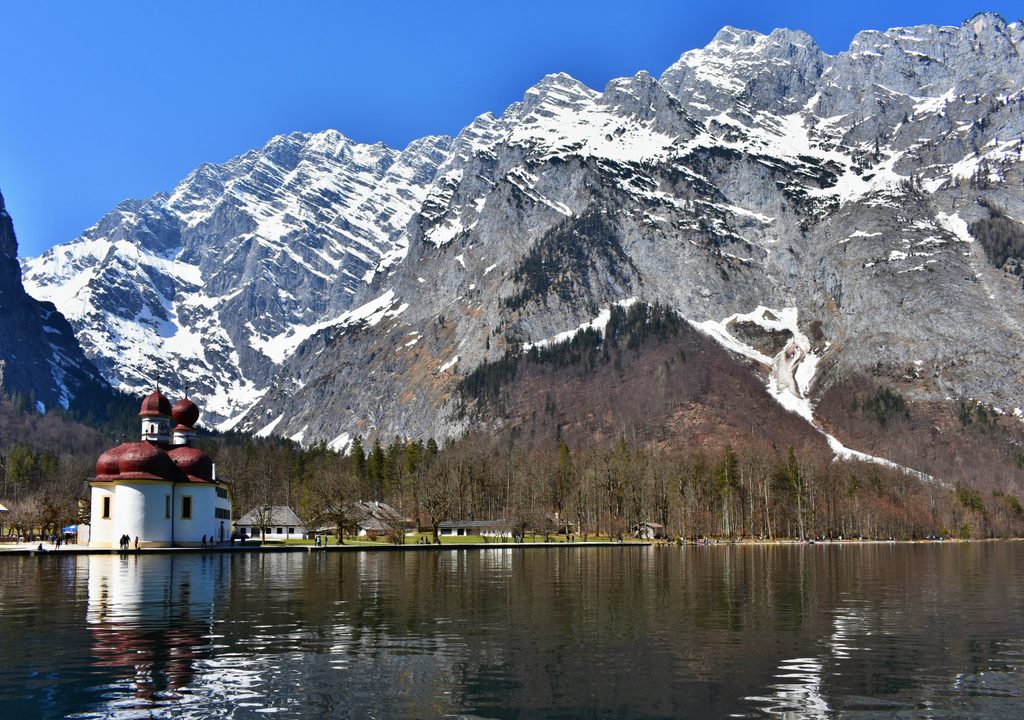
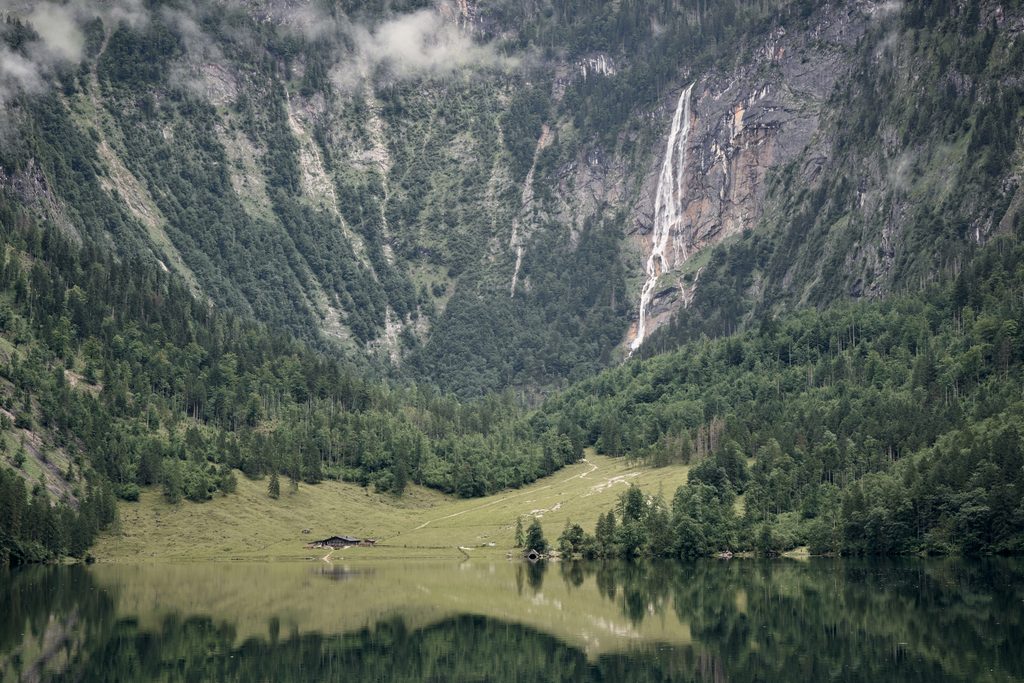
The Watzmann Ostwand rockets almost 1,800 meters straight up from the shores of Königssee—often cited as the longest wall in the Eastern Alps. It’s big, beautiful, and unforgiving: the easiest lines hover around UIAA III, but the real challenge is the length, exposure, and weather. If you’re dialed for long limestone, it’s a lifetime route; if not, pick something shorter.
Most teams park at the Königssee lots, ride the boat to St. Bartholomä, then hike toward the Hirschau peninsula to reach the base. Starting the day before and overnighting at St. Bartholomä is a common tactic for a pre‑dawn start. Facilities exist at the dock and around St. Bartholomä during operating hours, but you cannot count on anything before first light.
Expect a labyrinth low down and wet rock if you’re moving before sunrise. Early on, the Feuchte Platte (Damp Slab) gives a short stiff move; higher, the Wasserfallwand brings slabby traversing with running water. The Gipfelschlucht gully tempts you into a harder direct line—resist and keep to the intended easier way. The final Ausstiegskamine (exit chimneys) serve up sustained UIAA II–III climbing with a brief III+ step just below the ridge. Time on the technical climbing can be around 6 hours for efficient parties, but door‑to‑door days often stretch to 13 hours or more. An orange bivouac box sits high on the route for emergencies only.
Topping out on the main summit, many continue the Watzmann ridge over Mittelspitze and on to Hocheck. Parts are cable‑protected and commonly treated as a Klettersteig; a via ferrata lanyard is standard for many parties. The long descent typically runs past Watzmannhaus and onward to lower huts or back toward Königssee/Wimbachgries.
Prime season is summer—think June to September in stable weather—yet storms can sneak in fast. Objective hazards include rockfall, ice patches on the ridge, and complex navigation; there’s a well‑documented history of serious accidents. The Eiskapelle below the face has been historically dangerous and even collapsed in 2025—don’t enter or linger beneath unstable ice. Once you leave St. Bartholomä, you’ll find no toilets or dependable water on the wall. The national park prohibits camping and bivouacking outside designated facilities.
Aim for a stable‑weather window June–September. Plan a pre‑dawn start—either catch the first boat or sleep at St. Bartholomä the night before. Verify boat schedules and be ready to turn around if conditions deteriorate.
Place · 0.2 mi away
Place · 0.4 mi away
Place · 0.7 mi away
Place · 1.3 mi away
Challenging · 2.5 mi away
Challenging · 2.5 mi away
Moderate · 2.5 mi away
Easy · 3 mi away

Parkwolf Tour Guide
