
Place · 0.5 mi away
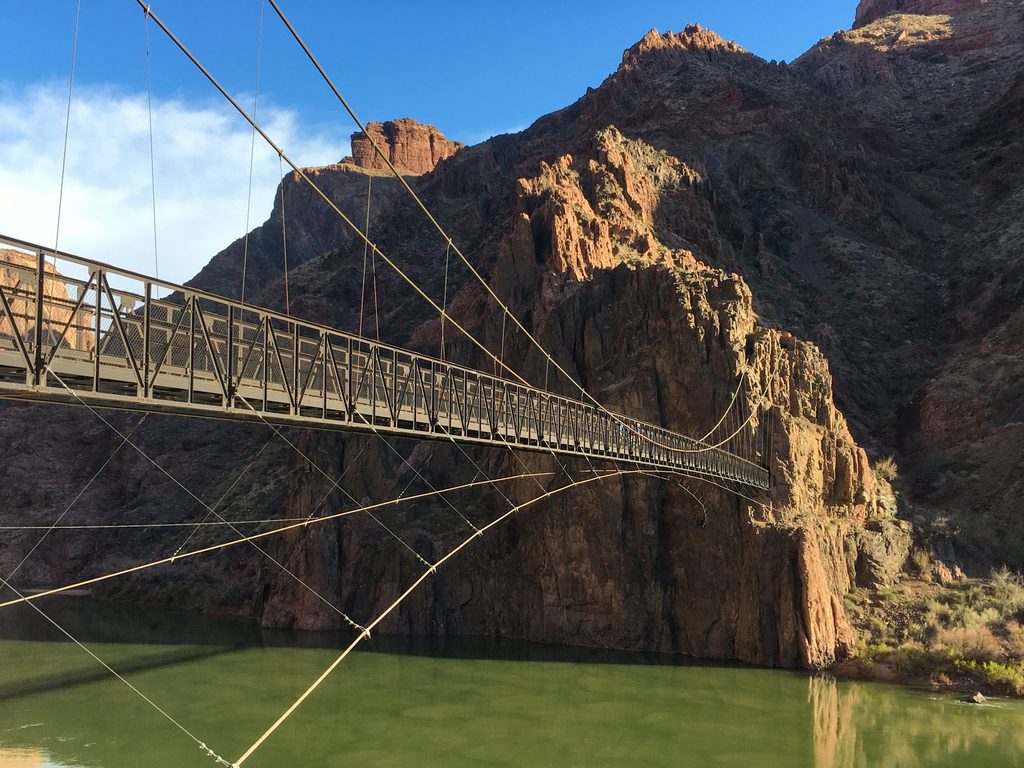
Deep in the inner canyon near Phantom Ranch and Bright Angel Campground, the Kaibab Suspension Bridge—aka the Black Bridge—spans the Colorado River and ties the South Kaibab and North Kaibab Trails together. It’s the moment you meet the river on a rim‑to‑rim route, and the setting is electric: sheer walls, roaring water, and a piece of living park history beneath your boots.
Built in 1928, this 440‑foot single‑span suspension bridge was engineered for extreme remoteness—every component small enough to be packed in by people or mules. At the time, it was the only Colorado River crossing for 754 miles. Even today, aside from a second suspension bridge about a half‑mile downstream, there isn’t another physical crossing for roughly 340 miles between Navajo Bridge and Hoover Dam. It’s also a designated historic civil engineering landmark, and plaques commemorate its significance.
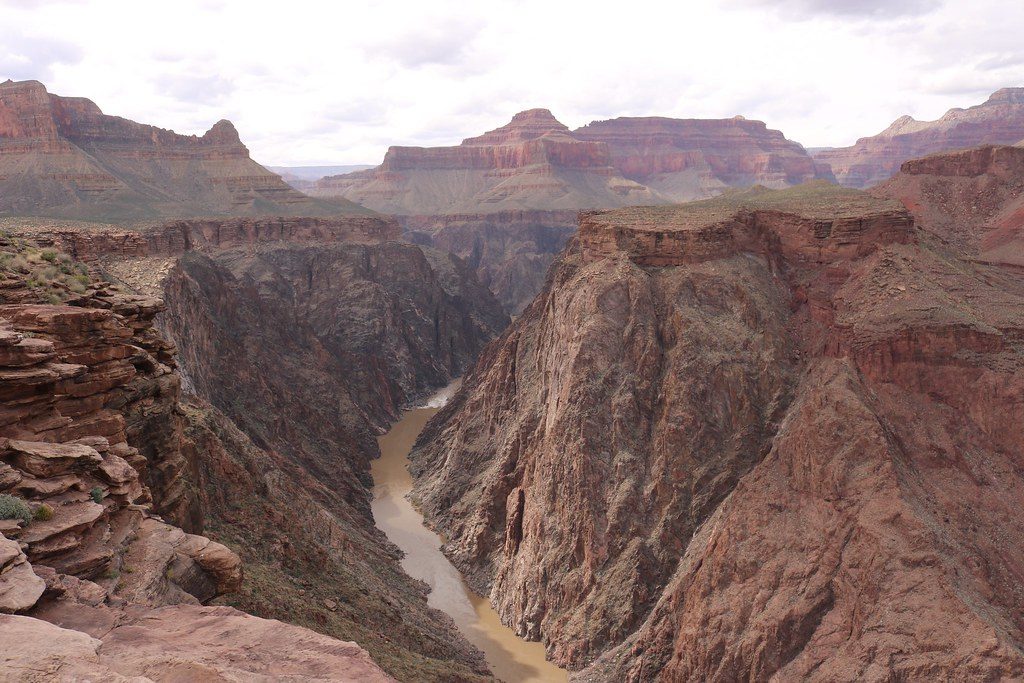
From the deck you get head‑on drama: the Colorado River churning far below—emerald or muddy depending on conditions—and billion‑year rock stories rising around you. Expect mule trains headed to Phantom Ranch, backpackers bound for the North or South Rim, and a bridge that still feels stout and purposeful nearly a century after it was built.
There’s no driving to this one. It’s a strenuous 7‑ish miles down the South Kaibab Trail from the South Rim, or about 14 miles from the North Rim via the North Kaibab Trail. Many hikers cross as part of rim‑to‑rim itineraries; roughly 100,000 people traverse the bridge each year.
Keep an eye out for bighorn sheep, mule deer, lizards, ravens, and the occasional California condor riding canyon thermals. Mule trains are common—give them space and enjoy the classic canyon scene.
A wobbly 1921 predecessor couldn’t keep up with traffic or storms, so the current bridge was purpose‑built in 1928 to be stronger, safer, and feasible to construct in such a remote place. It’s remained largely unchanged ever since—part engineering feat, part cultural touchstone for Grand Canyon backcountry travel.
There are no facilities at the bridge itself. Summer heat at river level can be extreme, and the climb back to the rim is the real challenge. The bridge’s open grating can feel airy; take your time if heights bother you. Missing this crossing isn’t easily fixed—detours between river bridges are long.
Sunrise and sunset light the inner canyon beautifully, and cooler months make the approach far more comfortable. In warm seasons, start early, cross during the cooler parts of the day, and save the scenic lingering for shade.
Place · 0.5 mi away
Place · 0.7 mi away
Place · 1.4 mi away
Place · 1.6 mi away
Easy · 2.9 mi away
Easy · 3.6 mi away
Easy · 3.7 mi away
Easy · 4.7 mi away

Parkwolf Tour Guide
