
Place · 1.2 mi away
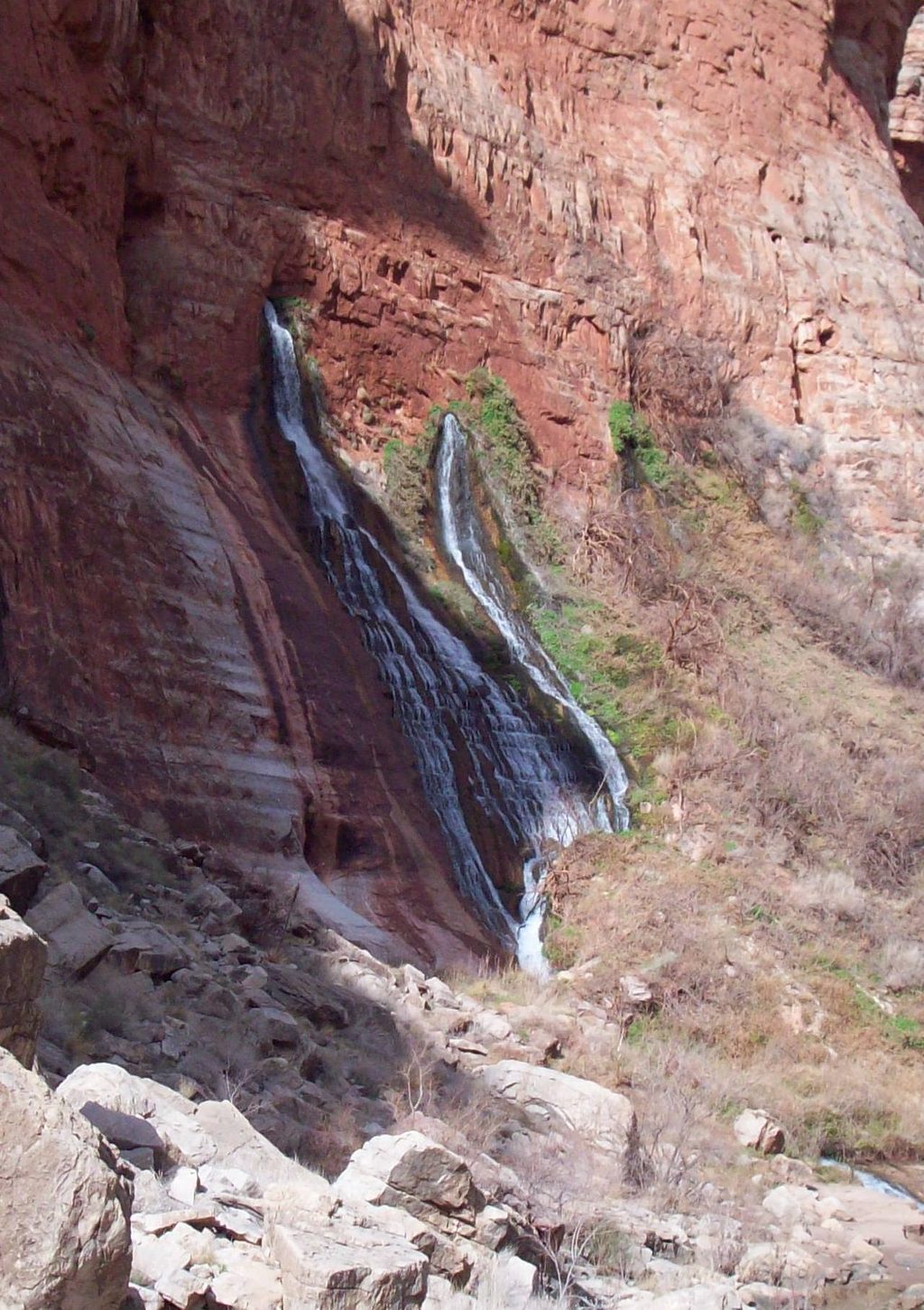
About 30–32 river miles below Lees Ferry, Vaseys Paradise explodes out of the Redwall Limestone in a sudden gush, draping the cliff in ferns and bright greenery. It’s the classic Grand Canyon river‑trip moment when the desert turns unexpectedly lush.
Water pours directly from the canyon wall into the Colorado, feeding a vivid patch of vegetation at the base—think golden columbine, crimson monkeyflower, and lots of green against pale stone. The immediate spring area can feel cool and shaded compared to the river corridor.
This is a karst spring: groundwater from the North Rim travels through fractures and conduits in the limestone and emerges here in a perennial cascade. Flows spike in wet years—especially late spring after high snowpack—so the show can vary with the season and the year.
The oasis is critical habitat for the endangered Kanab (Niobrara) ambersnail, alongside a suite of invertebrates. That sensitivity is why most trips admire it from the water or tread very lightly if they step ashore. Also: poison ivy is abundant.
Most visitors see Vaseys Paradise from a raft; it’s an early highlight on Grand Canyon river trips. Shore access exists but is often brief and cautious due to dense vegetation and the protected habitat. There are no developed facilities here—no restrooms, no trailhead, no camping—so plan to look, learn, and leave it pristine.
John Wesley Powell named the spot in 1869 for botanist George Vasey (who never actually saw it). Geologically, it’s a textbook Redwall Limestone spring, a window into the canyon’s hidden plumbing where ancient groundwater pathways meet the modern river.
Place · 1.2 mi away
Place · 8.4 mi away
Place · 9.1 mi away
Place · 13.5 mi away
Easy · 16.3 mi away
Easy · 19.9 mi away
Moderate · 22 mi away
Moderate · 22 mi away

Parkwolf Tour Guide
