
Place · 0.9 mi away
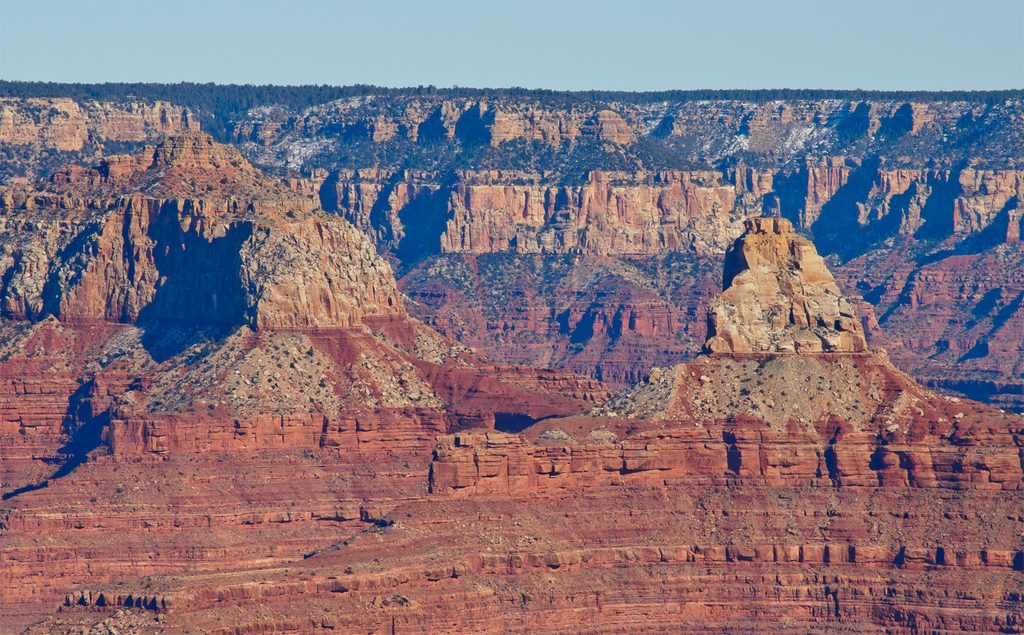
Zoroaster Temple is one of the Grand Canyon’s most dramatic inner-canyon summits—a towering butte capped in gleaming Coconino Sandstone. It rises more than 4,600 feet above the Colorado River and sits northeast of Yavapai Point, just south of its close neighbor, Brahma Temple. For most visitors, it’s a landmark to admire from the South Rim; for climbers, it’s a legendary, committing objective.
This formation helped launch technical climbing in the canyon—the first technical ascent was made in 1958. Its white Coconino cliffs make it pop from many South Rim viewpoints, and the sense of remoteness is palpable even from afar.
You’ll spot Zoroaster Temple easily from South Rim overlooks between Mather Point and Grandview Point. A pair of binoculars makes the distinctive white cap and steep faces really come alive. Sunrise and sunset light up the Coconino Sandstone and give the butte that classic, photogenic glow.
Reaching the base is a journey in itself: long, maze-like approaches are the norm, with a common itinerary dropping in via South Kaibab, traversing toward Clear Creek, then climbing through the Redwall Notch. Expect big mileage before any roped climbing begins. The easiest summit route is around 5.7, with harder lines up to the 5.11+ range. Parties often make it a multi-day push and exit via Bright Angel. Wind, cold north-face conditions, and route-finding are all part of the experience. Overnight trips require a backcountry permit; there are no water sources or services—carry everything and plan for self-reliance.
Zoroaster’s striking upper cliffs are Coconino Sandstone—hard, pale, and erosion-resistant—perched atop older layers that record immense spans of geologic time. The name, officially adopted in 1906, follows the canyon tradition of honoring mythological and religious figures. Its 1958 first technical ascent is a milestone in Grand Canyon climbing history.
While specific sightings at Zoroaster Temple aren’t documented, the wider canyon supports desert bighorn sheep, mule deer, California condors, reptiles, and many birds. Given the inaccessibility, wildlife encounters at the formation itself are uncommon.
For rim viewing, aim for sunrise or sunset on clear days—the low angle light makes the butte glow. Midweek dawn and dusk also mean fewer crowds at popular overlooks. For climbers, cooler seasons and stable weather windows are key in this cold semi-arid environment; strong winds are possible, especially on north aspects.
There are no amenities of any kind at Zoroaster Temple—no restrooms, water, or trailhead. Approaches are long and complex, and water is virtually nonexistent. If you encounter cultural artifacts on routes or summits, leave them undisturbed. Pack out all waste and practice strict Leave No Trace.
Place · 0.9 mi away
Place · 2.7 mi away
Place · 2.8 mi away
Place · 2.9 mi away
Easy · 5.3 mi away
Easy · 5.4 mi away
Easy · 5.4 mi away
Easy · 5.5 mi away

Parkwolf Tour Guide
