
Place · 2 mi away
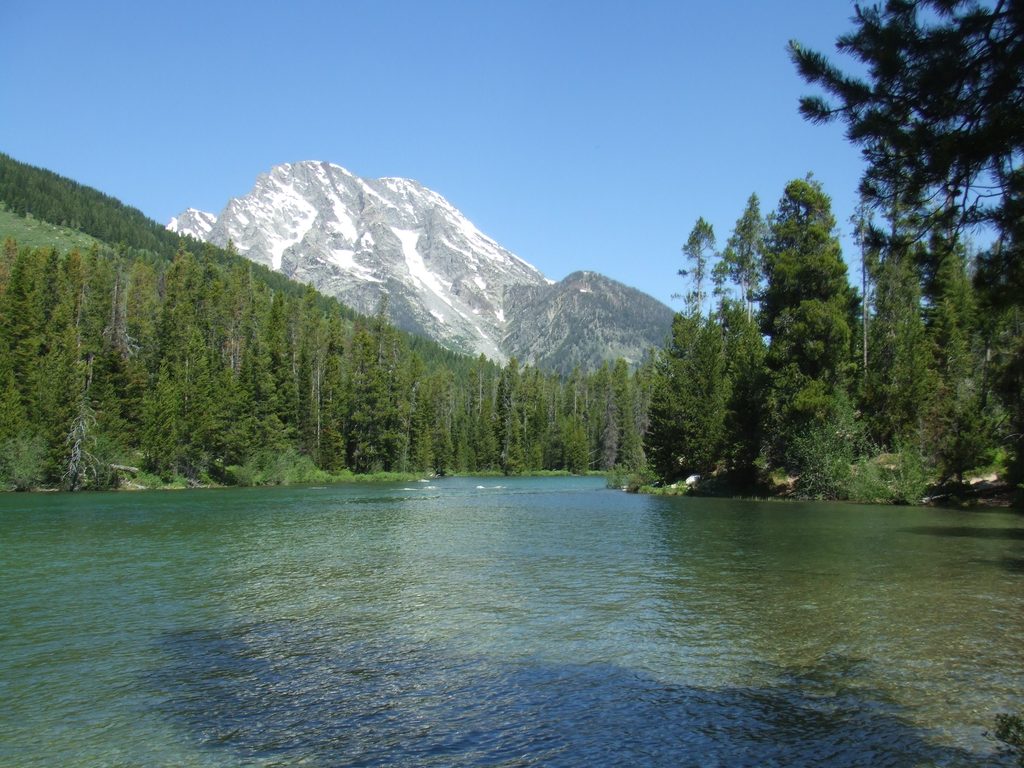
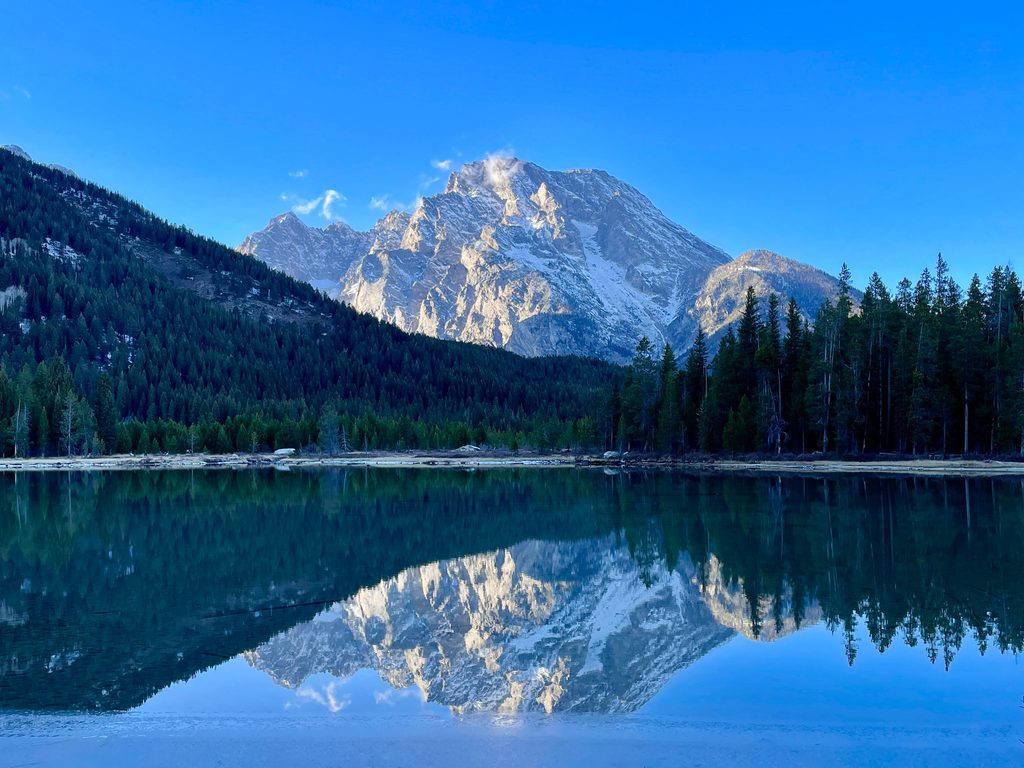
Mount Moran (12,610 feet) anchors the north end of the Teton Range with a massive, standalone presence. It’s the mountain you keep photographing from Jackson and Leigh lakes—broad, blocky, and unforgettable. For climbers, it’s a full-on wilderness objective; for everyone else, it’s a top-tier subject for sunrise and sunset photos from the valley.
Two things make Moran stand out: the sense of isolation (no maintained trail to its base) and the striking black diabase dike streaking down its east face. That dark ribbon is nearly a billion years old and instantly recognizable in photos.
From shoreline viewpoints like Oxbow Bend and the Leigh/Jackson lake edges, Moran’s bulk often reflects in glassy water at dawn and dusk. On the mountain, the CMC high camp is famed for knockout vistas, and the summit panorama sweeps over Jackson and Leigh lakes, the Snake River, and the rest of the Tetons.
This is not a casual hike. The standard summer route—the CMC (II, 5.5)—typically starts with a canoe across Leigh Lake, then a steep, off-trail approach to a high camp before a long, moderate but intricate rock climb. Early season brings the classic Skillet Glacier snow climb. Expect complex routefinding, time-consuming days, and rappels; unplanned bivouacs aren’t unheard of. Many parties plan a multi-day itinerary and stage from CMC camp.
There are no developed amenities on Moran—no trailhead, restrooms, or water taps. Approaches are by boat and unmaintained paths. Backcountry camping (e.g., at CMC camp) requires a permit. Bear awareness and proper food storage are essential, and you should be fully self-sufficient. Given the multi-discipline nature (paddling plus alpine), many visitors opt to go with a permitted guide service.
Black bears frequent the broader approach area. Lakeshores and riparian zones near Moran host abundant birdlife and other wildlife; keep your distance and store all food properly.
If you’re a non-climber, Mount Moran is best appreciated as a marquee photo subject from lakeside pullouts and viewpoints. If you’re an experienced alpinist seeking solitude and a true Tetons adventure, Moran delivers—just bring the skills, time, and respect it demands.
Place · 2 mi away
Place · 2.8 mi away
Place · 3.1 mi away
Place · 3.6 mi away
Challenging · 3.9 mi away
Challenging · 3.9 mi away
Easy · 3.9 mi away
Challenging · 4.2 mi away

Parkwolf Tour Guide
