
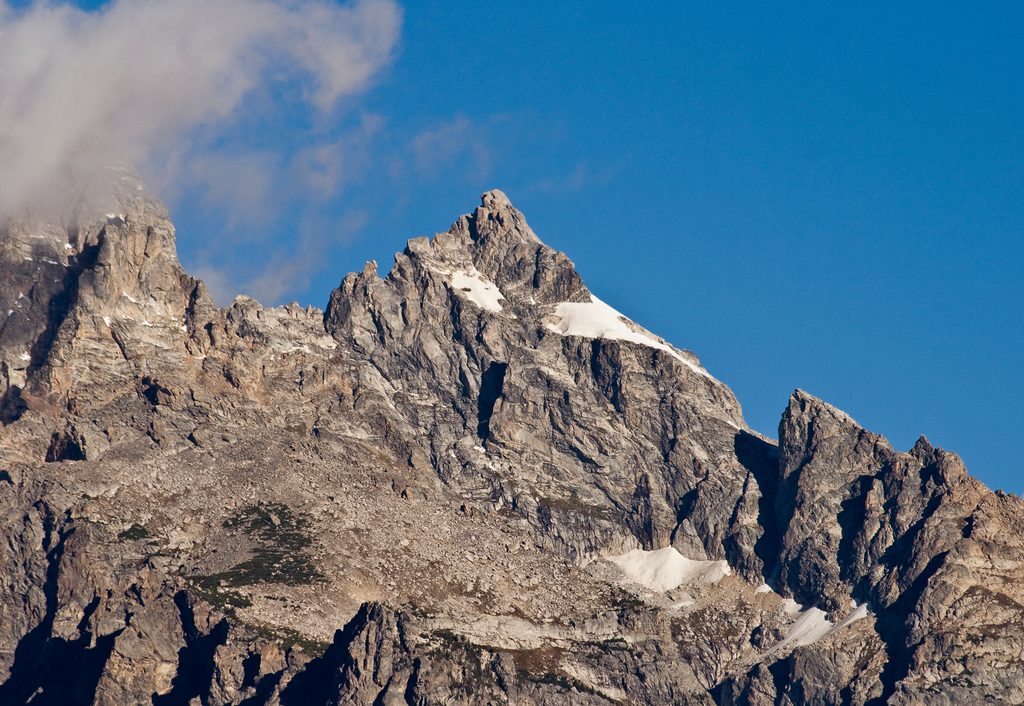
Place · 0.9 mi away
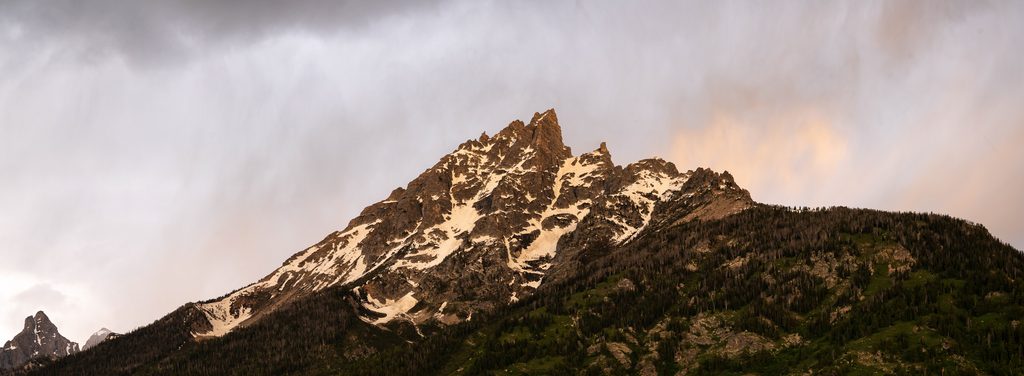
Teewinot Mountain is a jagged, pinnacle-studded summit rising directly above Lupine Meadows, topping out around 12,326 feet and ranked among the highest peaks in the range. It dominates views from the east side of the park and is fully visible from valley spots like Jenny Lake—one reason many first-time visitors mistake it for the Grand.
The East Face soars abruptly from the valley, with terraced cliffs and a castle-like upper mountain. The true summit is a narrow, exposed block—room for just a person or two—so tagging it feels momentous. A 300-foot cascade called Broken Falls drops down the eastern slopes, and the views from high on the mountain are panoramic and unforgettable.
The standard line is the East Face: a long, steep ascent from Lupine Meadows that gains roughly 5,600 feet and finishes with Class 4 scrambling. Expect an unmaintained climbers’ path that fades in and out and demands confident route-finding. A popular listing pegs the outing at about 9.5 km out-and-back; fit parties report times that vary widely, with full-day efforts common.
This is a serious mountain with a track record of accidents. The East Face has been called the deadliest route in the Tetons, largely due to exposure, loose rock, and missteps in complex terrain. Afternoon thunderstorms are a real threat—start early and set a firm turnaround time. Early and late season often mean steep, consequential snowfields; bring and know how to use an ice axe (and possibly crampons). Helmets are wise for rockfall.
Above treeline the world opens up—Grand Teton looms nearby, and the valley unfolds far below. It’s big-mountain scenery the whole way, with the East Face on full display from the moment you leave the car. Wildlife typical of the Teton high country—think marmots, pikas, and the occasional bear in lower approach zones—add to the alpine feel.
Begin at Lupine Meadows Trailhead. A social climbers’ path leaves from near the middle of the parking lot before switchbacking toward the upper mountain. There are no services on route and no reliable water once you’re climbing; carry what you need.
Mid-summer to early fall (when snow has receded) is the most straightforward season. Go pre-dawn to beat thunderstorms and to secure parking. Weekdays are quieter. For photos, early light is kinder on the East Face; by afternoon, weather risk often outweighs any golden-hour dreams.
Carry a helmet, detailed navigation (maps/GPS), layers for fast-changing weather, ample food and water, and bear spray for lower approach sections. In shoulder seasons, add an ice axe and traction. This is not a casual hike—only experienced parties comfortable with exposed scrambling and route-finding should commit.
Place · 0.9 mi away
Place · 1.1 mi away
Place · 1.2 mi away
Place · 1.3 mi away
Challenging · 2.1 mi away
Challenging · 2.1 mi away
Challenging · 2.1 mi away
Challenging · 2.1 mi away

Parkwolf Tour Guide
