
Place · 2.1 mi away
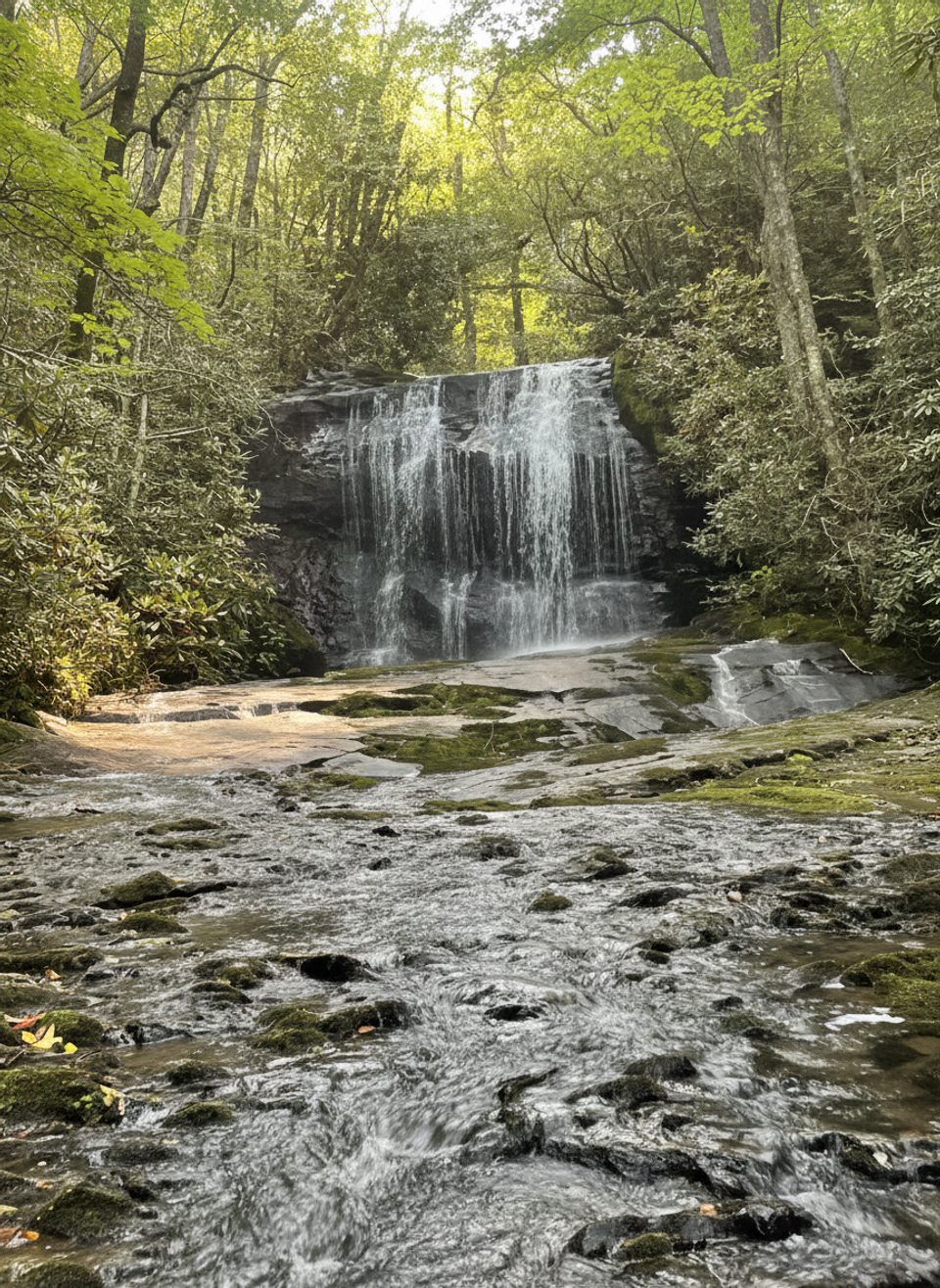
If you’re chasing wild, seldom-seen Smokies water, Gunter Fork Falls delivers. The main drop is about 65–70 feet, finishing down a broad sloping slab with a short freefall up top. Most hikers actually fall in love with the bonus water features on the approach: a graceful, thin-sheet cascade (around 150 feet) and a smaller sliding falls with a legit pool—great for a breather before the final push.
From the Big Creek area, head up Big Creek Trail past Mouse Creek Falls, continue as it becomes Camel Gap Trail, then turn left onto Gunter Fork Trail. You’ll immediately ford Big Creek (no bridge) and then cross Gunter Fork several times as the trail steepens and narrows. Around 7.9 miles from the start, a short side path drops to the sliding falls and pool; another quick jaunt upstream puts you beneath the main falls. Expect a hard day: reported round trips range from roughly 16.8 miles to a much larger loop around 23 miles, with substantial elevation gain.
This is remote, committing terrain. The crossings are the crux: rock-hopping is rarely possible, and after heavy rain, both Big Creek and Gunter Fork can be treacherous or impassable. The Gunter Fork Trail itself is narrow in places, with eroded bench cuts and some steep sidehill sections. Trekking poles, footwear you’re happy to soak, extra layers, real food, a headlamp, and a map/GPS are smart. Turn around if water is too high.
Note: The park has reported storm damage in this corridor in recent seasons; the Gunter Fork Trail has been closed at times due to washouts and slides. Always check current conditions before you go.
No facilities at the falls—pack in/pack out. Parking in the Big Creek area is limited; expect an approach from the main parking near the ranger station to the trailhead. The park requires a paid parking tag if you’ll be parked more than 15 minutes. Cell service is spotty; download maps ahead of time.
You’re in prime Smokies habitat with rich plant diversity and a full suite of wildlife. Black bears are around—give them space, secure your food, and know what to do if you encounter one.
The base view of the main falls can feel cramped and less photogenic because of the sloping rock. Many hikers prefer shooting the slim cascade or the sliding falls/pool for easier compositions.
Late summer into early fall typically brings lower, safer water fords and clearer tread after spring washouts. Start early to buy daylight for the long mileage. Avoid or postpone this hike during and after major rain—crossings are the dealbreaker.
If conditions or time aren’t cooperating, the earlier Mouse Creek Falls off Big Creek Trail is a reliable, shorter day that still scratches the waterfall itch.
Place · 2.1 mi away
Place · 3.4 mi away
Place · 3.6 mi away
Place · 3.8 mi away
Moderate · 3.8 mi away
Easy · 3.9 mi away
Challenging · 3.9 mi away
Challenging · 3.9 mi away

Parkwolf Tour Guide
