
Place · 1.1 mi away
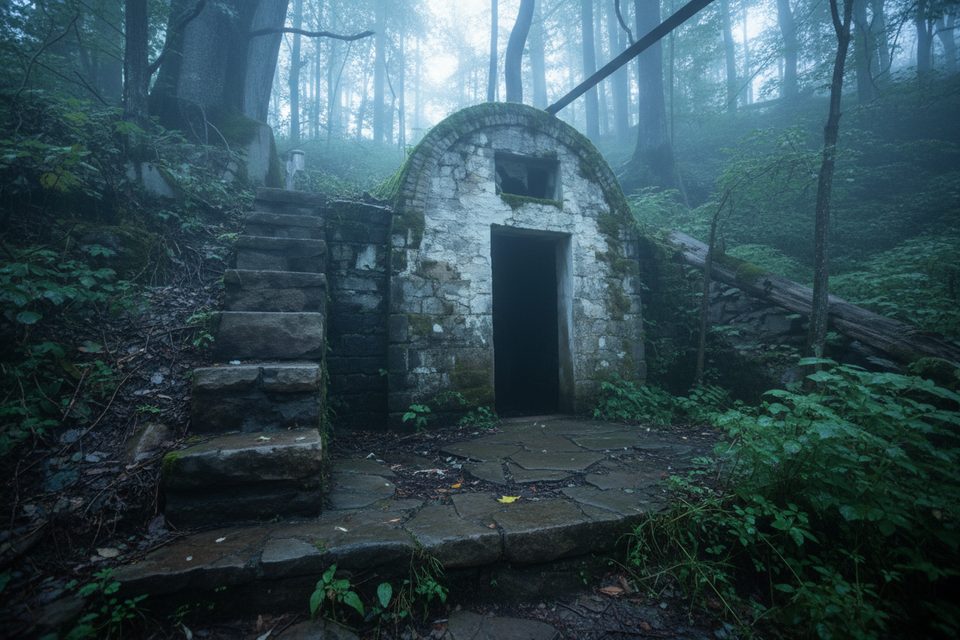
The House of the Fairies is a small, moss-draped stone springhouse tucked in the woods off Twin Creeks Trail near Gatlinburg. Built as part of Louis E. Voorheis’s early-20th-century mountain retreat, it feels straight out of a storybook: arched stone doorway, narrow stairs, and a cool, shadowy interior fed by a natural spring.
Entrepreneur Louis E. Voorheis developed his Twin Creeks/Voorheis Estate between 1928 and 1944 with a passion for rustic architecture and water-powered design. He used fieldstone, hand-hewn logs, dams, wheels, pools, and gardens to create a self-styled retreat. The springhouse—later nicknamed the House of the Fairies—was built entirely of stone to keep spring water clean and cool. Voorheis deeded the estate in 1933 (with a lifetime lease); the National Park Service assumed full management later, and many of his features still dot the area.
Follow Twin Creeks Trail (about 4.5 miles roundtrip if you do the full out-and-back). Start from the Noah “Bud” Ogle Place parking area or from Mynatt Park; there’s also limited parking near the Twin Creeks Science & Education Center. After you pass the Resource Center on the trail, look for a small, unmarked side path that leads uphill to the springhouse. If you’re unsure, staff at the Resource Center (when open) can point you in the right direction.
Expect a mossy, arched stone facade with an open doorway and a short stairway to the top. Inside, it’s a simple one-room springhouse—cool, damp, and photogenic. Along Twin Creeks Trail you’ll pass remnants of the Voorheis Estate (cabins, a water mill) and the park’s Resource/Science & Education area, all set to the steady sound of the creek.
The trail is generally easy with gentle ups and downs. Minor water crossings are possible, especially after rain—waterproof footwear helps. Dogs aren’t allowed on this trail. Snakes and black bears are occasionally seen; give wildlife plenty of space and follow park guidance. Treat the springhouse as a historic resource—don’t climb on the stonework.
If you love quirky, human-made history tucked inside a forest, yes. It’s a fun, low-effort side quest on a quieter trail corridor that feels miles away from the park’s busier one-way loops.
Weekday mornings are the calmest. Soft, indirect light mid-morning or late afternoon flatters the mossy stone. After rain, the greens pop—but the stones get slick—so take care. In peak seasons, start early to enjoy the estate remnants and creekside stretches with fewer people.
Place · 1.1 mi away
Place · 1.1 mi away
Place · 1.2 mi away
Place · 1.7 mi away
Moderate · 0 mi away
Moderate · 1.6 mi away
Easy · 1.7 mi away
Easy · 1.8 mi away

Parkwolf Tour Guide
