
Overview
About Kalamina Gorge Lookout
Why stop
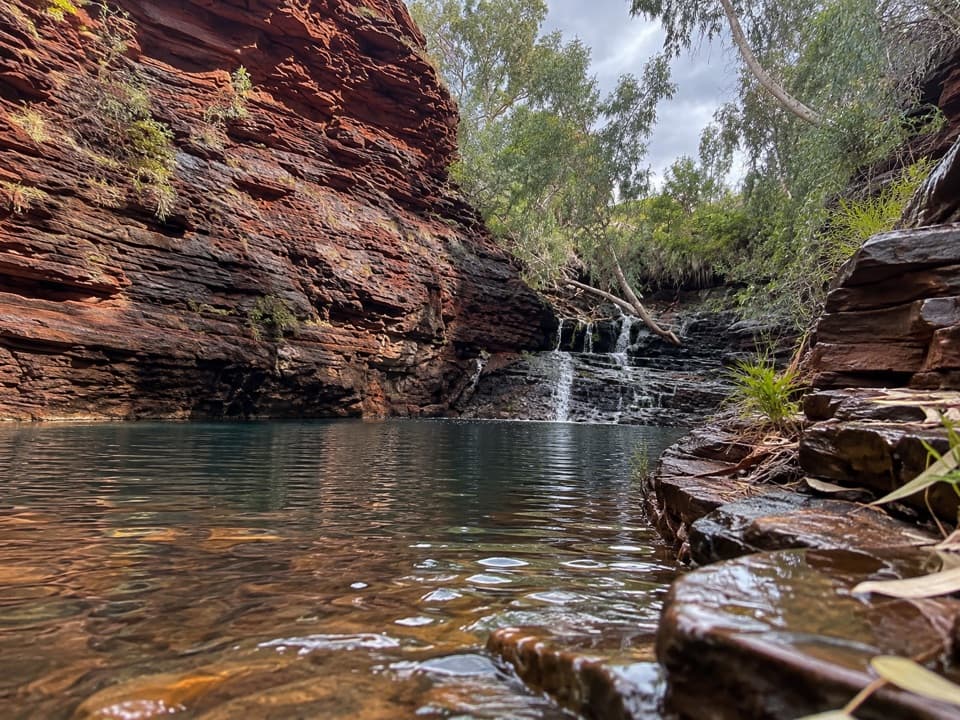
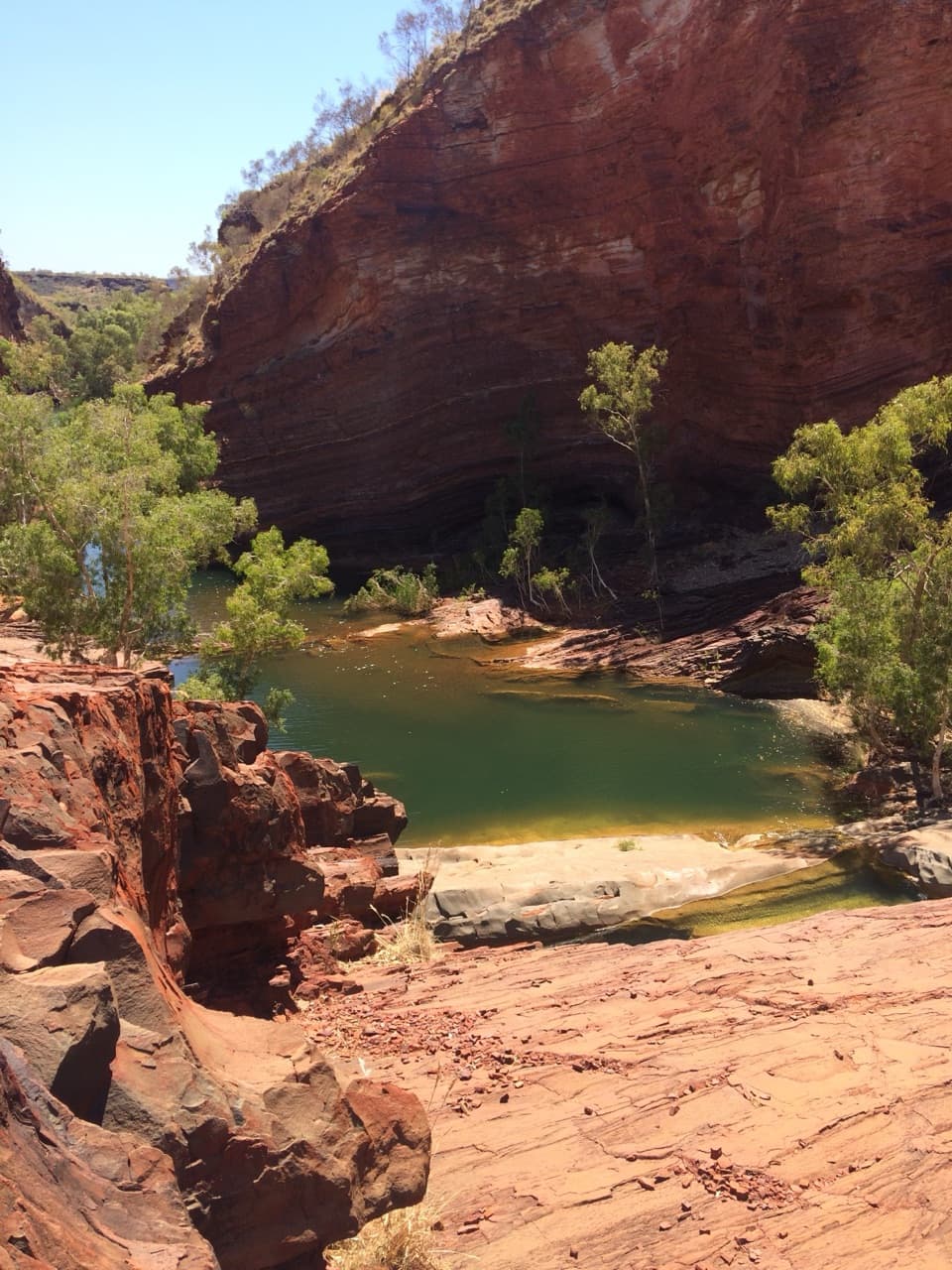
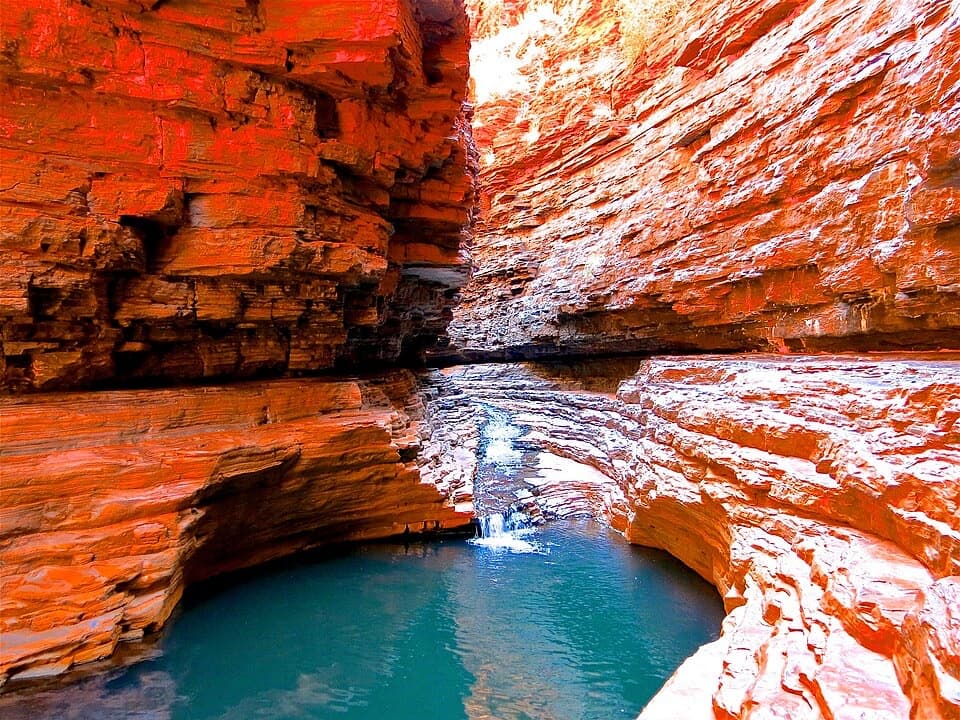
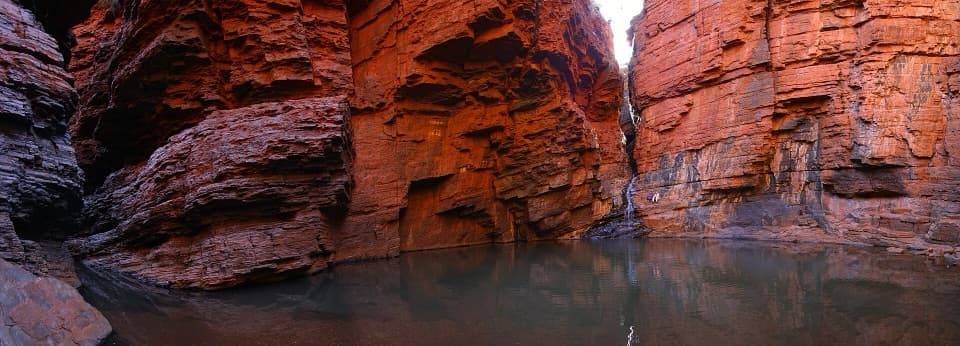
- The red, banded walls, pale gums and green stream make a vivid contrast.
Heads up
- Reaching the pools means a steep descent, and the approach road can be rough.
Map
Where it is
The highest, rockiest slopes around here are a summer buffet for grizzly bears.
Karijini Tour Guide
Your drive to Kalamina Gorge Lookout, narrated.
Parkwolf is a GPS audio tour guide for Karijini National Park. As you drive, it chimes in with what’s ahead: hidden gems, upcoming stops, history, geology, and wildlife, right through your car’s speakers.
See the Karijini audio tourRecorded for this place
Kalamina Gorge and Rock Arch Pool“Kalamina Gorge is coming up, with a short, steep descent to a small waterfall and permanent pool. For a quick visit, allow about half an hour, including the climb back out. Look for fish in the rock pools.”
Plays as you drive up to Kalamina Gorge Lookout in the Parkwolf Karijini Tour Guide.
More stories near here in the app
- Sorting Rock with a Magnet
- Wittenoom's Lasting Legacy
- The Pigeon with a Long Crest
- Hematite's Two Faces
- 141 audio storiesacross Karijini’s roads, triggered by GPS as you drive
- Wildlife heatmapsfor Dingo, Rock Wallaby, Mulga Snake, and 13 more
- Works offlinemaps, 22 trails, 30 places, and audio download before you lose signal
- CarPlay readysimple controls built for the drive
“Fantastic app with many points of information… It’s great to just turn on while you’re driving and it gives you an audio tour of the national Park. We love it!!!!”


Guide
More about Kalamina Gorge Lookout
Take the view before you decideKalamina Gorge Lookout is a short walk from the car park to a viewpoint above the gorge, before…
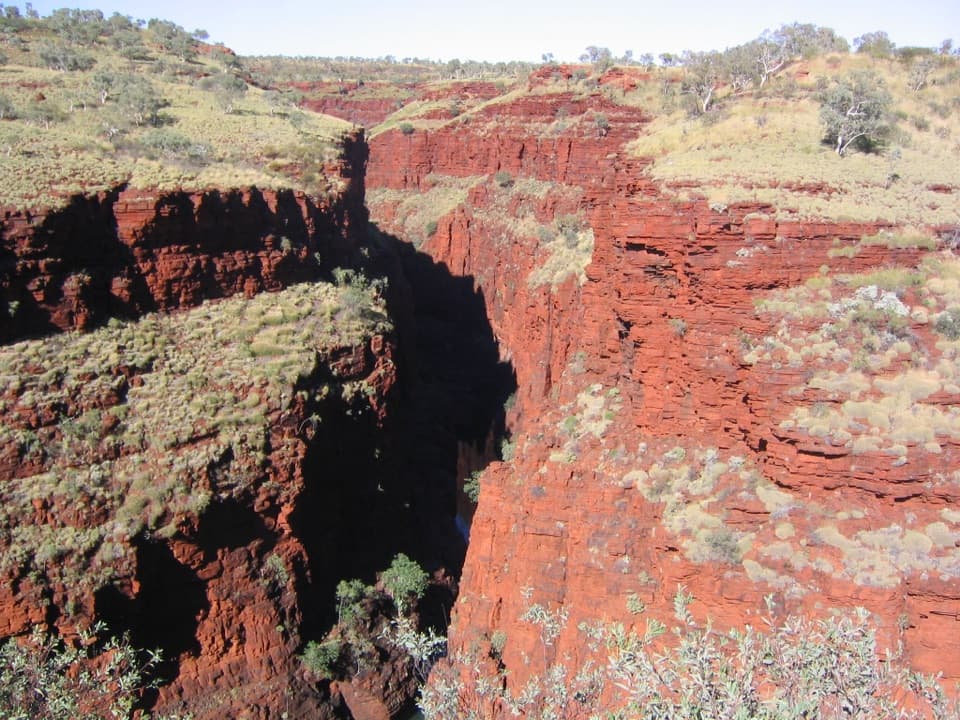
Kalamina Gorge Lookout is a short walk from the car park to a viewpoint above the gorge, before the track drops steeply to the creek. It's a worthwhile stop on its own; continue down only if you want the pool and gorge-floor walk. The lookout is a preview, not the longer outing.
The descent is a separate outingFrom the lookout, a steep track drops to a small permanent pool and waterfall.
From the lookout, a steep track drops to a small permanent pool and waterfall. The short return to the pool is about 30 minutes; the full walk follows the stream past rock pools and banded walls to Rock Arch Pool, about 3 km and three hours return. Expect rough steps, stream crossings and ledge walking.
Don't enter the gorge in rain: flash floods are a risk. The pools are especially cold from April through September, while summer temperatures often top 40°C.
Red walls, green waterKarijini's Hamersley Basin exposes horizontal, iron-rich layers that have been cut into deep…
Karijini's Hamersley Basin exposes horizontal, iron-rich layers that have been cut into deep gorges; the region has been relatively stable for about two billion years. Below, green water, pale snappy gums and grasses set the red rock off. For a photo from the rim, include the stream and pale gum trunks against a banded wall; the contrast is what makes the view.
Karijini is Country of the Banyjima, Kurrama and Innawonga peoples. Traditional fire management has helped shape the area's varied plant communities.
Make the stop workThe car park has toilets, drinking water and an information shelter.
The car park has toilets, drinking water and an information shelter. The approach road is unsealed and can be corrugated, so allow for a slower drive. Bring food for the walk; the known facilities here are toilets, drinking water and an information shelter.
Wildlife
Wildlife in Karijini
 44 sightingsDingoMost seen around 6 PMSighting map
 18 sightingsRock WallabyMost seen around 6 AMSighting map
 15 sightingsMulga SnakeMost seen around 7 PMSighting map
 36 sightingsHamersley Rock MonitorMost seen around 9 AMSighting map
 13 sightingsWestern BowerbirdMost seen around 7 AMSighting map
 34 sightingsChildren's PythonMost seen around 8 PMSighting map
Sighting maps show where each species has been reported across Karijini. Wildlife moves, so no sighting is guaranteed.