Best time to go
- Dry season: Best for visibility and general game as grasses die back and animals concentrate at water.
- After heavy rains: Long grass makes sightings tougher and the view can feel more closed-in.

Scenic pullout · Kruger National Park
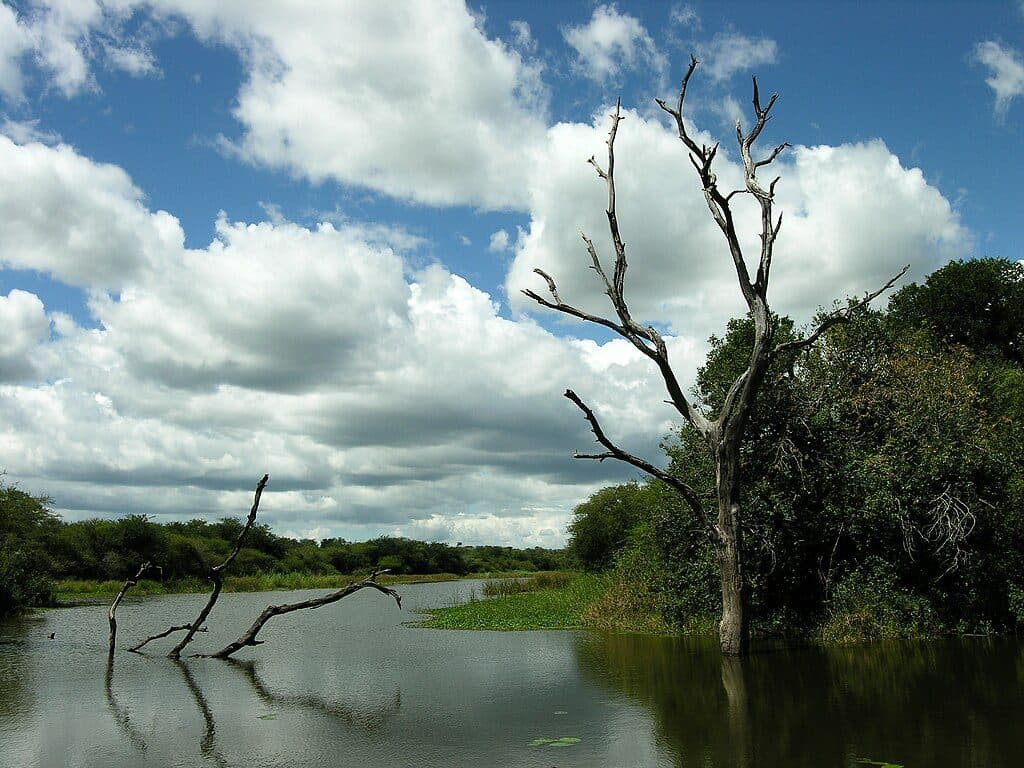
Quiet pull-off for waterbirds with a distant dam view
Overview
This is a simple pull-off overlooking a small, older concrete dam at the confluence of the Gudzani and Mavumbye streams, reached via the S41 sand road in the Satara–N’wanetsi area. The dam dates to the 1950s, and its name, “Gudzani,” means “early frost” in Tsonga—apt for a pocket of the park that chills earlier and harder in winter.
Map
Local know-how
Aim for the dry season when grasses recede and visibility improves.
If the view is screened, continue to Gudzani East on the same road.
Plan restroom and supply stops at N’wanetsi Picnic Spot or Satara Camp.
Bring binoculars or a long lens—the viewpoint sits a fair distance from the water.
Work the early or late hours for both activity and better light.
Plan your stop
The highest, rockiest slopes around here are a summer buffet for grizzly bears.
Kruger Tour Guide
Parkwolf is a GPS audio tour guide for Kruger National Park. As you drive, it chimes in with what’s ahead: hidden gems, upcoming stops, history, geology, and wildlife, right through your car’s speakers.
See the Kruger audio tourRecorded for this place
Gudzani Dam: Lions and a Frosty Name“The pull-off coming up is for Gudzani Dam. The name 'Gudzani' is Tsonga for 'early frost,' a nod to how this low-lying area gets chilled in winter.”
Plays as you drive up to Gudzani Dam Viewpoint in the Parkwolf Kruger Tour Guide.
More stories near here in the app
“Fantastic app with many points of information… It’s great to just turn on while you’re driving and it gives you an audio tour of the national Park. We love it!!!!”


Guide
Expect a basic, exposed parking area with a relatively distant vantage over the water. Vegetation can screen parts of the dam, especially outside the driest months. Even so, it’s a steady stop for waterbirds and raptors, and the broader Satara–N’wanetsi–Sweni region is renowned for predators—huge lion prides are frequently recorded along the nearby corridors. Any of the Big 5 can wander through this stretch, though it’s not a guaranteed hotspot.
If the outlook here is too screened, continue along the same road to Gudzani East, another waterpoint that can offer closer views when it holds water. This S41 link is generally quieter than headline routes, so you can poke around without the traffic.
There are no on-site facilities—no hide, shade, restrooms, shop, or fuel. Plan comfort breaks at formal stops like N’wanetsi Picnic Spot on the H6 or a nearby camp such as Satara. The S41 is a sand road; drive unhurriedly and give yourself time to sit and watch the water—things can appear out of nowhere.
Bring binoculars or a longer lens. Early and late light helps cut haze and adds color to the water and birds, while also catching peak animal movement.
Wildlife
 1,312 sightingsLionMost seen around 6 AMSighting map
 727 sightingsLeopardMost seen around 5 AMSighting map
 2,403 sightingsElephantMost seen around 5 PMSighting map
 425 sightingsWhite RhinocerosMost seen around 6 AMSighting map
 547 sightingsBuffaloMost seen around 5 PMSighting map
 502 sightingsWild DogMost seen around 6 AMSighting map
Sighting maps show where each species has been reported across Kruger. Wildlife moves, so no sighting is guaranteed.
Parkwolf’s Kruger ranking

The audio tour guide for the drive, plus offline maps, trails, and wildlife heatmaps for when the signal drops.