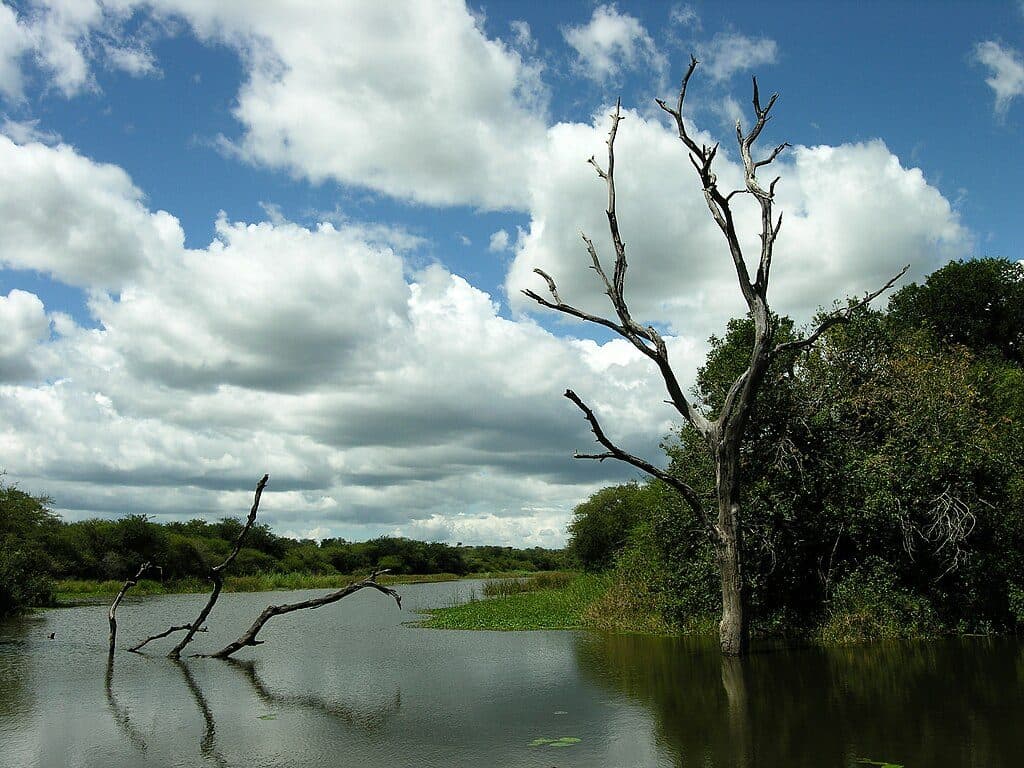
Lake Panic Bird Hide

Close-up birding and big game at a tranquil dam hide
Lake Panic Bird Hide, Kruger National Park
InsideKruger National Park

Overview

A few minutes west of Skukuza, Lake Panic Bird Hide looks over a tranquil dam edged with reeds and overhanging trees. The dam dates to 1975, when an earthen wall was built across Mafunyana Creek. Its quirky name recalls an anxious episode just after completion, when heavy rain sparked fears the new dam might burst—it didn’t.

What You’ll See

This is one of the park’s most reliable places to sit still and let the wildlife come to you. Expect a parade of herons and egrets (from Grey to Squacco), cormorants and African darters, jacanas stepping daintily on lily pads, and a fish eagle or two. Kingfishers are the headliners—Pied and Malachite are regulars, with Pygmy and Woodland visitors in season. Weaver colonies often buzz beside the hide, males furiously weaving and displaying to win approval. Beyond birds, hippos and crocodiles are resident, and elephants and terrapins show up, too.

Why It’s Special

The hide puts you right on the waterline, so action unfolds at eye level—perfect for spotting hunting kingfishers or the intricate architecture of weaver nests. You can rack up species without moving an inch, which makes it both productive and wonderfully relaxing.

Practicalities

Facilities are deliberately minimal: a simple wooden hide with benches and a small parking area. There are no ablutions or water here—use Skukuza Rest Camp before or after, and pack out all trash. It’s easiest to visit with your own vehicle. If you’re car-free at Skukuza, some guided drives may add a short stop if asked, and ride shares sometimes happen via community forums. Just treat those as bonus options rather than guarantees.

Nearby Extras

Access is via the S42, which also leads to an indigenous plant nursery with a short wetlands boardwalk—handy for stretching your legs and adding a few more wetland species to your list.

Best Time to Visit

Bird and game activity peaks early and late in the day; that’s also when light is softest for photography and the hide is calmer. Midday often brings the biggest crowds. Seasonal note: the migratory Woodland Kingfisher appears during its visiting period, adding a splash of electric blue and that unmistakable call.

Pros

  • Consistently excellent birding with kingfishers, herons, and weavers
  • Close, sheltered views over a reed-fringed dam ideal for photography

Cons

  • No restrooms, water, or kiosks on site
  • Popular spot that can get busy, especially midday

Tips

  • Use Skukuza’s restrooms before/after—there are no facilities at the hide.
  • Arrive at sunrise or late afternoon for peak activity, softer light, and fewer crowds.
  • Bring binoculars, a zoom lens, water, and insect repellent, then settle in and be patient.
  • If you don’t have a car, ask guided drives to include a stop or seek ride shares via park forums.
  • Check official SANParks updates for any temporary closures before you go.
The Parkwolf tour guide sitting on a phone mounted in a car

Parkwolf Tour Guide

Like a tour guide in your car.

Save the places you found around Kruger, then let Parkwolf guide the drive between them.Download Parkwolf on the App Store