Place · 4.6 mi away

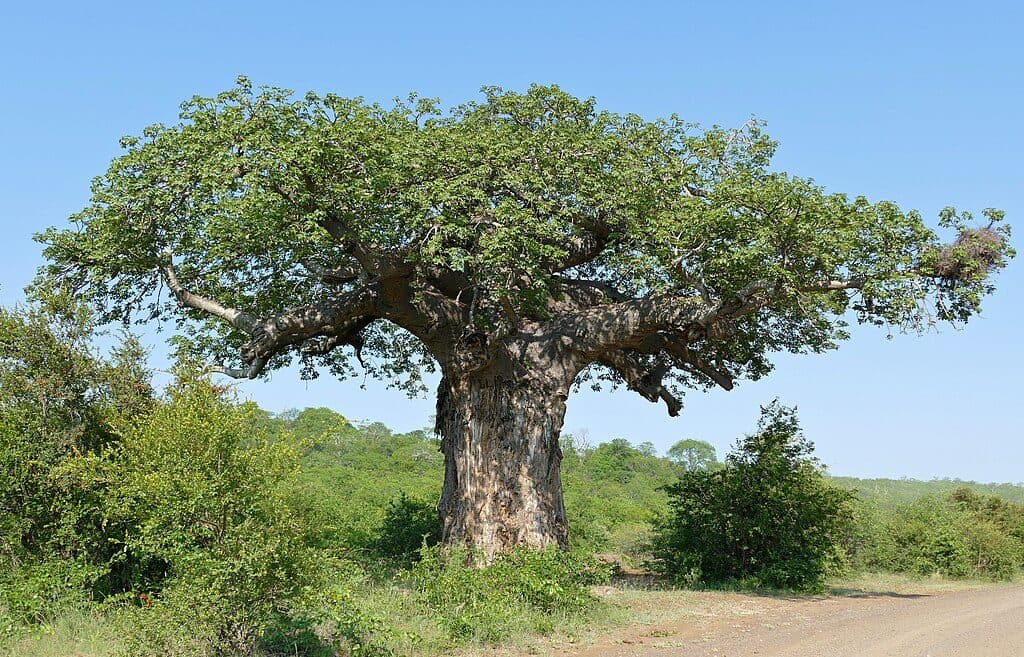
If you’re the type who brakes for remarkable trees, Von Wielligh’s Baobab is worth the detour. This venerable giant is all about scale, texture and story—an instant, roadside wow that takes five minutes to admire or an hour to photograph if the light plays nice.
The tree takes its name from G.R. von Wielligh, a surveyor who camped near the confluence of the Olifants and Letaba Rivers and carved his name into the trunk in 1891. It’s a rare, tangible marker of early mapping work in this part of the park.
You’ll find it about 8 km north of Olifants Rest Camp, on the S93 gravel road near its junction with the S44. The baobab sits right next to the road, so you view it from your vehicle. Standard Kruger rules apply: don’t alight here unless you’re on an official guided activity that allows a brief step-out.
Baobabs are the quintessential “upside‑down” trees—smooth, pinkish‑grey trunks with branchwork that looks like roots. They’re deciduous, so in winter the bare silhouette is especially dramatic; in leaf, the crown feels massive. Baobabs are famously resilient and can live for ages, which adds to the sense of meeting an old character on the landscape.
Early morning or late afternoon gives the best, angled light and a better chance of passing wildlife along the river corridors. Midday sun can be harsh and flatten the trunk’s texture. If it’s rained recently, budget extra time for the gravel surface.

There are no facilities at the tree—no toilets, no water, no picnic site. Plan comfort stops at Olifants (to the south) or Letaba (to the north). Keep your visit tight and respectful: no touching, no carving, no climbing. A quick pause for photos is the norm here.