
Place · 0 mi away
Challenging
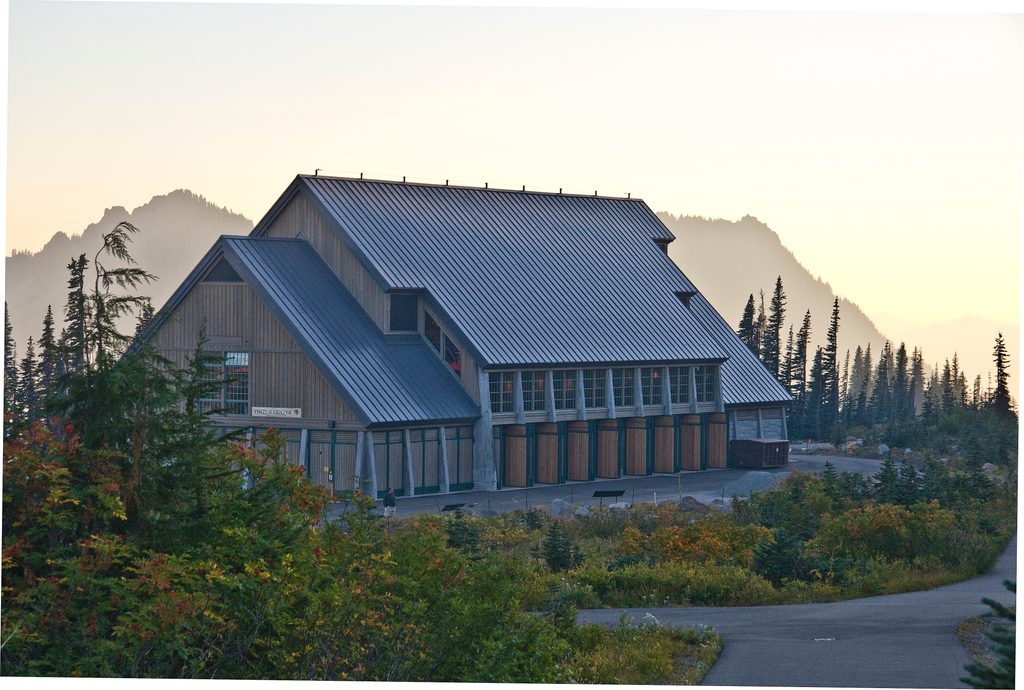
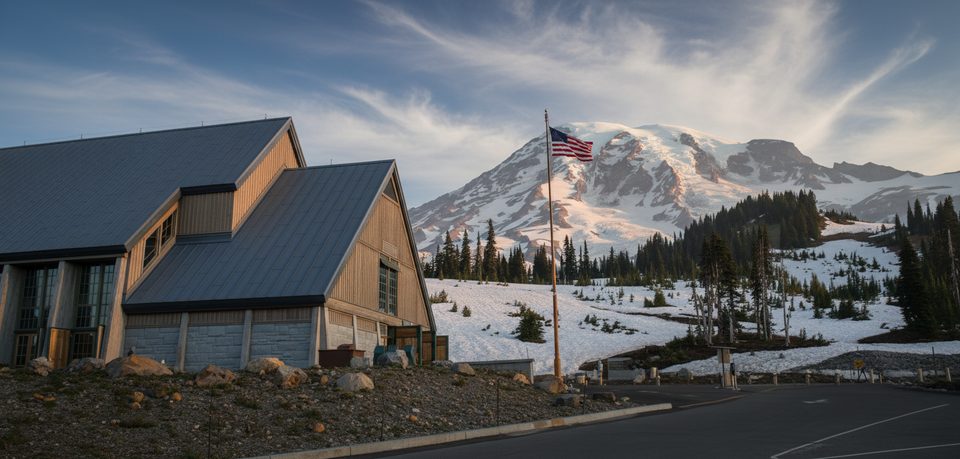
This is the classic Paradise hike: a roughly 5.5‑mile loop with about 1,700 feet of climbing, starting steps from the Paradise/Jackson Visitor Center. Expect an all‑star sampler of Mount Rainier—sublime wildflower meadows in mid‑summer, close‑up glacier views, roaring creeks, and sweeping horizons. It’s popular for good reason and absolutely worth doing if you can handle a steady climb.
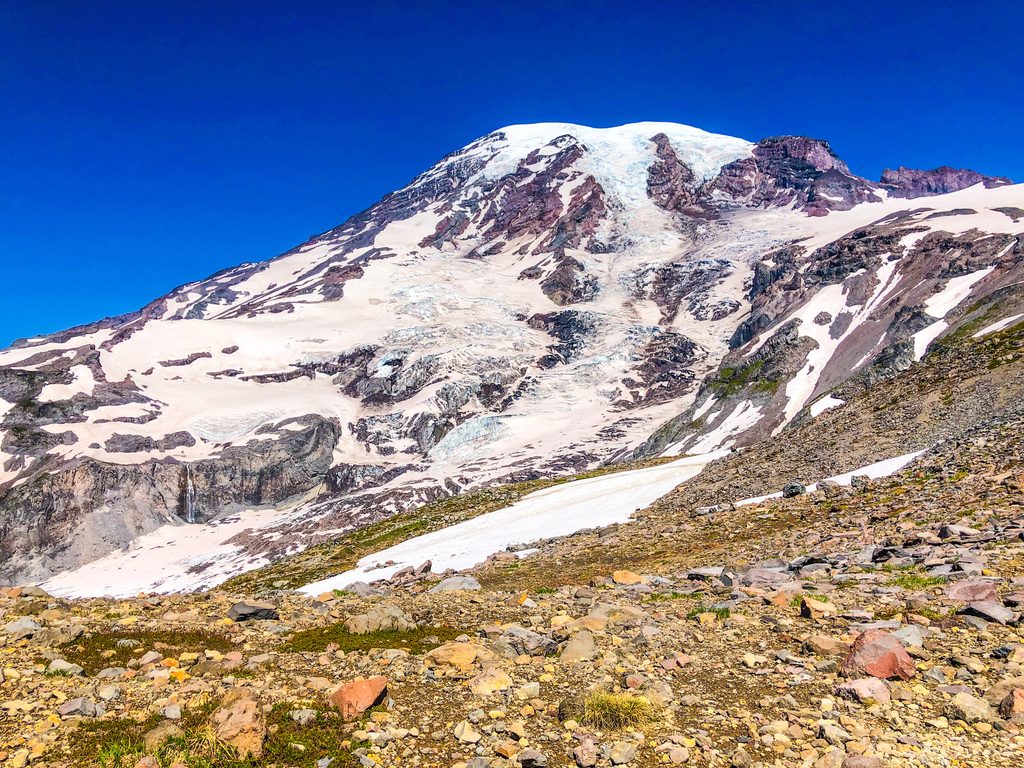
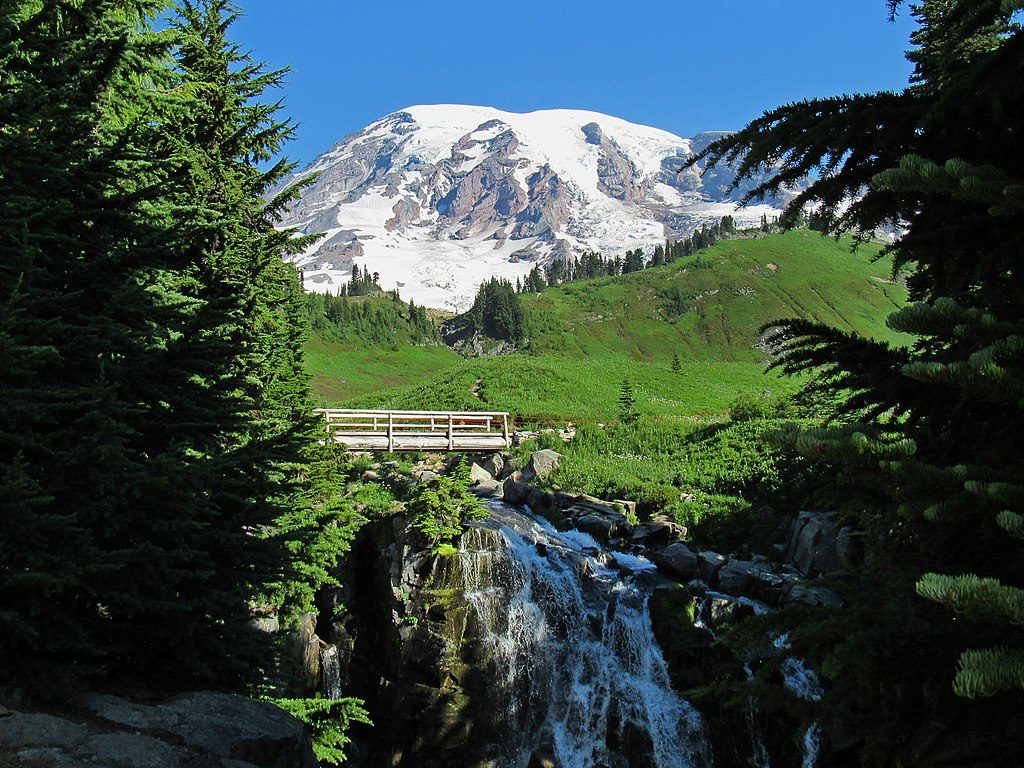
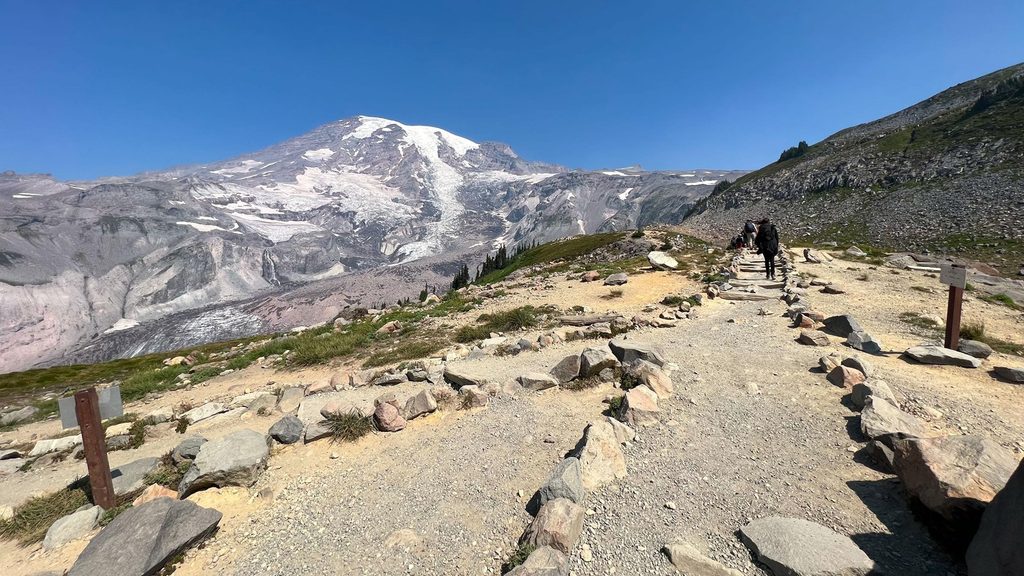
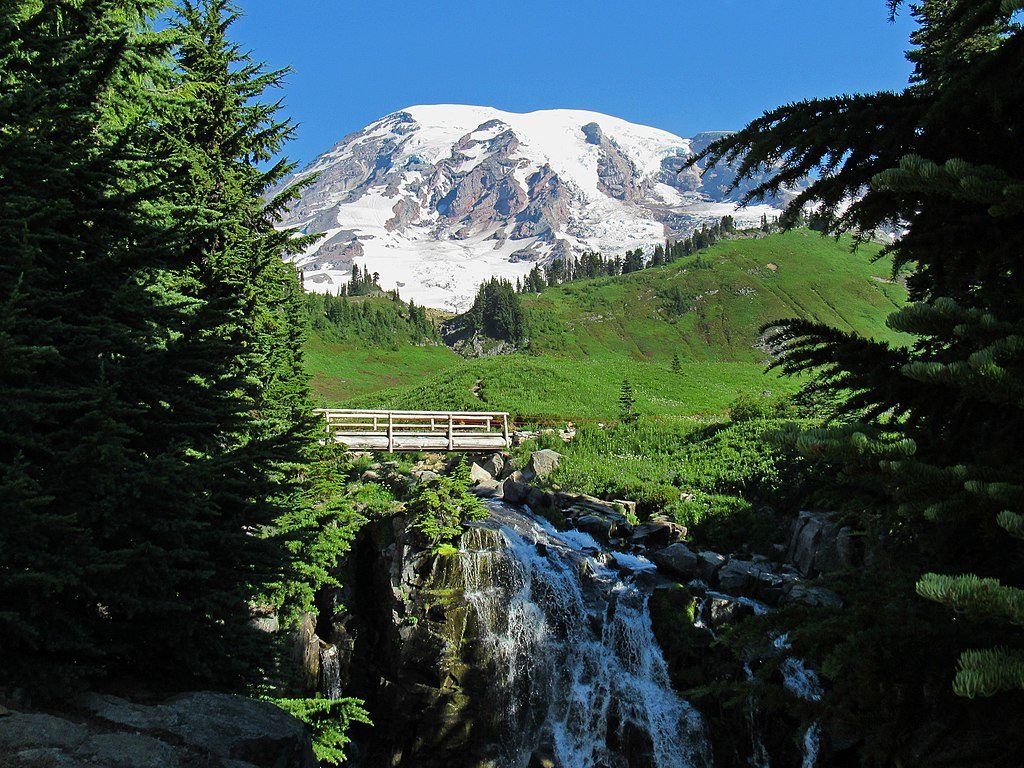
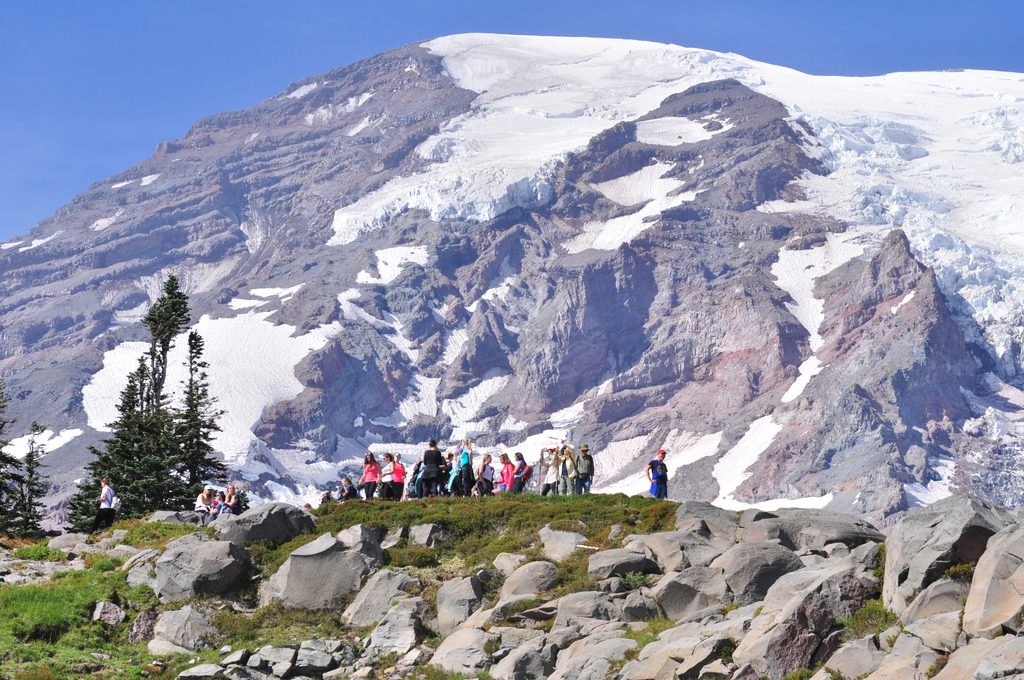
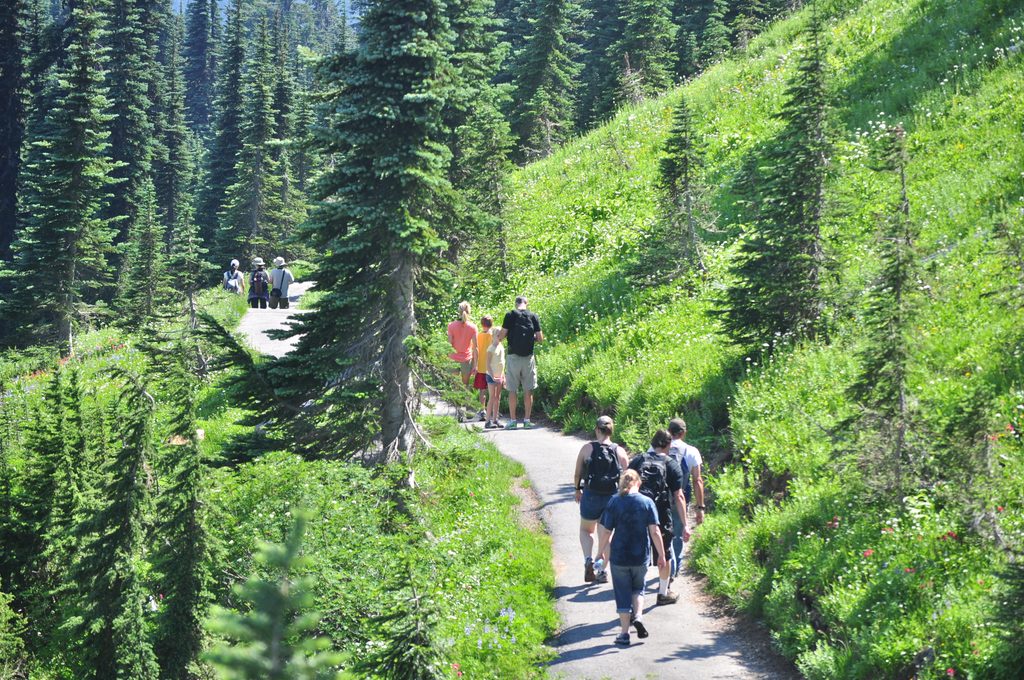
The loop begins on a paved path, then transitions to gravel, steps, and dirt as you pass Myrtle Falls—an easy, photogenic early highlight—and climb toward Panorama Point. Panorama Point is the marquee viewpoint, with big looks at Rainier and the Tatoosh Range, and on crystal‑clear days you may spot far‑off volcanoes. Higher up, you’ll traverse rocky alpine terrain with frequent glacier views (notably the Nisqually). Keep an eye out for the Stevens–Van Trump Memorial along the way for a touch of park history.
You can hike either direction. Clockwise starts steep and gets the big climb done early. If you’re fading, the Golden Gate Trail offers a shorter, steeper return to Paradise that reconnects with Skyline higher on the slope. Early in the season when an icy traverse above Panorama Point lingers, use the High Skyline option to avoid hazardous slopes.
Call it moderate to strenuous for most hikers: sustained grades, altitude, and mixed surfaces add up. Surfaces range from paved to gravel and rock steps to rough, rocky tread, with small stream crossings and lingering snow patches well into summer some years. Sturdy footwear is a must; traction aids can be smart early season if snow remains.
Mid‑July through September (often into October in fair years) is prime time—snow mostly gone, meadows in bloom, and long, stable weather windows. Start early for both light and space; parking routinely fills by late morning, and weekends can feel like a conga line on the steeper stretches. Aim for dawn to mid‑morning midweek if you can. Outside that window, snow travel skills and gear are required; casual hikers should skip winter conditions here.
Park at the large Paradise lots by the visitor center; arrive before 9 a.m. at minimum during peak season. Expect long entrance delays on busy summer weekends. Restrooms are at the visitor center, and there’s a seasonal vault toilet at Panorama Point (not always open). Bring sun protection—much of the upper route is exposed—and pack layers for rapidly changing alpine weather. Stay on the built paths; the subalpine meadows are fragile and easily damaged.
You’re walking the flanks of an active stratovolcano, with textbook views of glaciers, moraines, and alpine geology on display. Marmots whistle from the meadows, deer browse along the edges, and mountain goats are an occasional treat higher up. Give all wildlife space, stick to the trail through meadows, and pack out everything you bring.
Short on time or energy? Do an out‑and‑back to Myrtle Falls for a quick taste, or turn around at Panorama Point to pare the effort while still nabbing the views.
Length listed (5.5 miles) is total for the full loop from Paradise.
Park in the large lots by the Paradise/Jackson Visitor Center; arrive early (before 9 a.m. in peak season) as lots fill and entrance lines can be long on summer weekends.
Steep, exposed upper slopes with lingering snowfields—use High Skyline if the standard traverse is icy. Wear sturdy boots; consider traction in early season. Winter travel requires proper snow gear and experience. Stay on trail to protect fragile meadows.
Place · 0 mi away
Place · 0 mi away
Place · 0 mi away
Place · 0 mi away
Challenging · 0 mi away
Easy · 0 mi away
Challenging · 0 mi away
Moderate · 0 mi away

Parkwolf Tour Guide
