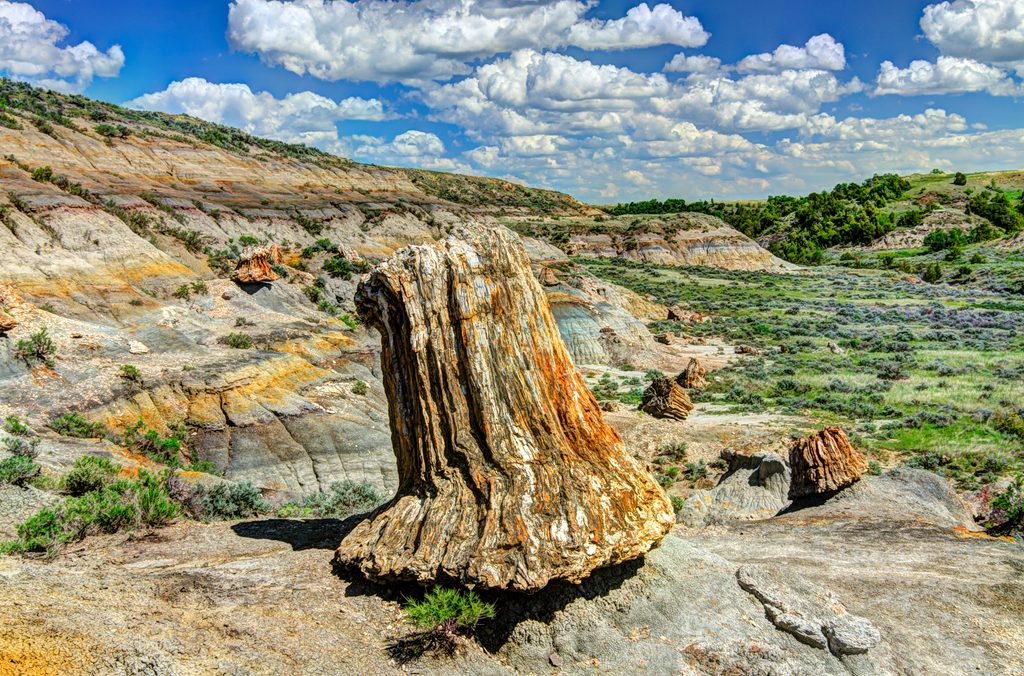
South Petrified Forest Area

Quiet badlands hike to colorful petrified stumps with big views
South Petrified Forest Area, Theodore Roosevelt National Park
InsideTheodore Roosevelt National Park

Overview

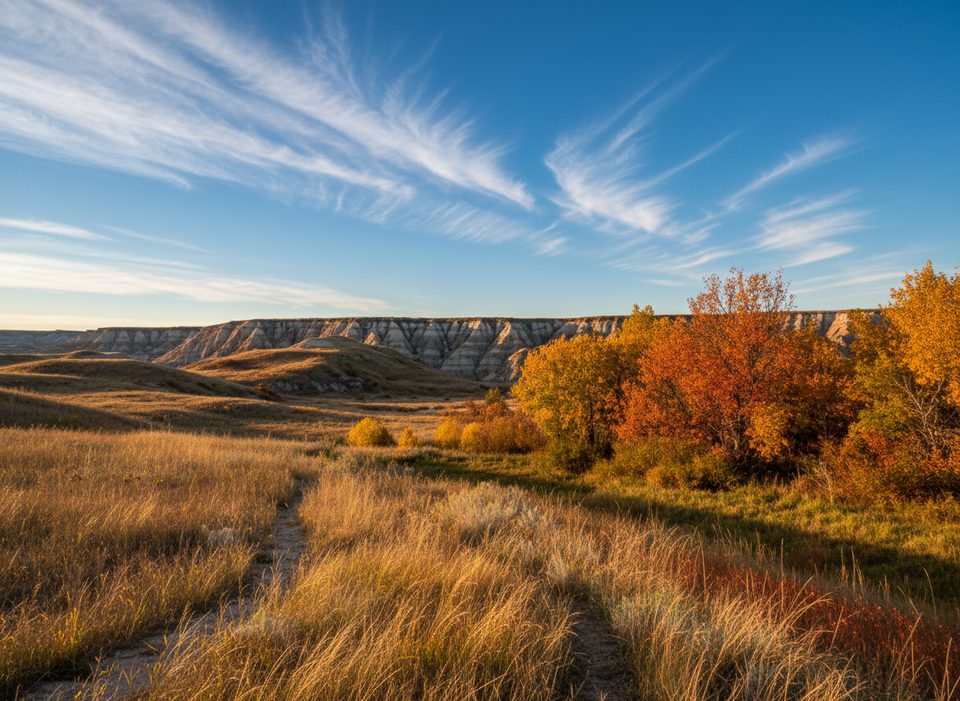
This backcountry pocket of the park sits within one of the largest petrified-wood concentrations in the United States, a window into a swampy delta of giant trees that existed here ~65 million years ago. It’s remote, uncrowded, and feels wild—more about big skies and ancient wood than roadside overlooks.

What You’ll See in the South Area

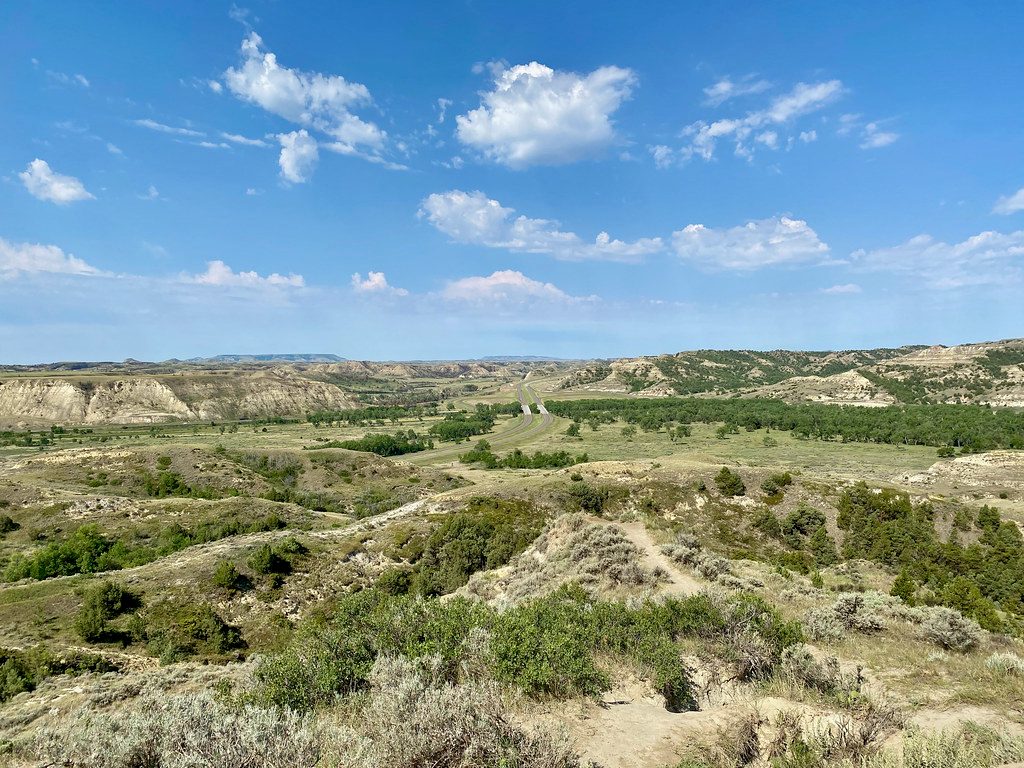
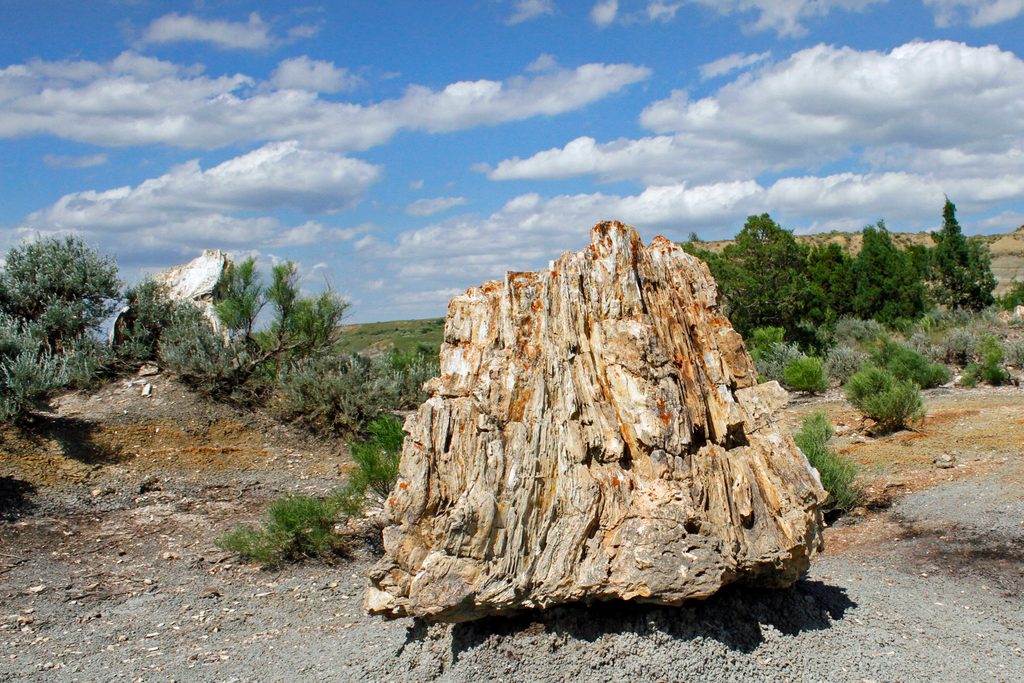
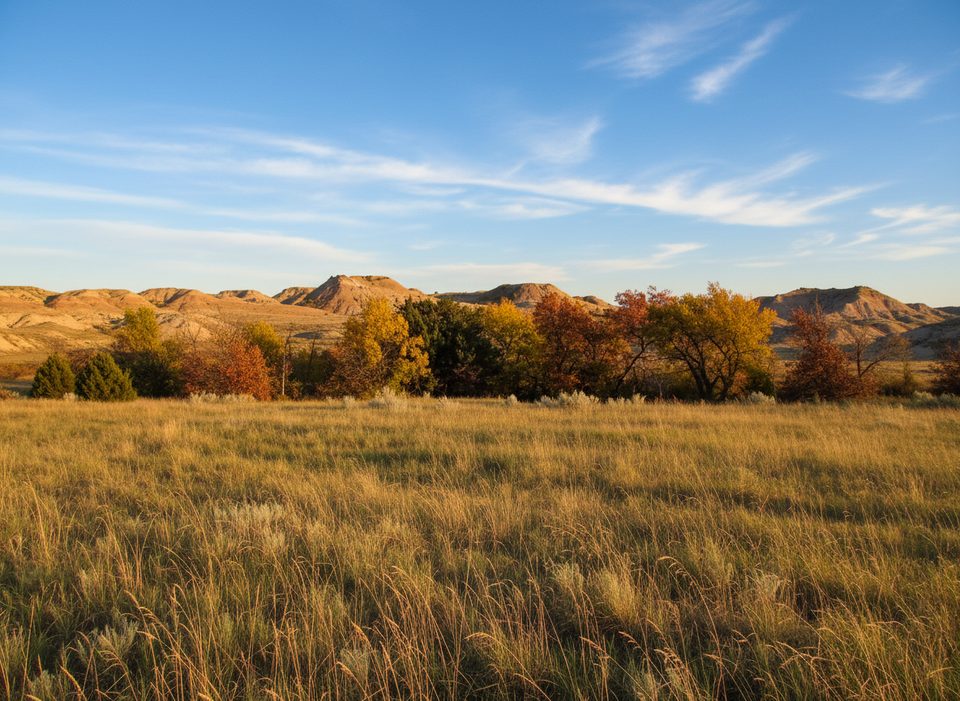
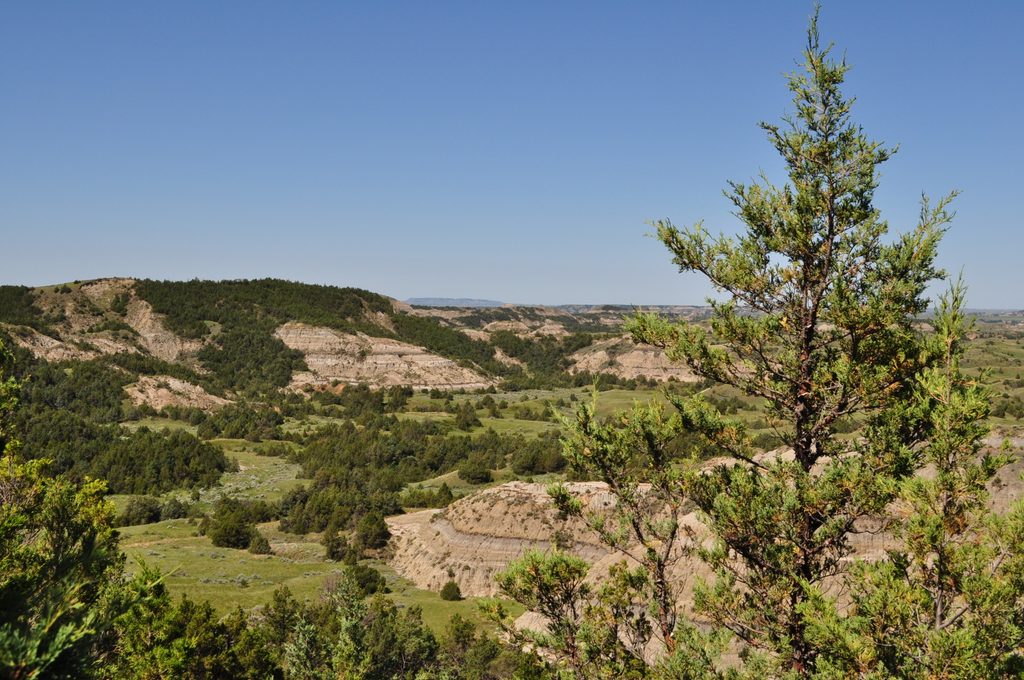
The south group has slightly fewer stumps than the north, but it makes up for it with sweeping views toward the southeast and a good chance of spotting elk. Expect upright stumps and log sections with striking mineral colors—from onyx to violet to white—scattered across open flats of badlands terrain.

Geology, Briefly

After the dinosaurs, mineral-rich sediments buried sequoia-like conifers, bald cypress, and magnolia. Groundwater slowly replaced the wood’s organic material with minerals, petrifying trunks and stumps. Erosion later peeled back the layers, revealing the “forest” you walk through today.

Getting There & The Hike

  • Access is via gravel roads on the park’s western boundary; it’s a backdoor approach that can change—pick up current directions at the South Unit Visitor Center before you go. Recent changes have increased the gravel mileage; don’t trust default phone routing.
  • From the trailhead, both the north and south petrified areas are about 1.5 miles away. An easy plan is a 3‑mile round trip to the south group.
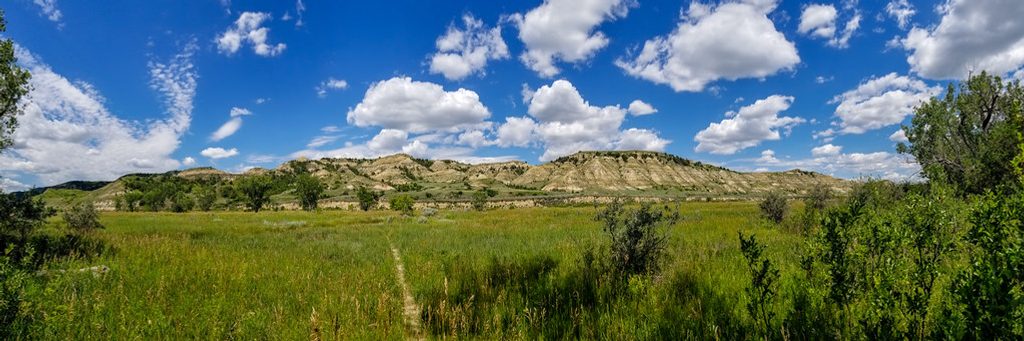
  • Want more? The full Petrified Forest Loop (combined with the Maah Daah Hey) runs about 10.4 miles. The trail is unpaved and remote with rolling prairie, one or two steeper sections, and clay surfaces that become very slick when wet.

Wildlife

Bison are frequently encountered on or near the trail—give them a wide berth and be ready to wait or reroute. Elk are often seen from the south area’s viewpoints, and wild horses roam the South Unit as well. Keep your distance from all wildlife.

Essentials, Amenities & Rules

  • At the trailhead: small gravel parking area and a vault toilet; no potable water—fill up in Medora.
  • Full sun and wind are common: hat, sunscreen, sturdy shoes, and extra water are must‑haves. Trekking poles help on the steeper or slick sections.
  • Leave No Trace is strictly enforced. Do not remove petrified wood (or anything else), and never carve or paint on features.

Best Time to Visit

  • Light and temps: Mornings and late afternoons offer softer light and cooler hiking. Midday, especially on weekends, sees the most foot traffic.
  • Conditions: Avoid visiting right after rain—clay turns to grease. Calm, clear days make the long views pop.

Is It Worth It?

If you want the densest, showiest stumps, many hikers favor the north group. If you appreciate solitude, big prairie vistas, and still-plenty petrified wood, the south area is a rewarding, lower‑key choice.

Pros

  • Wide-open badlands views; elk are often seen to the southeast
  • Colorful petrified stumps and logs in a remote, quiet setting

Cons

  • Long gravel-road approach; phone navigation can misroute—get directions first
  • Exposed trail with slick clay when wet and no potable water

Tips

  • Pick up current written directions at the South Unit Visitor Center; do not rely on default phone routing.
  • Carry more water than you think you’ll need—there’s no potable water at the trailhead.
  • If short on time, do the 3‑mile out‑and‑back to the south group for views and stumps.
  • Skip it when wet—the clay turns slick fast; wait for a dry window.
  • Give bison and elk ample space and be prepared to detour or wait.
The Parkwolf tour guide sitting on a phone mounted in a car

Parkwolf Tour Guide

Like a tour guide in your car.

Save the places you found around Theodore Roosevelt, then let Parkwolf guide the drive between them.Download Parkwolf on the App Store