Parking
Dune Life Nature Trailhead parking is on Dunes Drive, 2.8 miles from the visitor center. Vault toilets are at the trailhead.
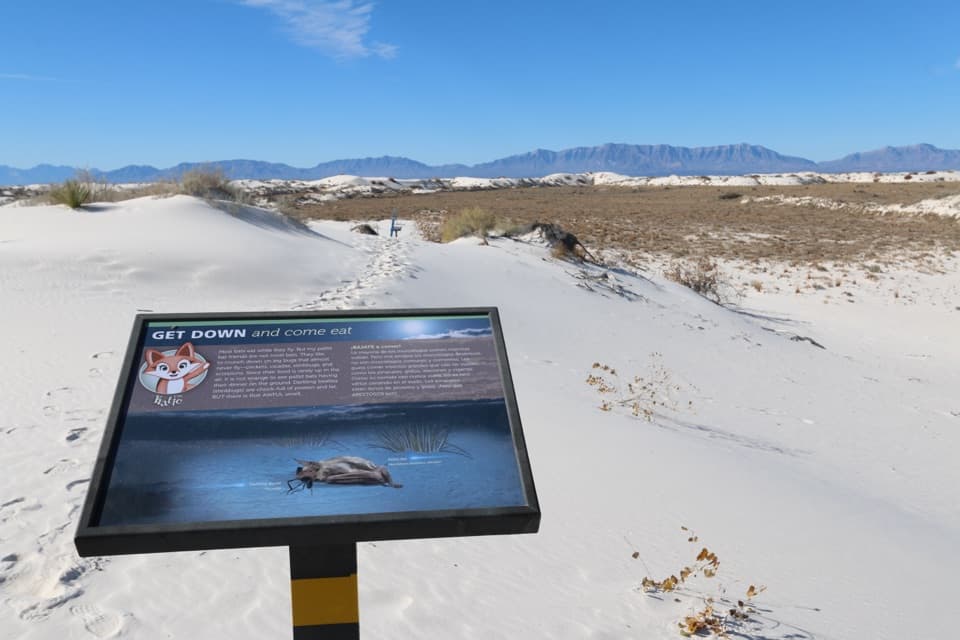
#2 of 5 trails in White Sands
White Sands National Park, NM
A short sand loop with blue markers, steep dunes, and wildlife signs.
Overview
Map & elevation
Plan your hike

The highest, rockiest slopes around here are a summer buffet for grizzly bears.
White Sands Tour Guide
Parkwolf is a GPS audio tour guide for White Sands National Park. As you drive, it chimes in with what’s ahead: hidden gems, upcoming stops, history, geology, and wildlife, right through your car’s speakers.
Recorded for this trailhead
Dune Life Nature Trail: Tracks in the Sand“You're nearing Dune Life Nature Trail, my pick for a short walk exploring where the dunes meet desert scrub.”
Plays as you drive up to this trailhead in the Parkwolf White Sands Tour Guide.
More stories near here in the app
“Fantastic app with many points of information… It’s great to just turn on while you’re driving and it gives you an audio tour of the national Park. We love it!!!!”


Trail guide
Dune Life Nature Trail is about a one-mile loop from Dunes Drive, with a short, level start before it climbs into the gypsum dunes and circles an interdune basin. The full distance includes the approach from the parking area and the same path back. Several dunes rise as much as 30 feet; loose sand and repeated climbs make this a moderate mile rather than a stroll. Allow 45–60 minutes. I’d choose it for a close look at where the dunes meet desert scrub and for its wildlife signs, but not if soft sand or almost no shade sounds like a slog.
Blue club-symbol markers lead through the loop. Keep the next post in view: if wind hides it, turn back to the car rather than guessing across blank sand. At the first high dune, the view opens over an interdune basin toward the Tularosa Basin and the Sacramento and San Andres ranges. From the ridge, the white dune edge in front of the basin shows how the sand and scrub fit together.
Fourteen interpretive signs follow the loop, with Katie the Kit Fox introducing the animals of the dune-scrub edge. This is where desert scrub and gypsum dunes meet. Tracks are the thing to watch for; kit foxes, coyotes, badgers, birds, rodents and reptiles live here, but the trail doesn’t promise a sighting.
Start at Dune Life Nature Trailhead on Dunes Drive, 2.8 miles from the visitor center. Vault toilets are at the trailhead, but there’s no food or drinking water along the route; the Trading Post at the visitor center sells packaged food and bottled water. Dogs are allowed on leash, and the standard park entrance fee applies. The trail isn’t ADA-accessible because of its loose sand and dunes.
Wildlife
 39 sightingsGemsbokMost seen around 7 PMSighting map
 17 sightingsGreat Horned OwlMost seen around 7 PMSighting map
 10 sightingsRoadrunnerMost seen around 9 AMSighting map
 11 sightingsRavenMost seen around 8 AMSighting map
 16 sightingsHorned LarkMost seen around 8 AMSighting map
 20 sightingsBlack-throated SparrowMost seen around 7 AMSighting map
Sighting maps show where each species has been reported across White Sands. Wildlife moves, so no sighting is guaranteed.
Keep exploring
 EasyInterdune Boardwalk0.4 mi · 24 min · 1.5 mi awayA short boardwalk through White Sands’ fragile interdune landscape.
 ModerateBackcountry Camping Trail2 mi · 2.5 hr · 3.2 mi awayClimb loose gypsum dunes on a short, orange-marker loop.
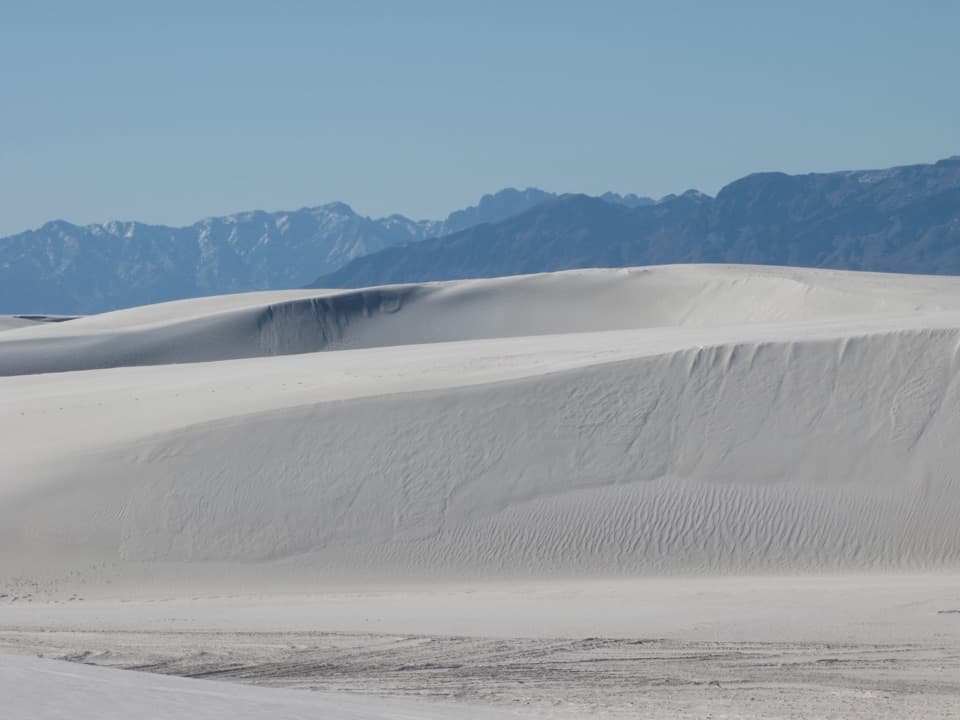 ChallengingAlkali Flat Trail5 mi · 3 hr · 4 mi awayFive sandy miles through gypsum dunes to an ancient lakebed edge.
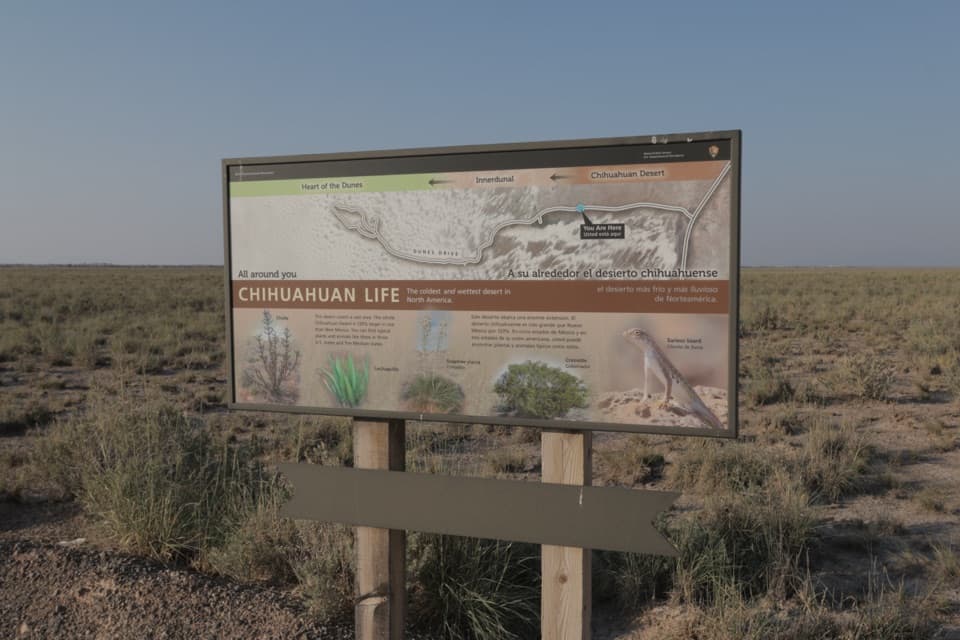 Sight · 0.8 mi awayChihuahuan Life Roadside ExhibitA quick bilingual guide to life across scrub and white dunes.
 Historic marker · 1.2 mi awayLife Thrives Roadside ExhibitA tiny world lives in the crust beneath the dunes.
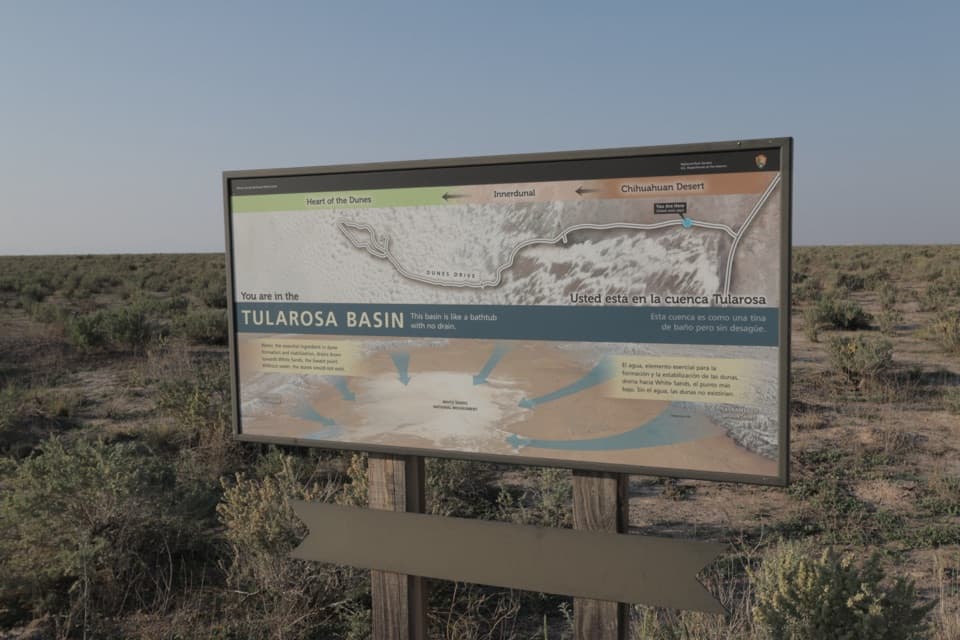 Sight · 1.6 mi awayTularosa Basin Roadside ExhibitA quick stop for the water story under the gypsum dunes.
 Sight · 2 mi awayRare Wonder Roadside ExhibitA compact bilingual guide to the dunes, from desert scrub inward.
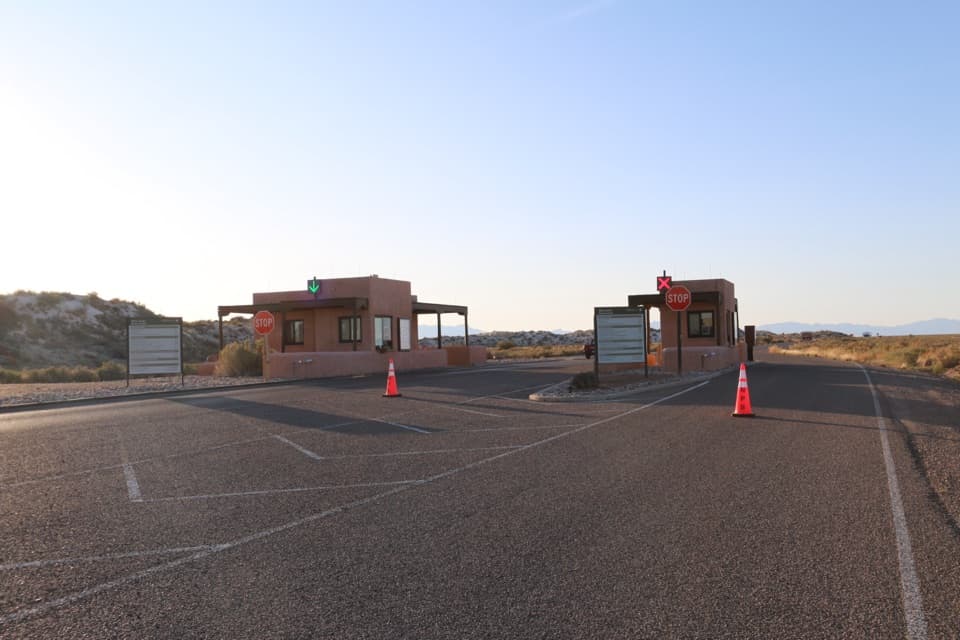 Entrance station · 2.3 mi awayWhite Sands Entrance StationBuy your pass here, just beyond the Visitor Center.
 Visitor center · 2.5 mi awayWhite Sands Visitor CenterAncient tracks and cool adobe make this a smart first stop.
 Store · 2.5 mi awayWhite Sands Trading CompanyA practical last stop for sleds, food and souvenirs.
 Sight · 2.6 mi awayWhite Sands National Park Entrance SignA quick photo stop at the visitor-center approach.
Parkwolf’s White Sands ranking

The audio tour guide for the drive, plus offline maps, trails, and wildlife heatmaps for when the signal drops.
