
Place · 0.1 mi away
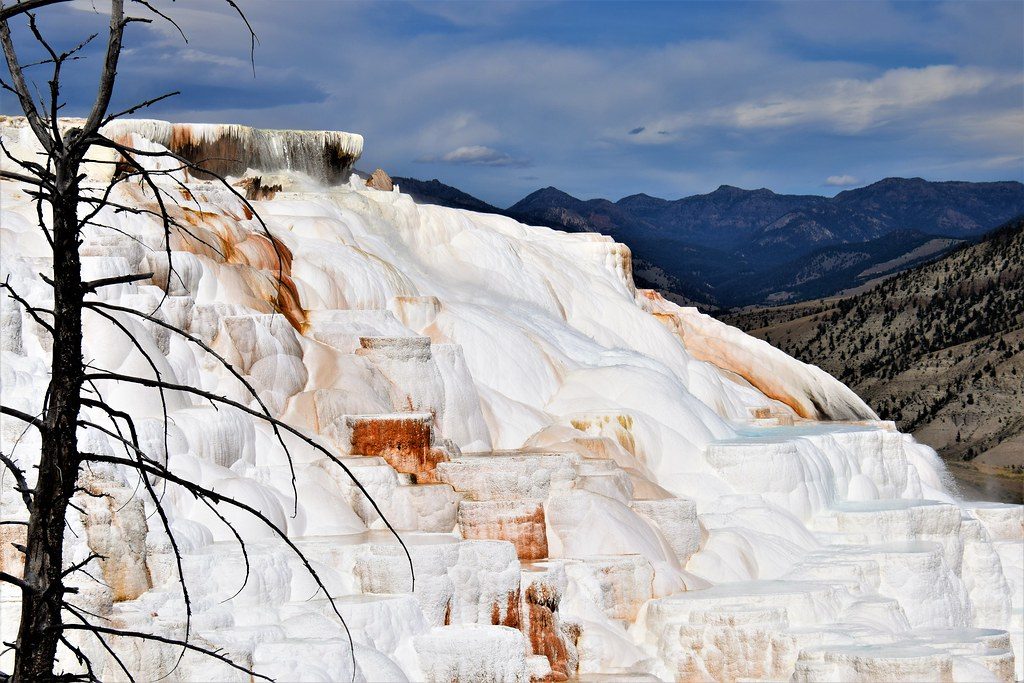
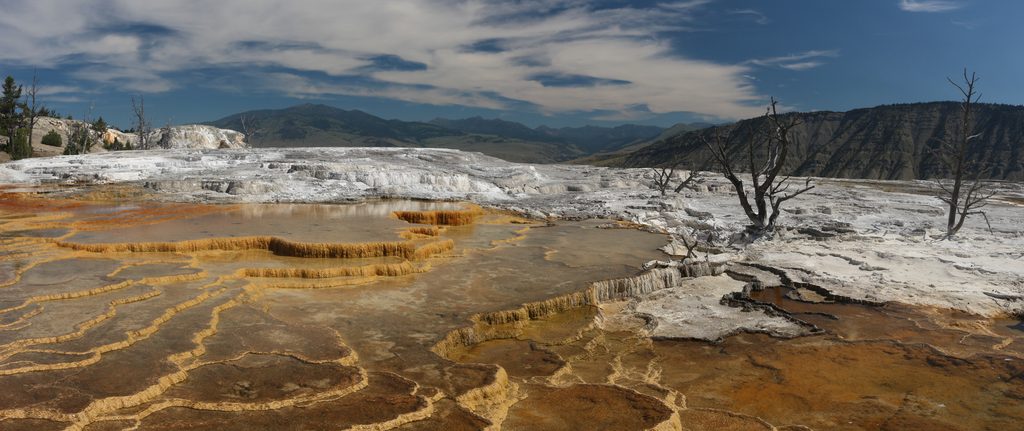
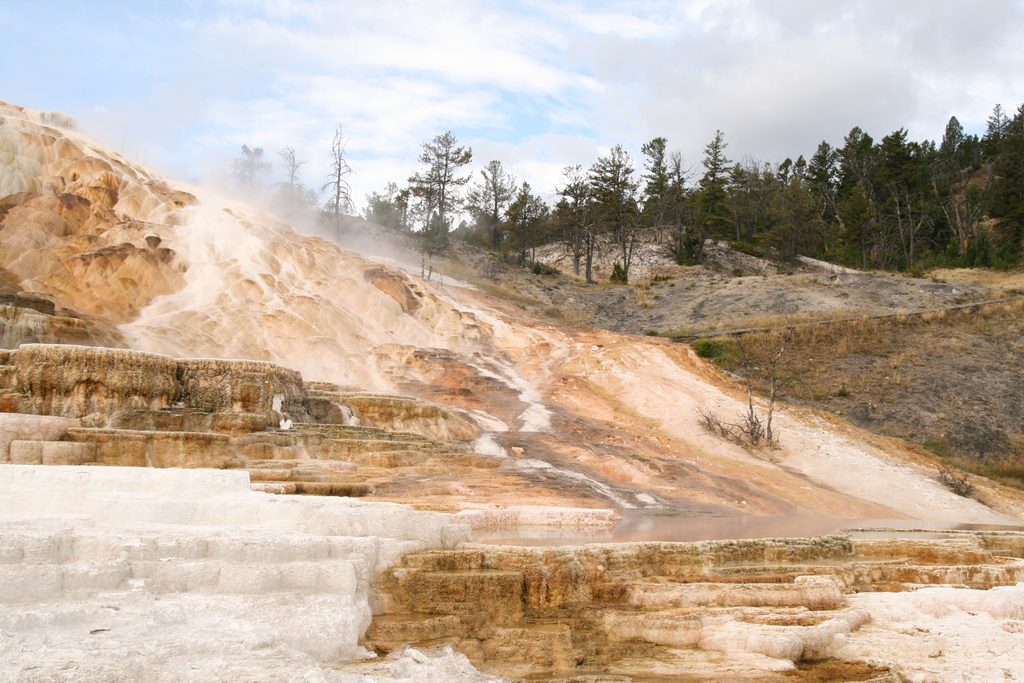
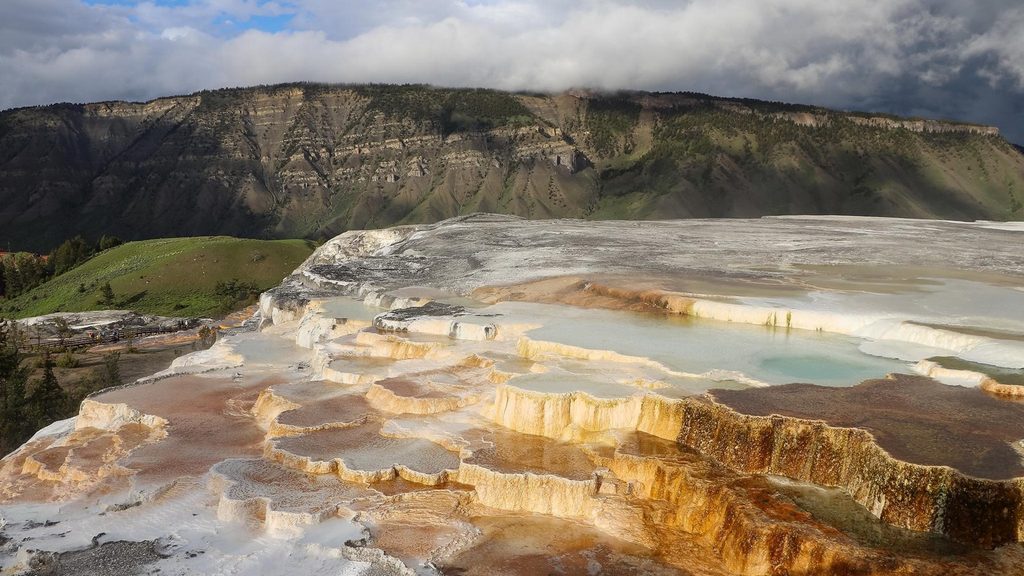
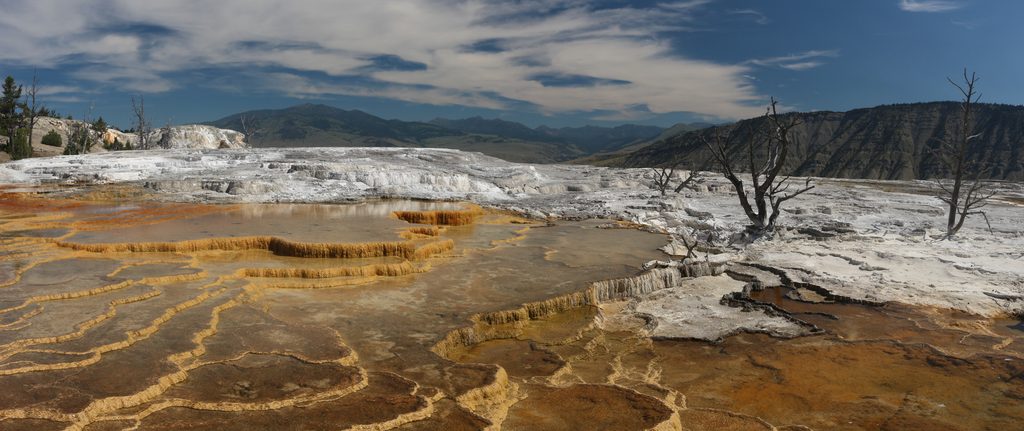
Perched on the edge of Mammoth Hot Springs’ Main Terrace, Canary Spring is a showpiece of color and texture. The spring’s namesake canary-yellow tones come from heat-loving microbes that paint the brilliant white travertine. Depending on flow and light, you can also catch soft light-blues, oranges, and even occasional pinkish hues. It’s dynamic—colors and activity shift over time—so it rarely looks the same twice.
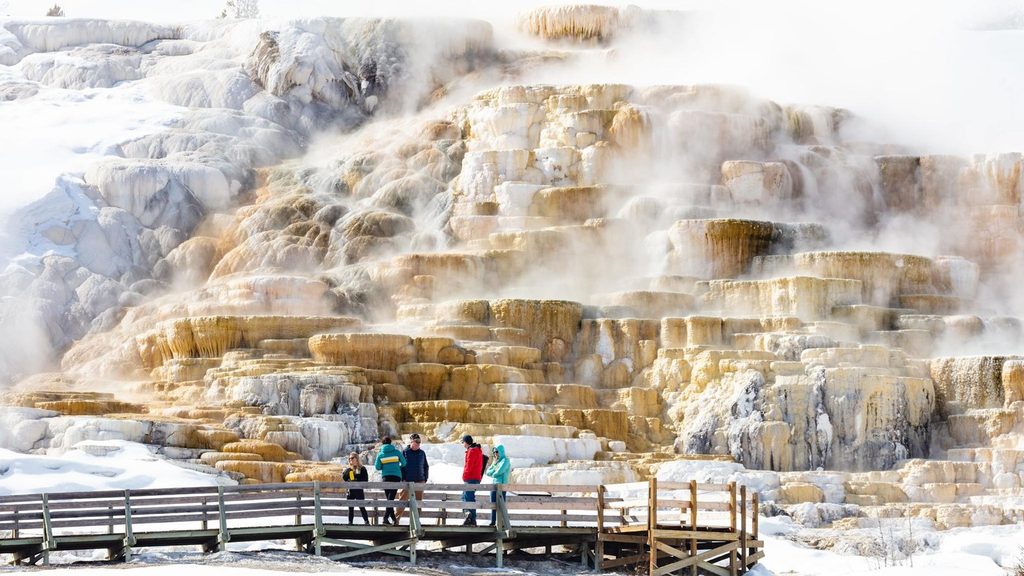
From the boardwalk’s end, you get a front-row look at steaming runoff cascading over stark white steps, with ghostly dead trees swallowed by mineral deposits. The elevated perch also opens up a sweeping view across the terraces and the valley—catch the right light and it dazzles in photos.
Hot, CO₂-rich water rises through the area’s limestone, dissolving calcium carbonate along the way. When it reaches the surface and degasses, it lays down travertine, building those chalk-white steps quickly. Because flow paths shift, Canary Spring can boom, fade, and re-route in short order—part of the fun is seeing what it’s doing today.
The easiest access is from Upper Terrace Drive: park, then take the ramped boardwalk roughly a quarter mile down to the viewpoint. Approaching from the Lower Terraces means a longer walk with more stairs. Note that the Upper Terrace Loop is a one-way drive and can close or restrict larger vehicles; if it’s closed, expect extra walking.
Open around the clock, but it’s at its best in soft light. Go early or late for fewer people, gentler highlights on the white rock, and photogenic steam. Midday brings harsher light and busier boardwalks, especially in peak season. On cold days, extra steam and rime ice add drama.
Elk commonly roam the Mammoth area (bison, mule deer, and the occasional bear, too). Give all wildlife ample space and let them move first. Stay on boardwalks—thermal ground can be thin with scalding water just below the surface. No drones; keep tripods on the boardwalk only.
Parking fills at peak times; arrive early or late to avoid the crunch. There are restrooms near the Lower Terraces parking by Liberty Cap, but not at the Canary Spring viewpoint. Official park maps beat phone GPS for wayfinding in the Mammoth complex.
Place · 0.1 mi away
Place · 0.2 mi away
Place · 0.2 mi away
Place · 0.2 mi away
Easy · 0.1 mi away
Easy · 0.4 mi away
Easy · 0.4 mi away
Moderate · 0.4 mi away

Parkwolf Tour Guide
