
Place · 0.1 mi away
Easy
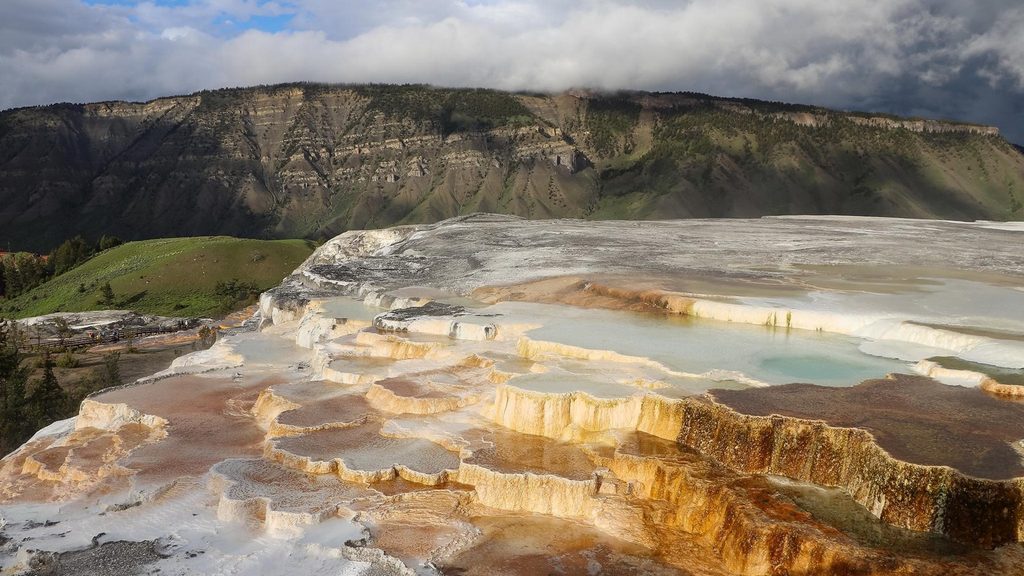
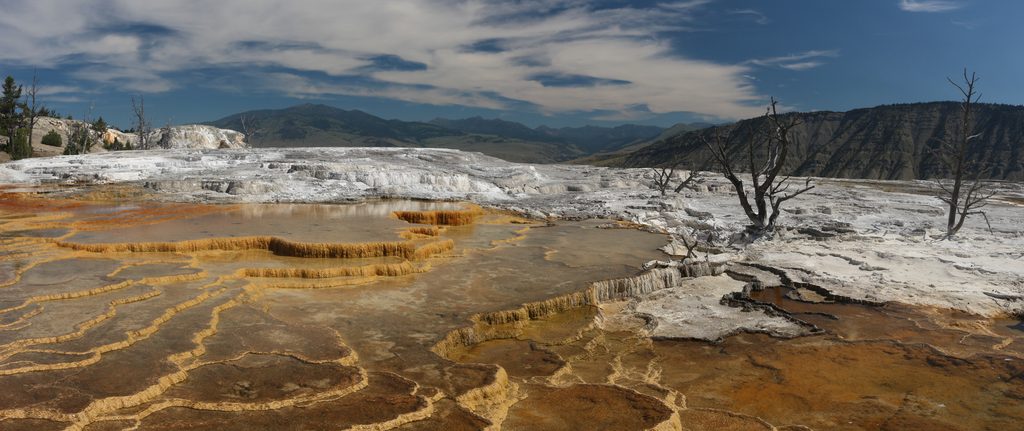
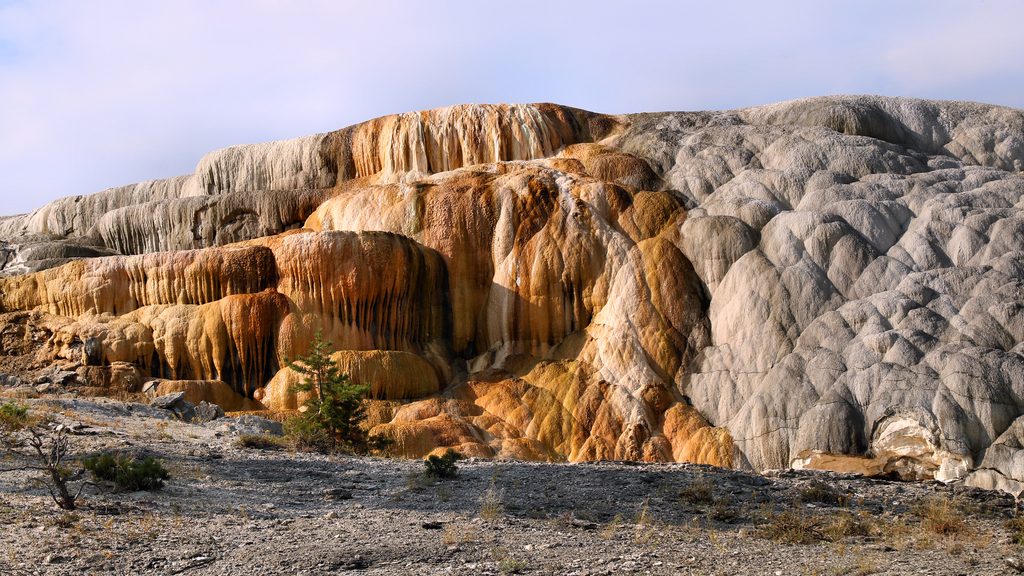
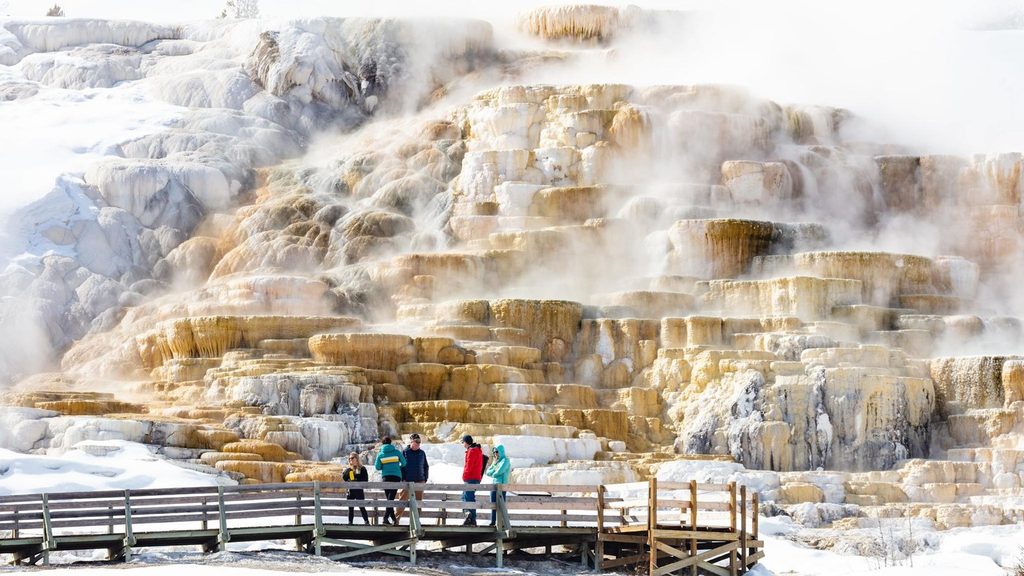
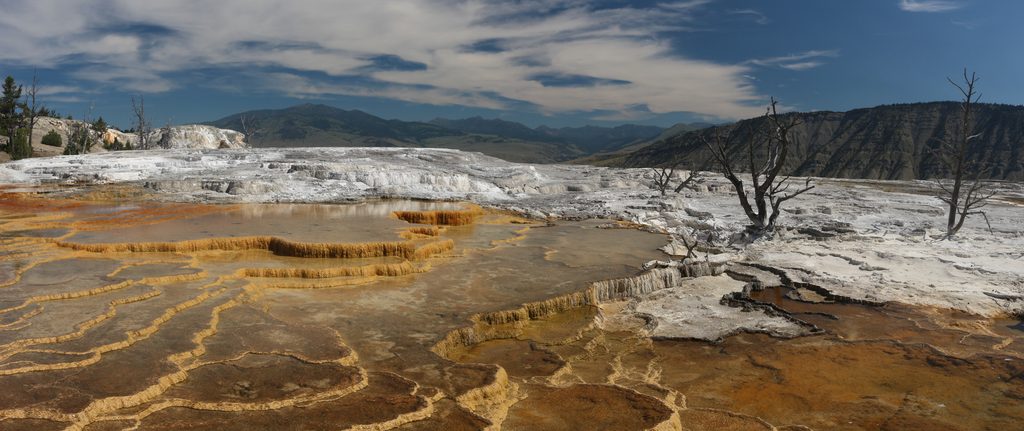
The Upper Terrace at Mammoth Hot Springs is a front-row seat to living geology. Boardwalks thread through chalk-white travertine and colorful hot springs—look for Dryad, Canary, Grassy, and Cupid Springs—while the formations shift year to year as vents awaken and go quiet. Unlike most of Yellowstone’s rhyolite-dominated hot spots, Mammoth sits on limestone, so hot water laden with dissolved calcium carbonate rises, degasses, and builds these terraces fast.
Plan on roughly 1.6–2.2 miles total on the boardwalk network depending on how much you explore; expect steps and some steep grades. Portions are wheelchair-accessible, but other segments include stairs and steeper pitches, and transitions between pavement and boardwalk can require assistance. From the Liberty Cap area to the end of the Palette Spring boardwalk is about 135 yards.
Prefer to mix driving and strolling? The Upper Terrace Drive is a one-way, 1.5-mile loop with multiple short boardwalk stops. Parking is available at the top of the terraces and at pullouts along the loop. Trailers, buses, and motorhomes aren’t allowed; park larger rigs at the entrance and explore on foot. There’s designated accessible parking near the start of the drive and accessible viewing at Orange Spring Mound about 0.7 miles in.
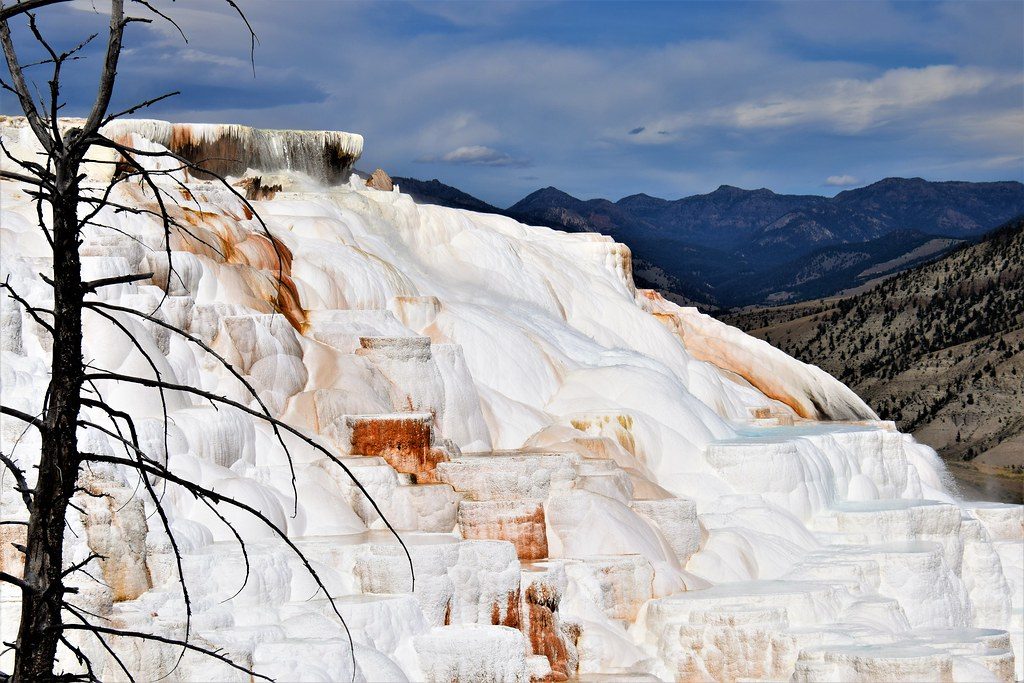
Up close, you’ll notice the white travertine ledges, delicate pools, and color bands from heat-loving microbes. Activity migrates over time, so some famous spots may be quiet while others are roaring—part of the charm here is embracing the change.
Go early or late for easier parking and thinner crowds. In winter, the road closes to vehicles and becomes a groomed 1.5-mile ski/snowshoe loop; clockwise tends to feel easier, while counter-clockwise ends with a steeper downhill. Expect icy patches and variable conditions near thermal areas year-round. Always check current conditions before heading out.
Stay on boardwalks and designated trails—thin crust and scalding water can cause severe burns. Supervise children closely. Wildlife is common around Mammoth; keep at least 25 yards from bison and elk and 100 yards from bears and wolves. In winter, stick to groomed routes and boardwalks; don’t shortcut across thermal ground.
Park at the top of the terraces or at pullouts along the one-way Upper Terrace Drive; large vehicles (trailers, buses, motorhomes) must park at the entrance and explore on foot. Designated accessible parking is near the start of the drive, with additional accessible viewing at Orange Spring Mound.
Hydrothermal ground is unstable and water can severely burn—stay on boardwalks and supervise children. Keep 25 yards from bison/elk and 100 yards from bears/wolves. In winter the road is a groomed ski loop with icy patches; no trailers, buses, or motorhomes on the drive.
Place · 0.1 mi away
Place · 0.1 mi away
Place · 0.1 mi away
Place · 0.2 mi away
Easy · 0.3 mi away
Easy · 0.3 mi away
Moderate · 0.4 mi away
Challenging · 0.4 mi away

Parkwolf Tour Guide
