
Place · 0.1 mi away
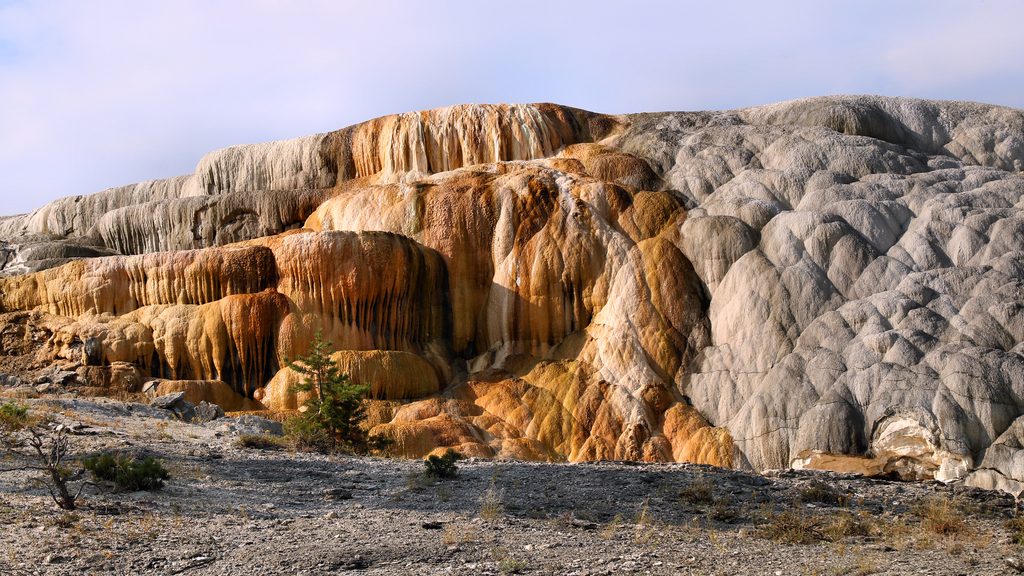
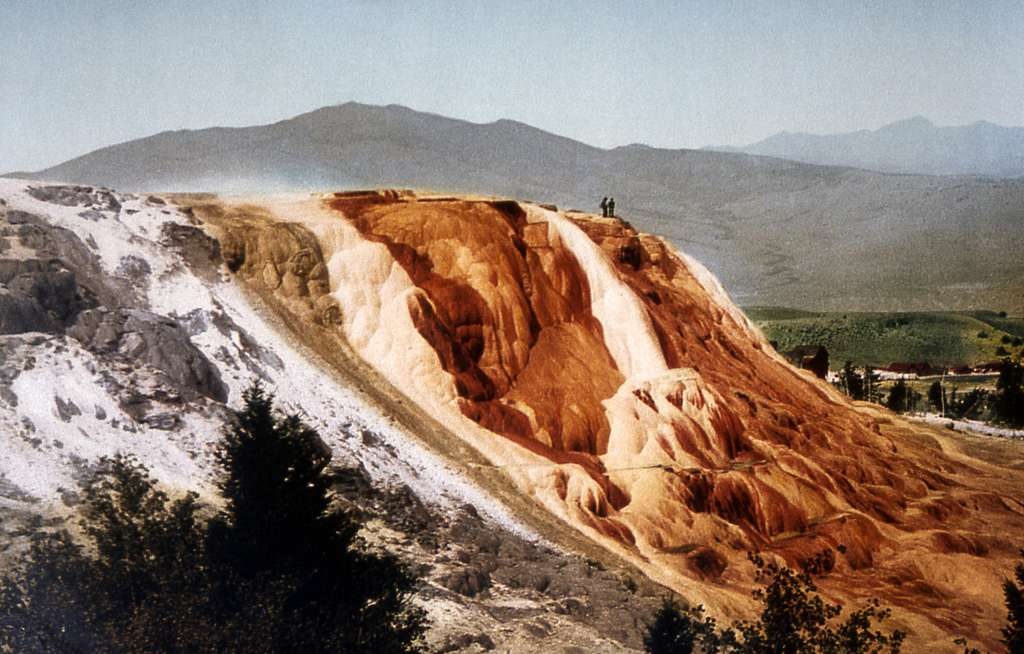
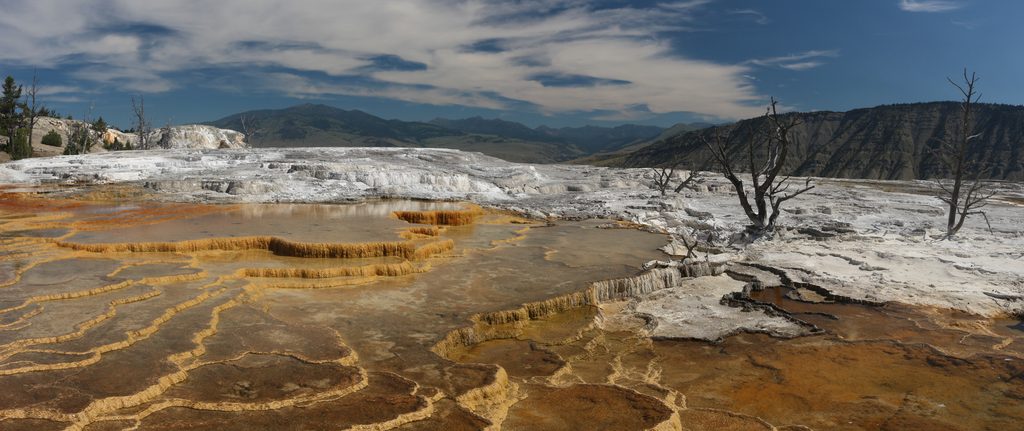
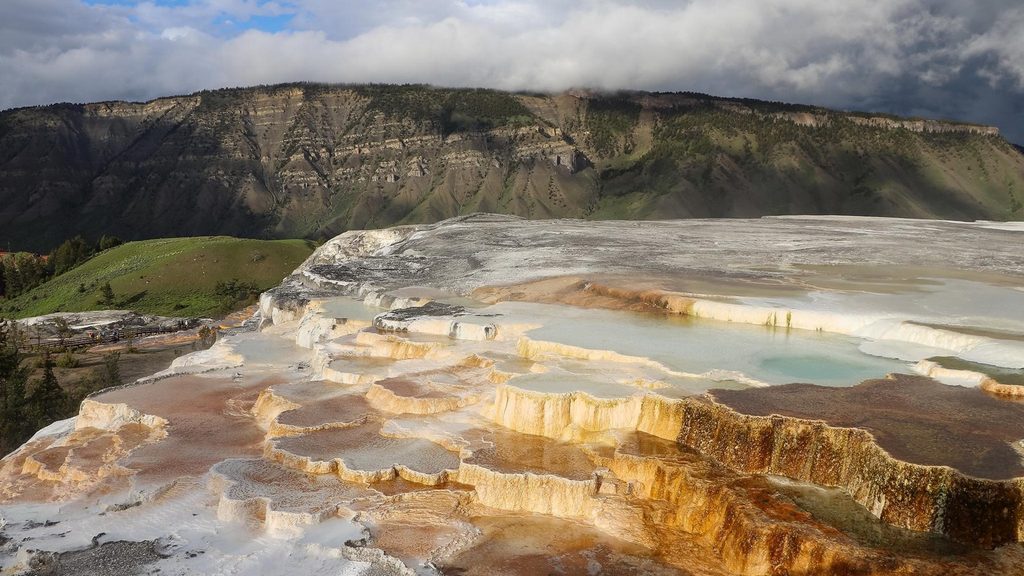
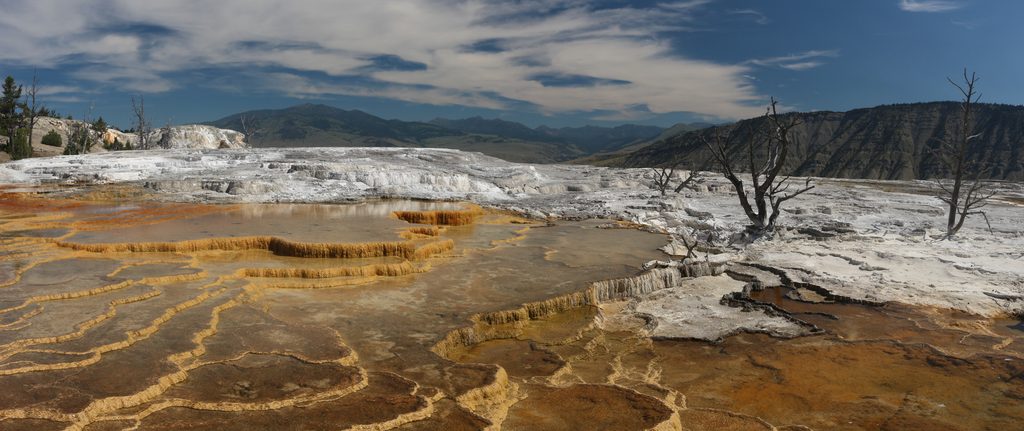
Cleopatra Terrace sits on the Lower Terraces of Mammoth Hot Springs, one of Yellowstone’s most changeable hydrothermal areas. It’s a named slice of the larger travertine wonderland—worth a look as you wander the boardwalks, especially when its delicate, curtain-like calcite is wet and glinting.
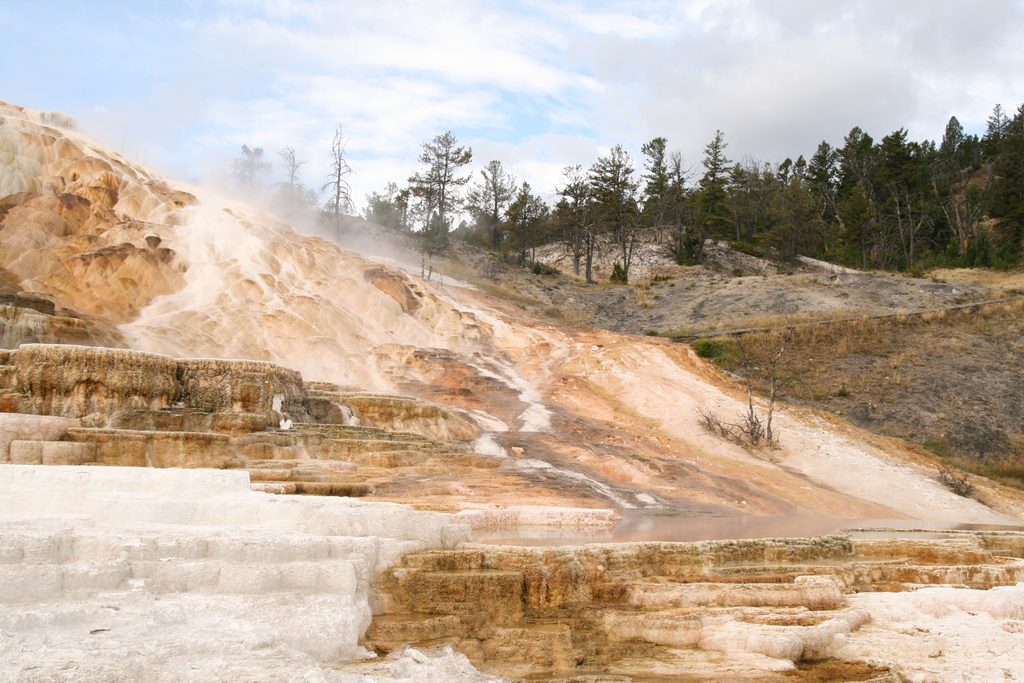
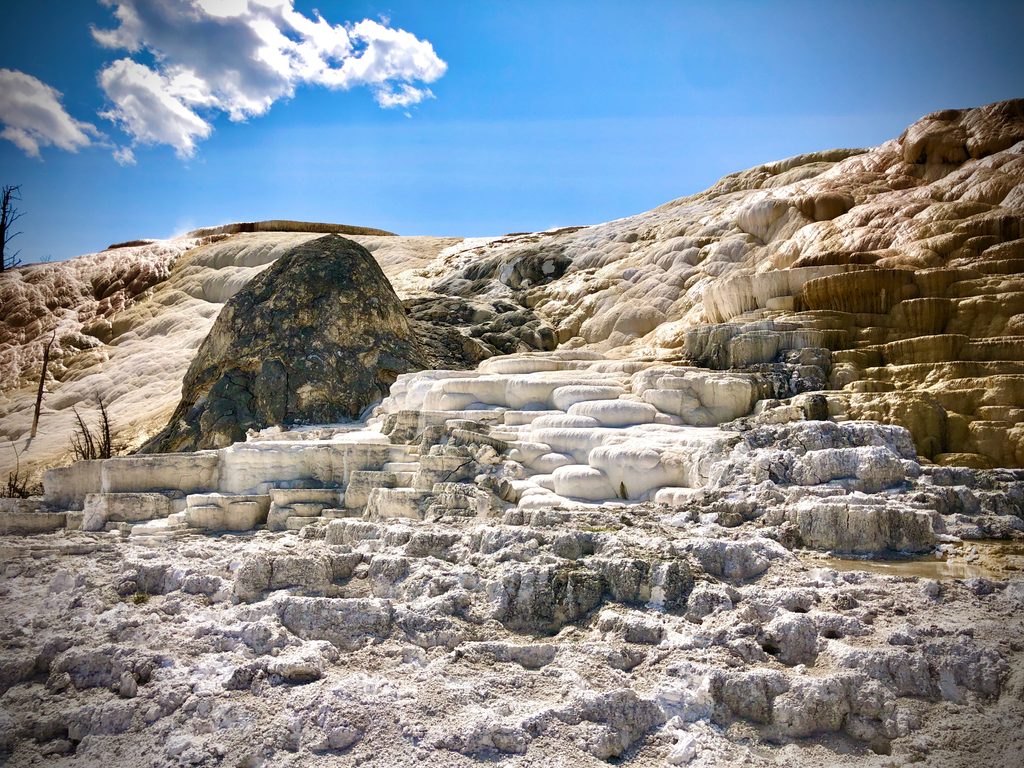
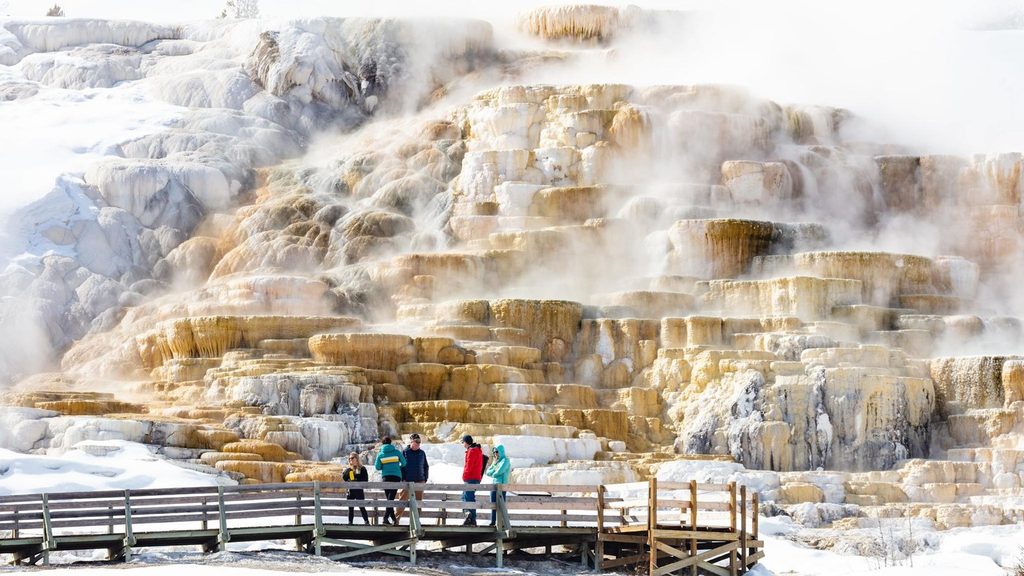
Expect terraced steps with draped calcite patterns. When water is flowing, colors pop thanks to heat‑loving microorganisms; when it’s drier, tones skew toward chalky whites and soft tans. Its scale is modest compared to showstoppers like Minerva, but its textures are unique and photogenic.
Hot water rises through limestone, releases carbon dioxide at the surface, then rapidly deposits calcium carbonate as travertine. Only a small fraction of Mammoth’s plumbing is visible above ground at any time, so vents open and close and water routes shift. That’s normal here—features can look very different season to season.
Mammoth’s terraces have been documented since the 19th century, and even the names have shifted over time. “Cleopatra” was once used for what’s now called Minerva Spring, and the feature currently known as Cleopatra has seen intermittent activity for decades. Indigenous peoples, including Shoshone and Bannock, historically collected minerals here for white paint.
Follow the Lower Terraces boardwalks to link Cleopatra with neighboring stops like Minerva and Jupiter. If you want broader context, pair this stroll with the one‑way Upper Terrace Loop Drive and its short walk‑up viewpoints.
Elk are commonly seen around the Mammoth area. Give them space and keep your distance—this is their home.
Boardwalks only—thermal ground is fragile and dangerous. Supervise kids, and don’t touch or scratch the hydrothermal mats. Hot water here can cause severe burns.
Place · 0.1 mi away
Place · 0.1 mi away
Place · 0.2 mi away
Place · 0.2 mi away
Easy · 0.2 mi away
Moderate · 0.2 mi away
Easy · 0.2 mi away
Easy · 0.2 mi away

Parkwolf Tour Guide
