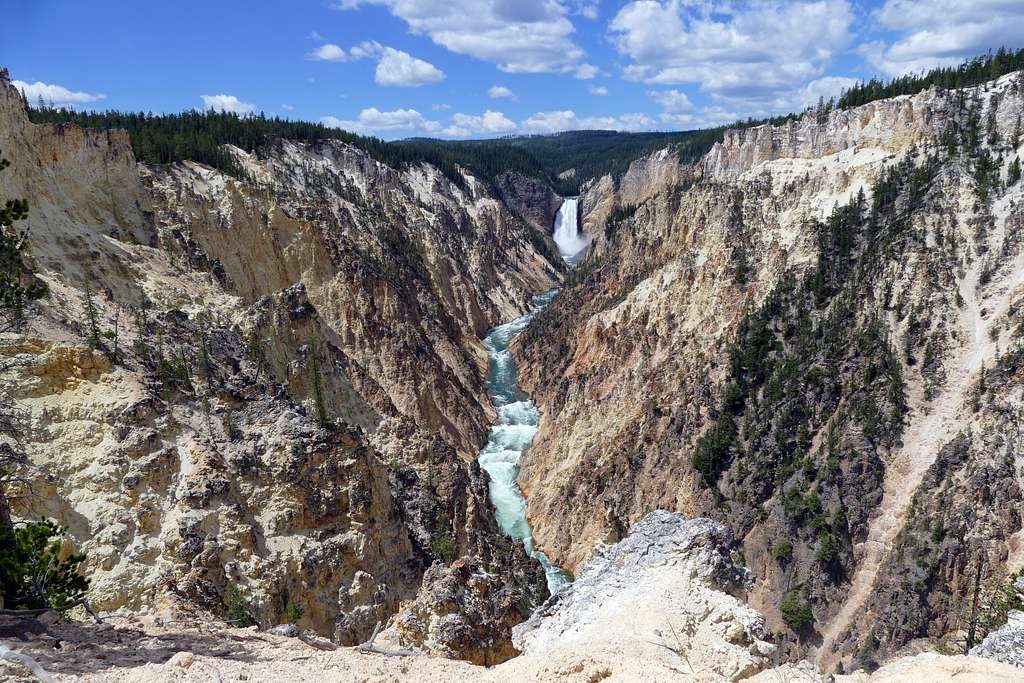
Lower Yellowstone Falls

Yellowstone River’s 308‑foot plunge framed by a painted canyon
Lower Yellowstone Falls, Yellowstone National Park
InsideYellowstone National Park

Overview

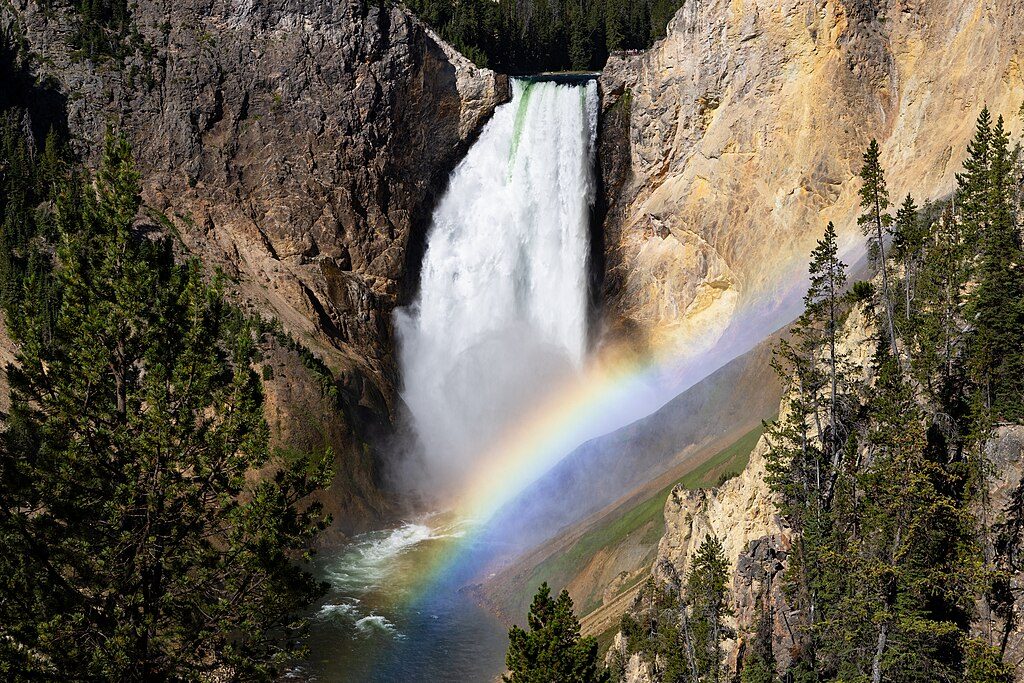
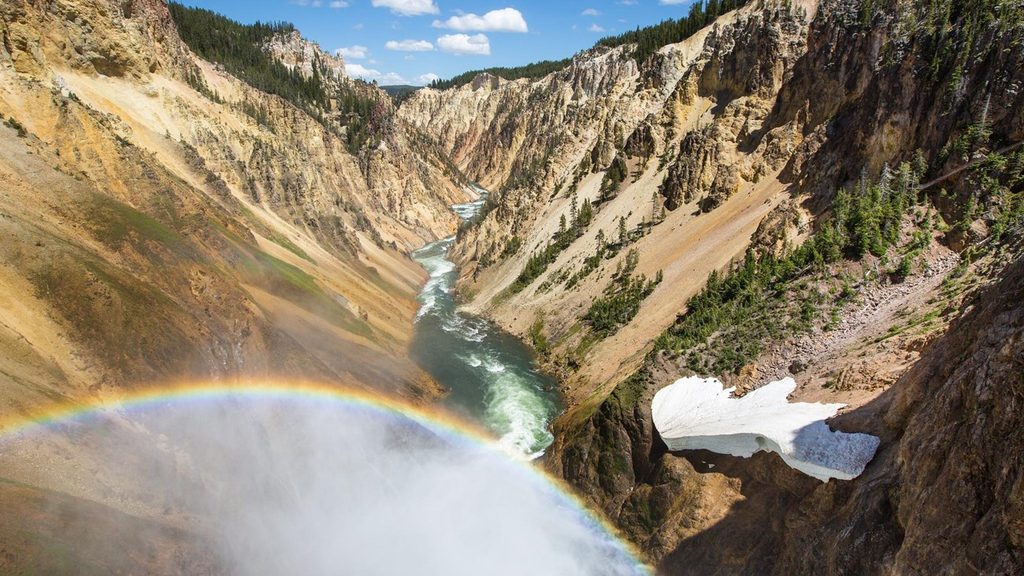
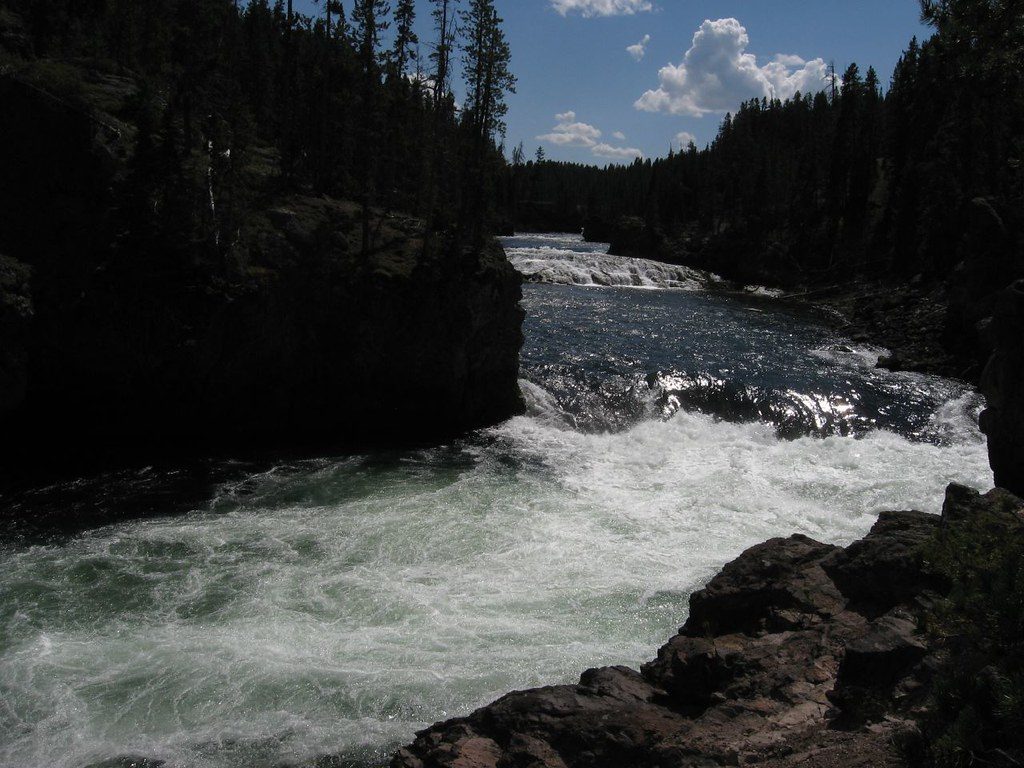
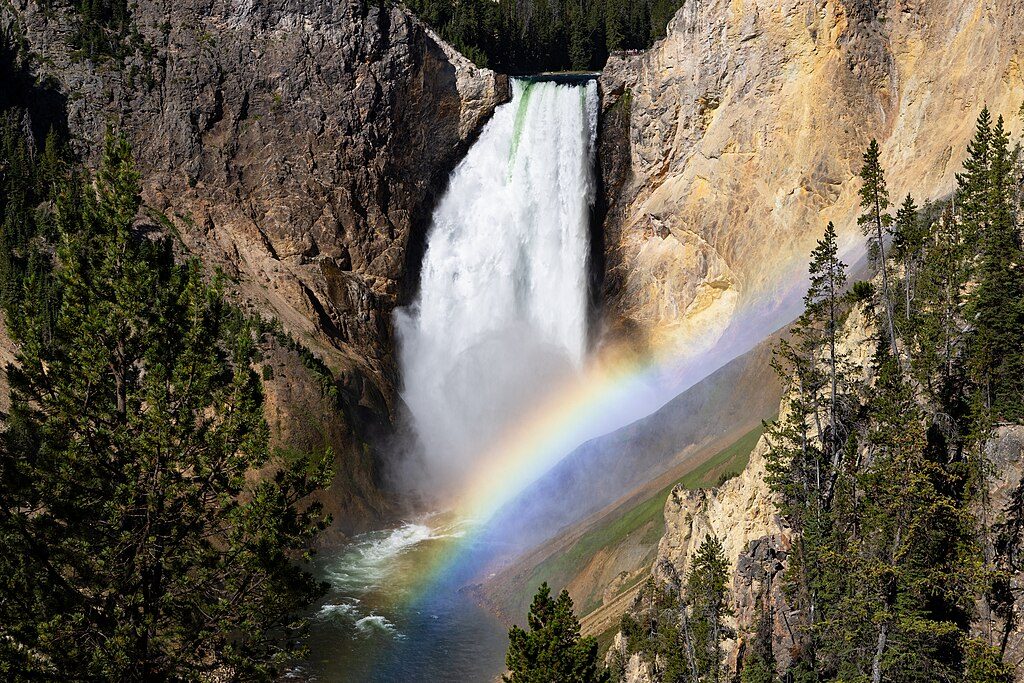
Lower Yellowstone Falls is the park’s showstopper: a 308‑foot drop where the Yellowstone River rockets into the Grand Canyon of the Yellowstone. Many visitors consider it the more dramatic of the park’s two main falls. The canyon’s yellows, reds, and pinks aren’t just pretty—they’re the result of ancient hydrothermal “cooking” that altered the rhyolite, then oxidized into today’s palette.

Why this canyon looks so wild

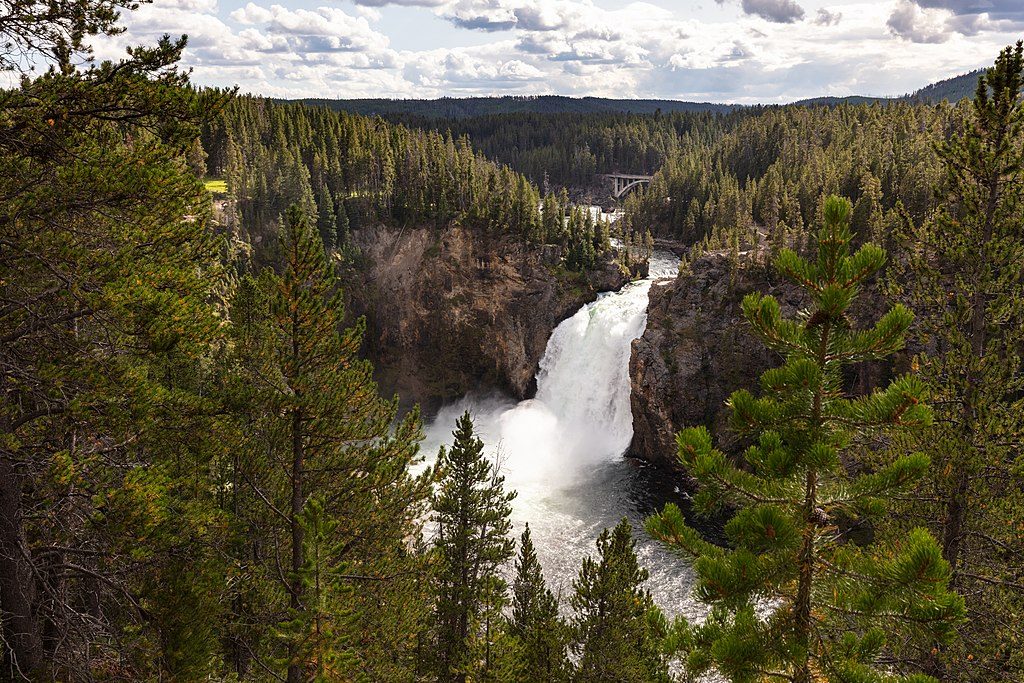
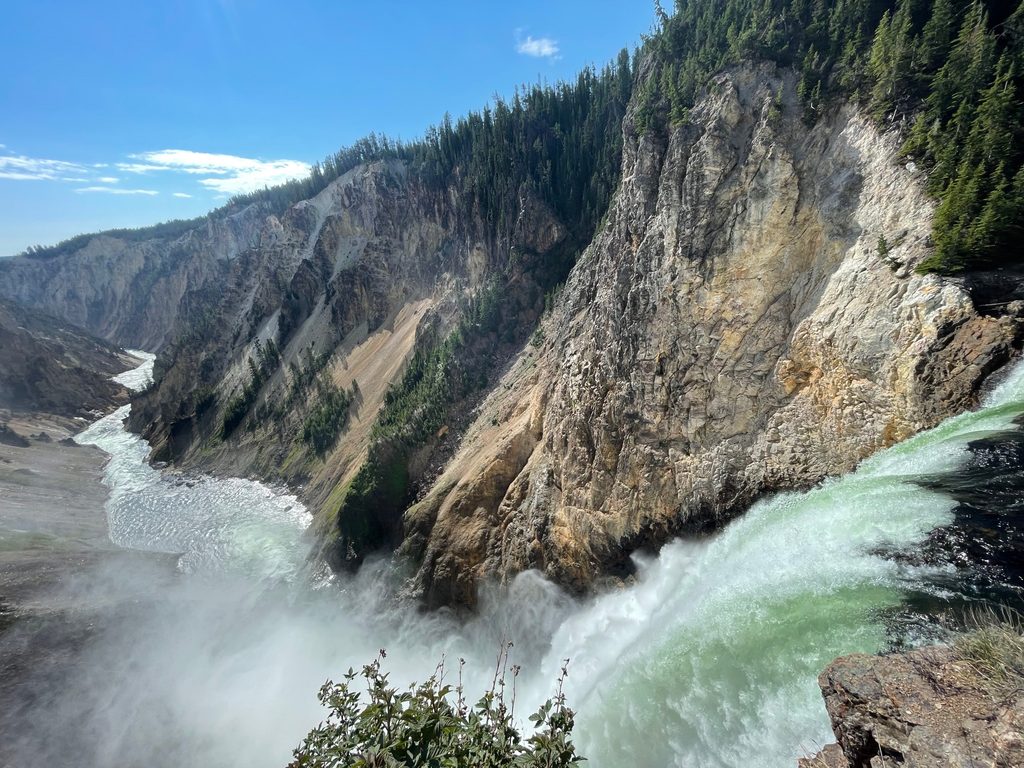
The canyon and falls owe their shape to a perfect storm of geology. Faults, hydrothermally weakened rock, and massive post–ice age floods helped the river cut fast and deep, carving the V‑shaped chasm and setting the stage for both the Upper (about 109 feet) and Lower Falls. It’s a rare spot where big water meets colorful, altered rock—power and paint in the same frame.

Best viewpoints (both rims)

  • South Rim: Artist Point delivers the iconic postcard view—waterfall centered, canyon painted in front of you.
  • North Rim: Lookout Point brings you closer to the action; Grand View shows off canyon textures; Inspiration Point opens up long, layered vistas.
  • Brink of the Lower Falls: A steep set of switchbacks drops to a platform at the lip. It’s the place to feel the thunder—be ready for a huff on the way back up.
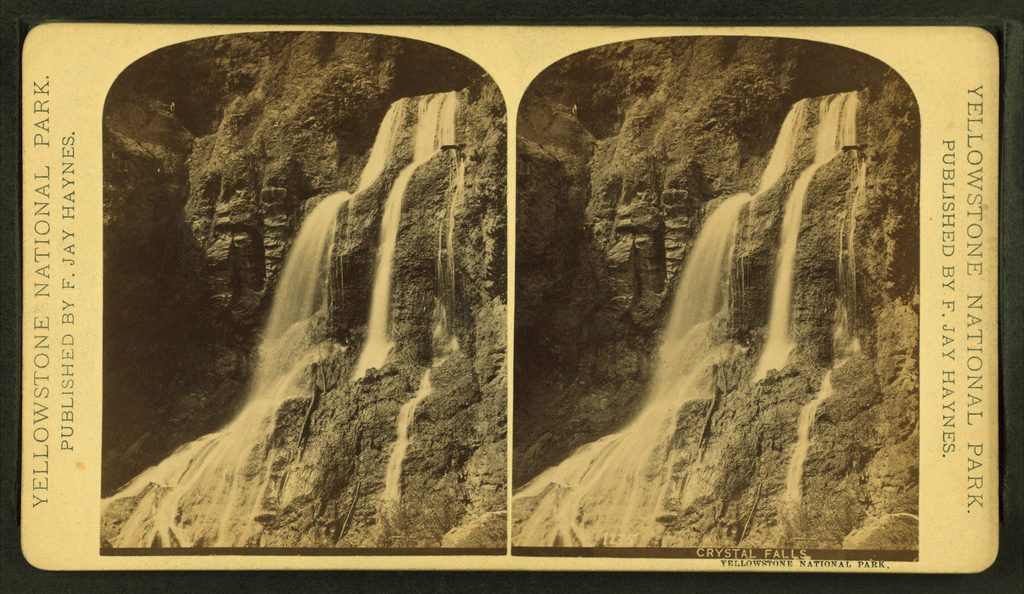
  • Bonus nearby: Between Upper and Lower Falls, Crystal Falls tumbles in tiers—easy to overlook but worth a peek if you’re already exploring the rim.

Timing, light, and crowds

  • Arrive early or late to snag parking and elbow room. Midday is peak crowd time.
  • Mid‑morning on clear days can throw rainbows into the mist—photographers, watch your angles.
  • Spring through early summer brings the biggest flows; late summer can reveal more canyon texture for photos. In winter, access to the area is by oversnow travel only.

Wildlife

Scan the pinnacles for osprey and ravens; you’ll often see them riding the thermals or nesting on spires. Just south in Hayden Valley, bison and elk are common—keep your distance and give all wildlife lots of space.

Safety and logistics

Rim edges are unstable—respect railings and stay on established paths. Mist can make stairs and pavement slick. The Brink trail is steep; carry water and pace yourself. Weather at elevation changes fast—layers and a light shell beat surprise squalls.

Best time to visit

  • Best overall: Early morning for calmer viewpoints and soft side‑light; late afternoon for warmer canyon tones.
  • For rainbows: Clear mid‑morning when the sun cuts the mist.
  • For maximum roar: Late spring to early summer snowmelt.

Pros

  • Multiple classic viewpoints from both canyon rims
  • Thrilling close-up perspective from the Brink of the Lower Falls

Cons

  • Parking lots fill late morning and afternoons
  • Steep climb on the Brink trail makes the return strenuous

Tips

  • Hit the North Rim first (Lookout Point), then swing to Artist Point for the classic perspective with fewer backtracks.
  • Mid‑morning on clear days can produce rainbows in the mist—watch the angles.
  • The Brink of the Lower Falls trail is steep; bring water and expect a slow, sweaty climb back up.
  • Crowds and parking peak late morning through afternoon—arrive early or come late day.
  • Spring snowmelt means maximum power; late summer can be better for color and canyon detail.
The Parkwolf tour guide sitting on a phone mounted in a car

Parkwolf Tour Guide

Like a tour guide in your car.

Save the places you found around Yellowstone, then let Parkwolf guide the drive between them.Download Parkwolf on the App Store