
Place · 1.3 mi away
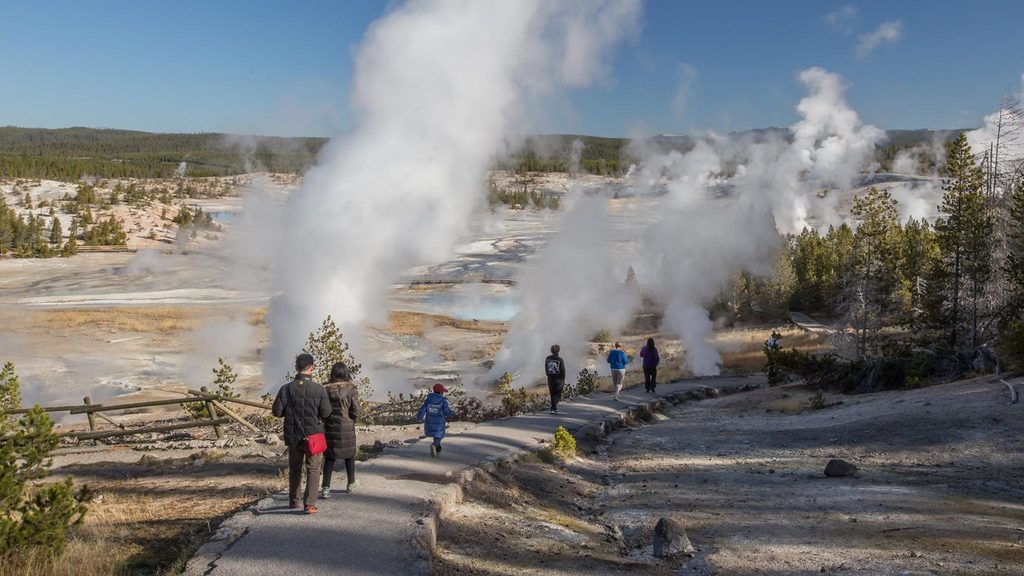
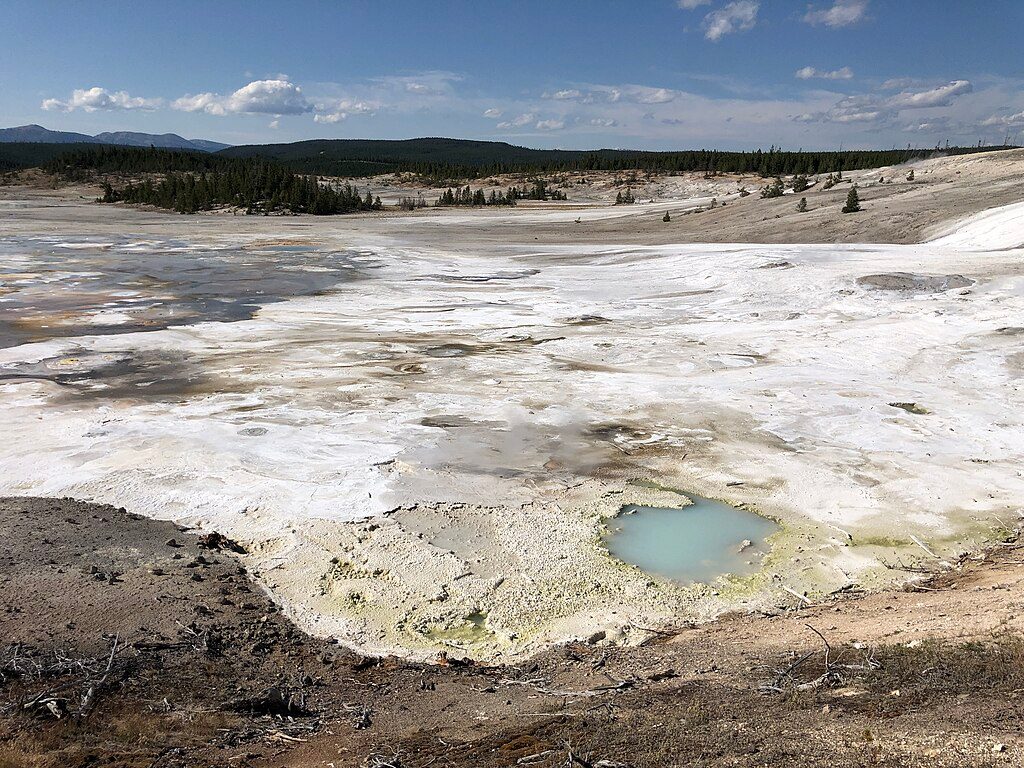
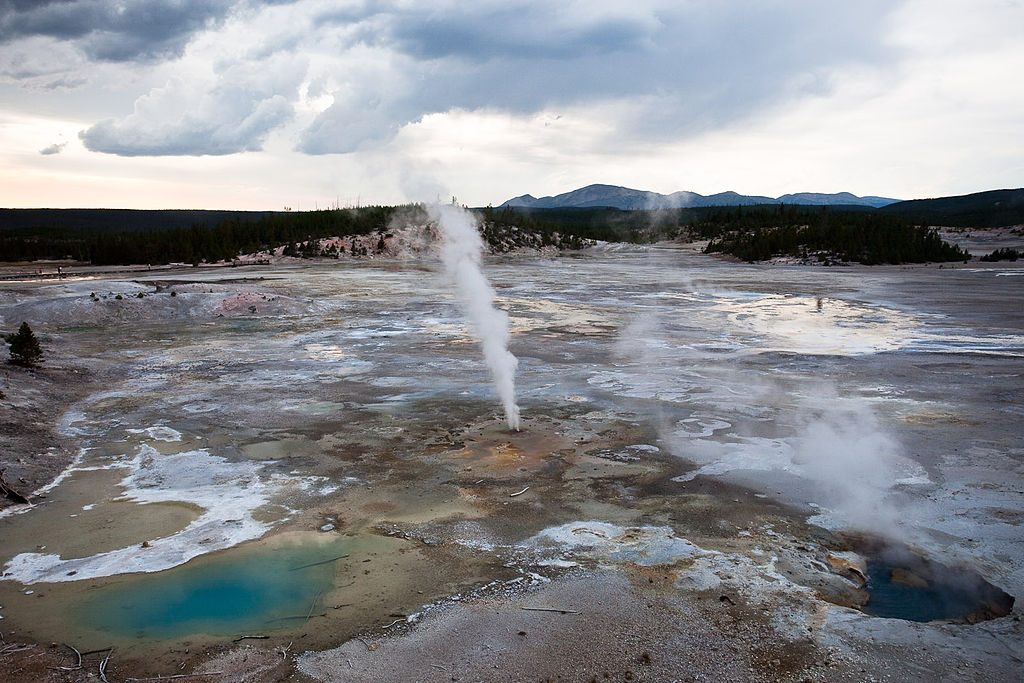
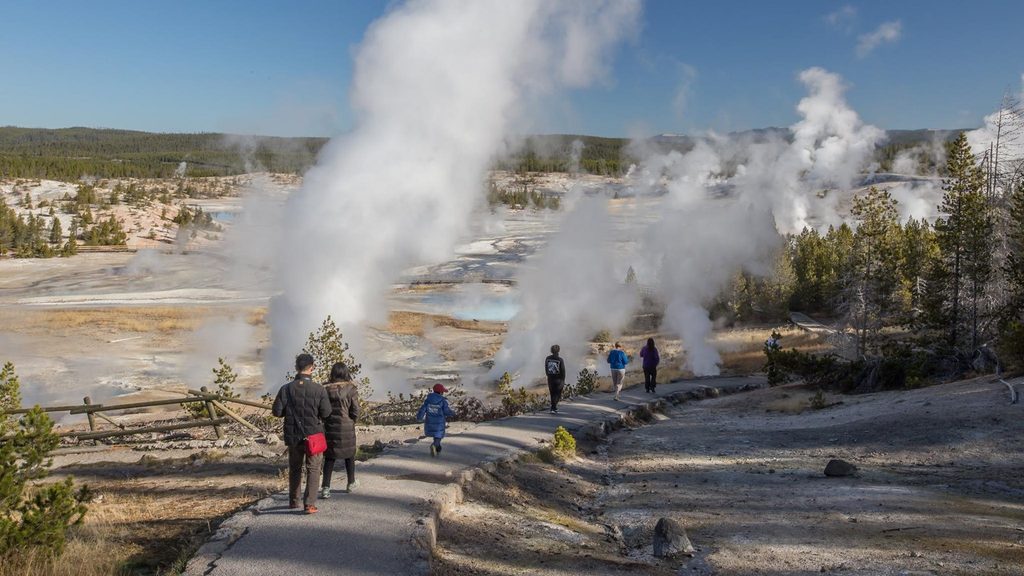
Porcelain Basin is the showiest corner of Norris Geyser Basin—barren, steaming, and constantly in flux. It’s among the hottest and most acidic hydrothermal areas, so the landscape here changes fast: pools appear, drain, and recolor, and vents awaken or go quiet. Expect a sensory hit of steam, hissing, and mineral smells.
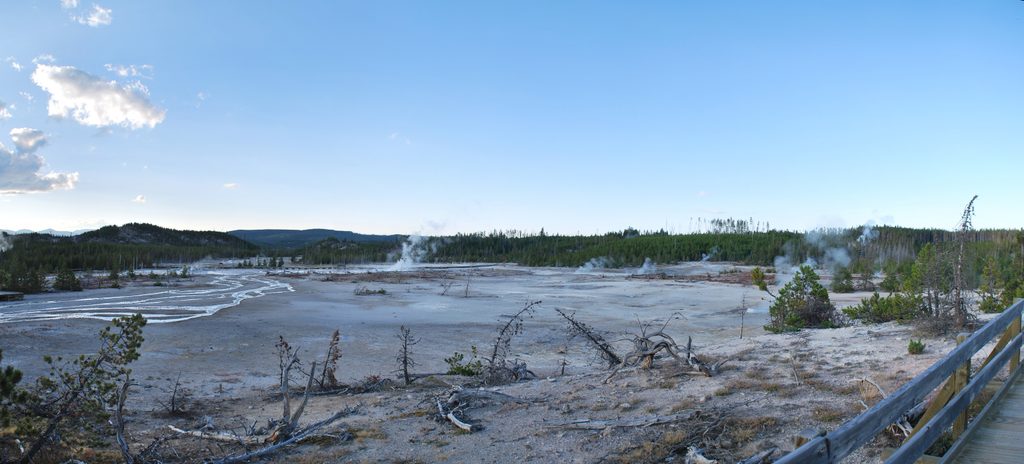
A sweeping expanse of milky‑white silica (sinter) flats streaked with blue‑green pools, geyser runoffs, and fuming vents. Colors shift with temperature and chemistry: hottest waters tend to be colorless to yellow, while cooler flows grow orange, brown, and green microbial mats. You can take it all in from the loop of boardwalks and paved path that circles the basin.
Norris sits near the rim of the Yellowstone Caldera and at the intersection of major fault zones, which channels extreme heat and fluids toward the surface. Beneath the basin lies welded tuff from the caldera‑forming eruption, overlain by glacial deposits and thick sinter. Porcelain is also a hydrologically closed thermal basin—its features drain into Tantalus Creek—hosting both acid and alkaline waters, a big reason the basin’s look and behavior can change so fast.
Small earthquakes and shifts in subsurface water levels trigger “thermal disturbances” that can re‑plumb features for days to weeks. Recent reminders: a small hydrothermal explosion occurred here in April 2024, and a new thermal pool likely formed between late December 2024 and early February 2025. Terrain can change without warning, and closures pop up as needed.
The Porcelain Basin loop is about 0.75 miles on boardwalks and paved sections—easy, but expect some grades. Restrooms are available at Norris Geyser Basin. The nearby museum offers exhibits and an information desk, and the main parking area for Norris serves the basin.
In peak summer, arrive early or late to avoid parking delays. Be ready for temporary boardwalk closures after disturbances.
Stay on boardwalks and designated trails—hydrothermal water can cause severe burns. Supervise kids closely, respect closures, and follow ranger advisories, especially after recent activity.
If you’ve got extra time, the Back Basin loop to Steamboat Geyser is an easy add—its major eruptions are unpredictable, but the area is fascinating even when quiet.
Place · 1.3 mi away
Place · 1.4 mi away
Place · 1.6 mi away
Place · 1.7 mi away
Easy · 1.3 mi away
Easy · 1.3 mi away
Moderate · 1.4 mi away
Easy · 1.8 mi away

Parkwolf Tour Guide
