
Place · 0.2 mi away
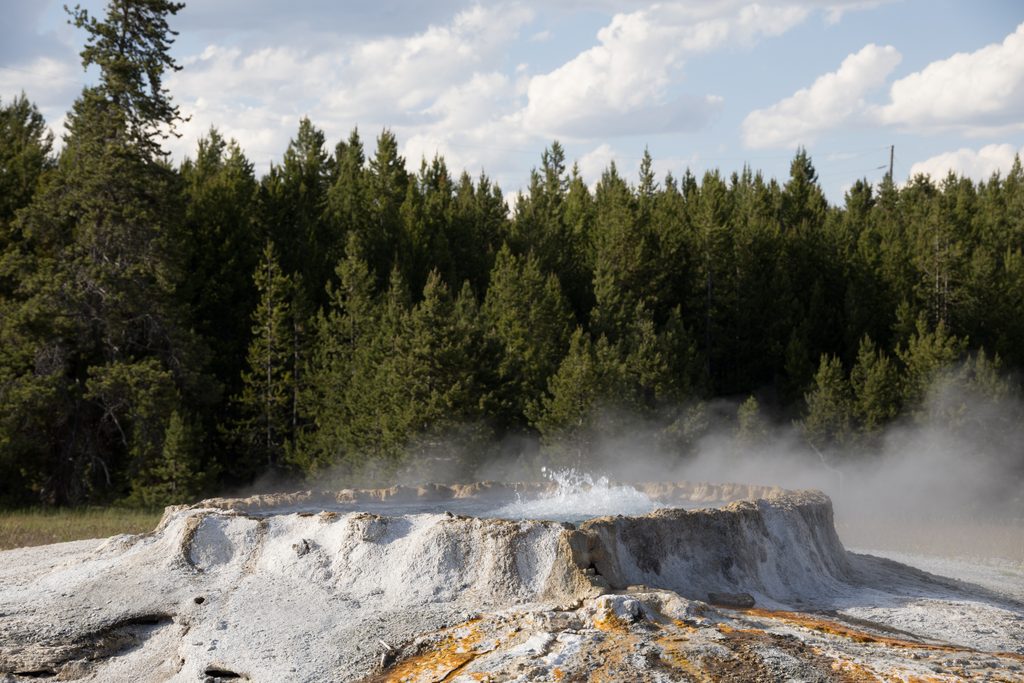
Punch Bowl Spring is a small but memorable hot spring in the Upper Geyser Basin, just west of Daisy Geyser on the way toward Black Sand Basin. What sets it apart is its perfect “punch bowl” shape: a beaded, sawtooth rim of siliceous sinter that lifts the blue pool above the surrounding ground. It gently boils and overflows almost constantly—quietly mesmerizing rather than explosive.
Expect a near-round pool about 12 feet across and roughly 30 feet deep, perched behind a rim about 30 inches high. The water is near-boiling (average around 197.8°F/92.1°C) and neutral in pH (about 7.5). You’ll notice glossy, white sinter textures on and around the rim; where temperatures drop along the edges, colorful microbial mats can appear—yellows in hotter zones, shifting to oranges, browns, and greens where it’s cooler.
The spring is part of Yellowstone’s active hydrothermal system. Rain and snowmelt percolate down, heat up over the shallow volcanic heat source, and rise through natural plumbing to feed features like this. As the hot, silica-rich water reaches the surface and cools, it deposits sinter bead by bead, building that distinctive punch-bowl rim over time.
Punch Bowl Spring has been on visitors’ radar since the Hayden surveys in the late 1800s. Early accounts occasionally called it “Devil’s Punch Bowl” or “Faeries’ Well.” Some 19th‑century observers described it as “playing,” but there have been no recorded eruptions since the early 1900s—today it’s best appreciated as a hot spring with character rather than a geyser.
Reach it via the Upper Geyser Basin boardwalk network from the Old Faithful area; there’s no dedicated roadside pullout. It’s a simple, family‑friendly walk on paved paths and boardwalks, and you’ll pass other notable features along the way. There are no toilets out on the boardwalks—use facilities in the Old Faithful developed area before you head out.
Bison and elk occasionally wander through the basin. Give them space and yield the boardwalk. Keep a safe distance and never step off the walkway to go around wildlife.
Stay on the boardwalks—the ground can be thin, and the water can cause severe burns. Don’t touch or throw anything into the spring, and don’t disturb the hydrothermal mats. Supervise kids closely.
Morning or late afternoon gives calmer light to appreciate the rim textures and the gentle boil. Midday brings the biggest crowds on the Upper Geyser Basin loop, so start early from the Old Faithful lots if you prefer a quieter look.
Place · 0.2 mi away
Place · 0.4 mi away
Place · 0.4 mi away
Place · 0.4 mi away
Easy · 0.5 mi away
Easy · 1.1 mi away
Easy · 1.2 mi away
Easy · 1.2 mi away

Parkwolf Tour Guide
