Place · 0.1 mi away

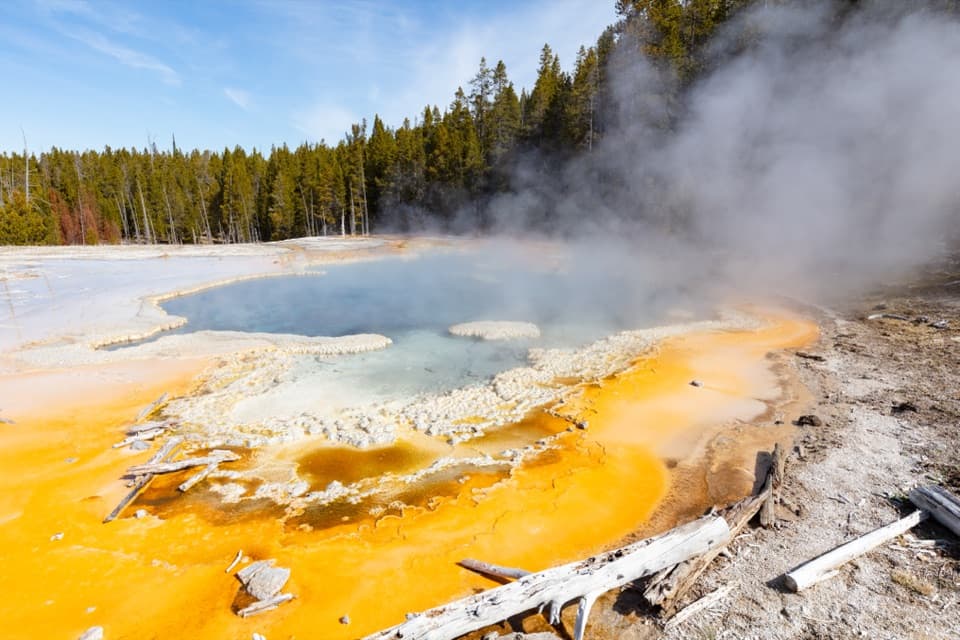
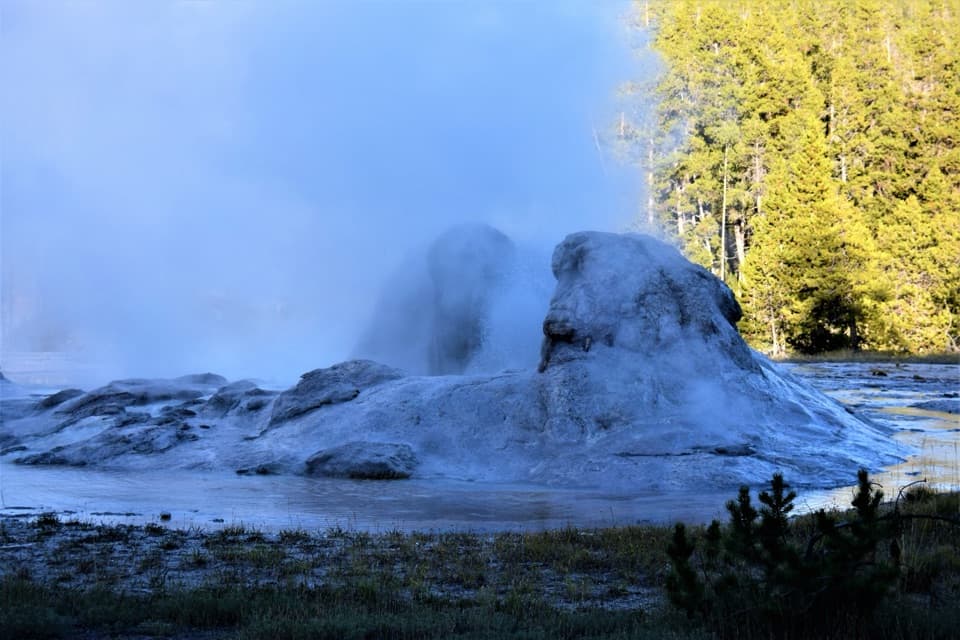
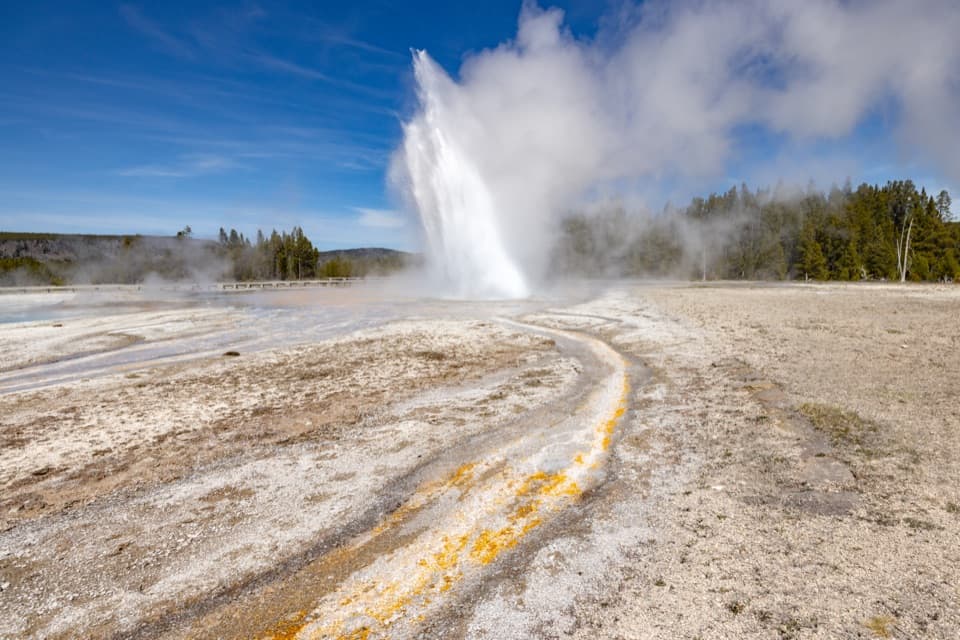
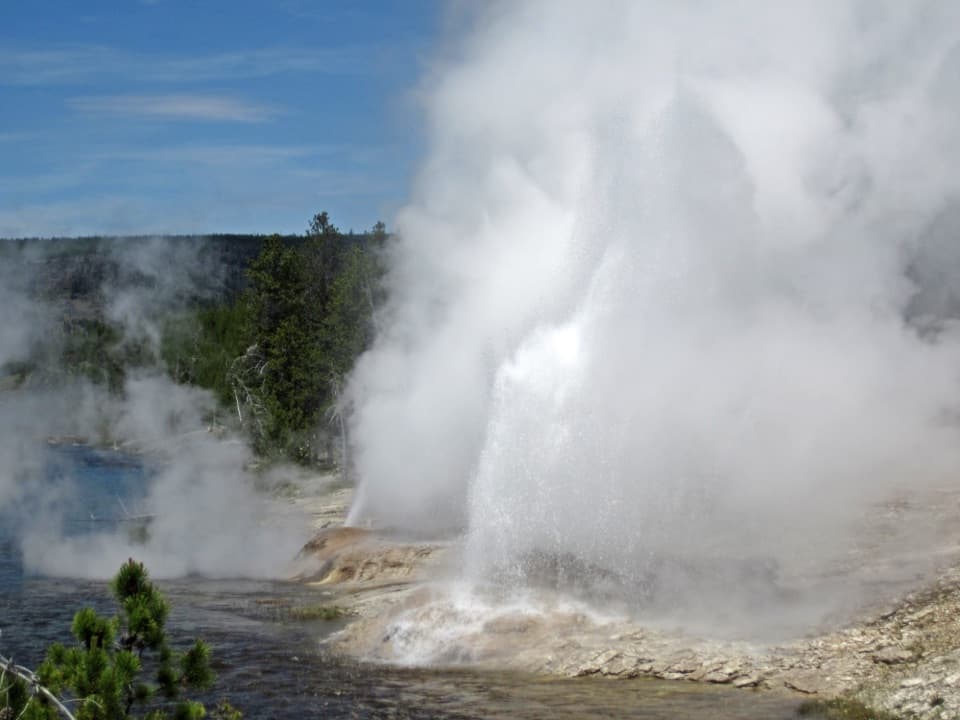
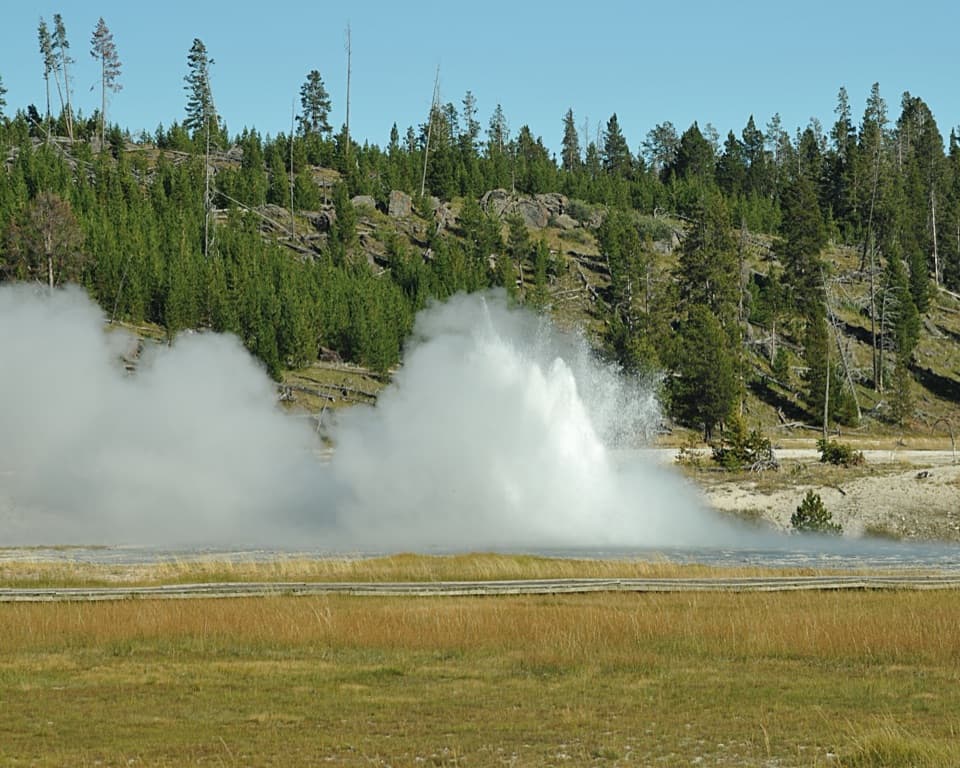
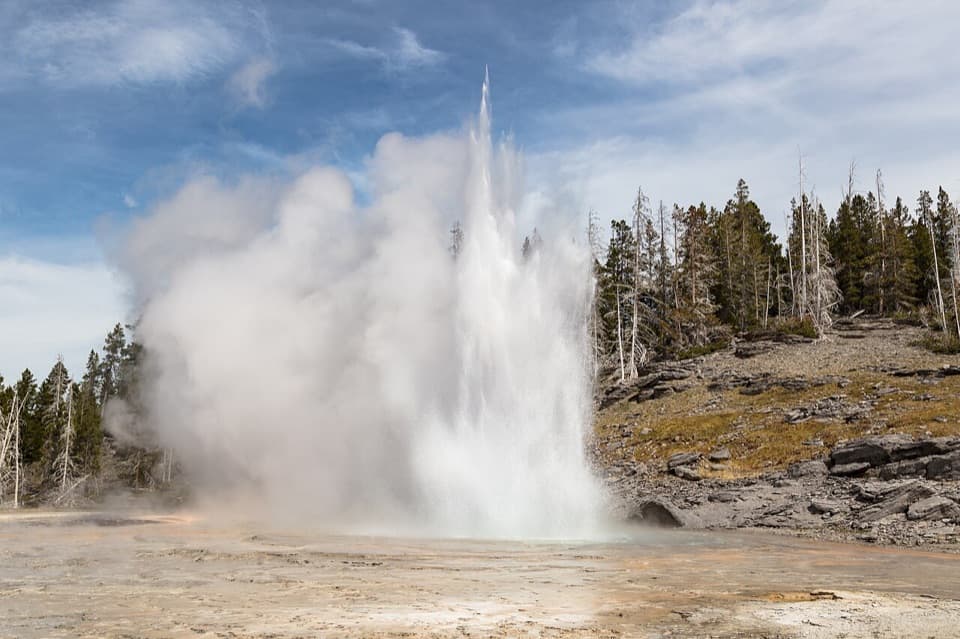
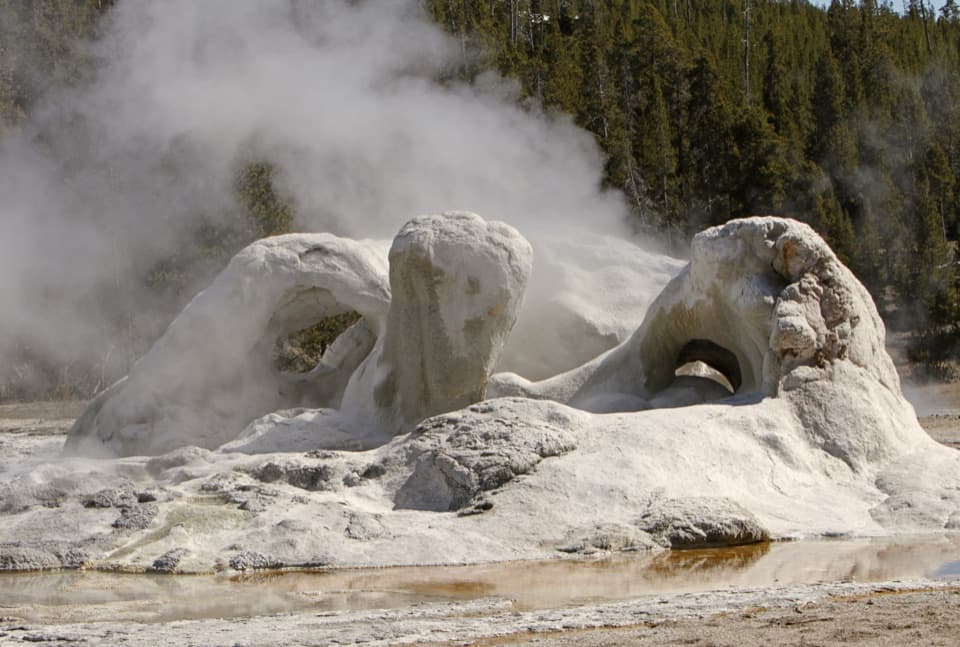
Grotto Geyser sits in the Upper Geyser Basin near Old Faithful, instantly recognizable by its gnarled, cave‑like cone—silica sinter built up around old tree stumps. It’s a fountain‑type geyser that favors endurance over height, typically throwing water around 10 feet high but often for a very long time.
Expect variability. Intervals average roughly every 8 hours, but the action comes in two flavors: short runs of about 1–2 hours and long “marathon” eruptions that can go 6–12+ hours (rarely even longer). When it’s on, the area can fill with steam and the steady play is mesmerizing rather than explosive.
Helpful tells: Grotto Fountain (and sometimes South Grotto Fountain) often precedes a Grotto eruption. If the small pool left of the cone starts to fill, an eruption may be imminent.
Grotto is wired into a cluster of nearby features, which makes lingering worthwhile. After short‑mode eruptions, Rocket Geyser commonly puts on a show; after long‑mode marathons, Spa Geyser tends to take a turn. Grotto’s behavior also ties into the “hot periods” that can set up Giant Geyser.
There’s no vehicle access or facilities at the geyser itself. Park at the Old Faithful/Upper Geyser Basin lots and follow the paved paths and boardwalks; you can also approach from the Biscuit Basin side via trail. Restrooms and services are back at the Old Faithful hub. Plan extra time—this section of the basin is dense with distractions, and Grotto is about a half‑mile from Old Faithful within a 3.5‑mile loop of features.
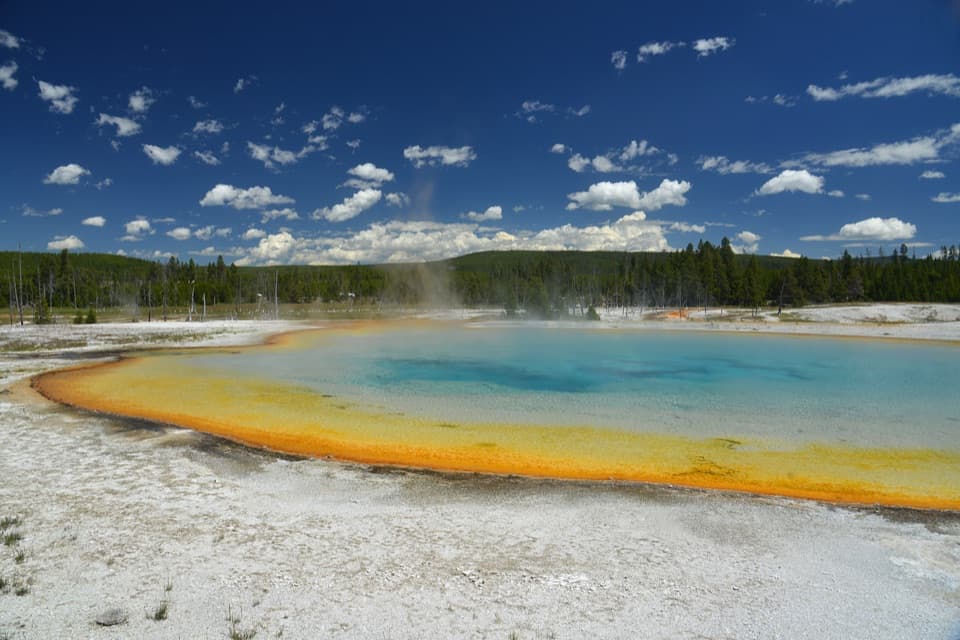
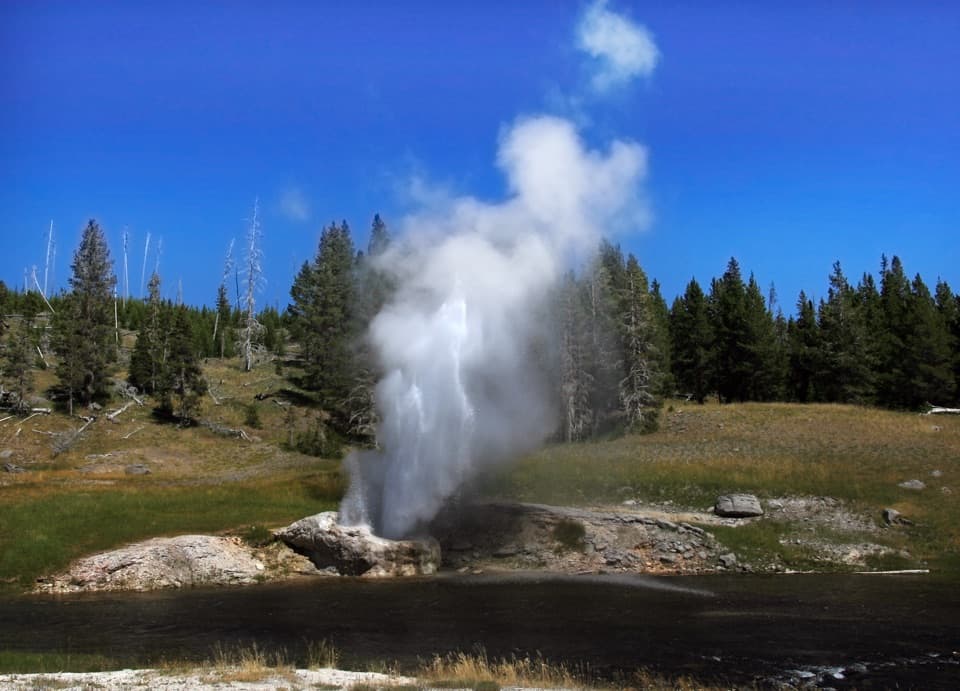
Yellowstone’s hydrothermal system is heated by a large magmatic reservoir. Groundwater circulates, heats up, and—when pressure releases—flashes to steam, driving eruptions. Changes in subsurface pathways (including from earthquakes) can influence intervals and activity.
The 1870 Washburn–Langford–Doane expedition named Grotto for its cavernous, sinter‑plastered structure, which early observers described as riddled with sinuous apertures.
Thermal areas are fragile and dangerous. Stay on boardwalks and designated paths; the ground can be thin and the water scalding.