
Place · 0 mi away
Challenging
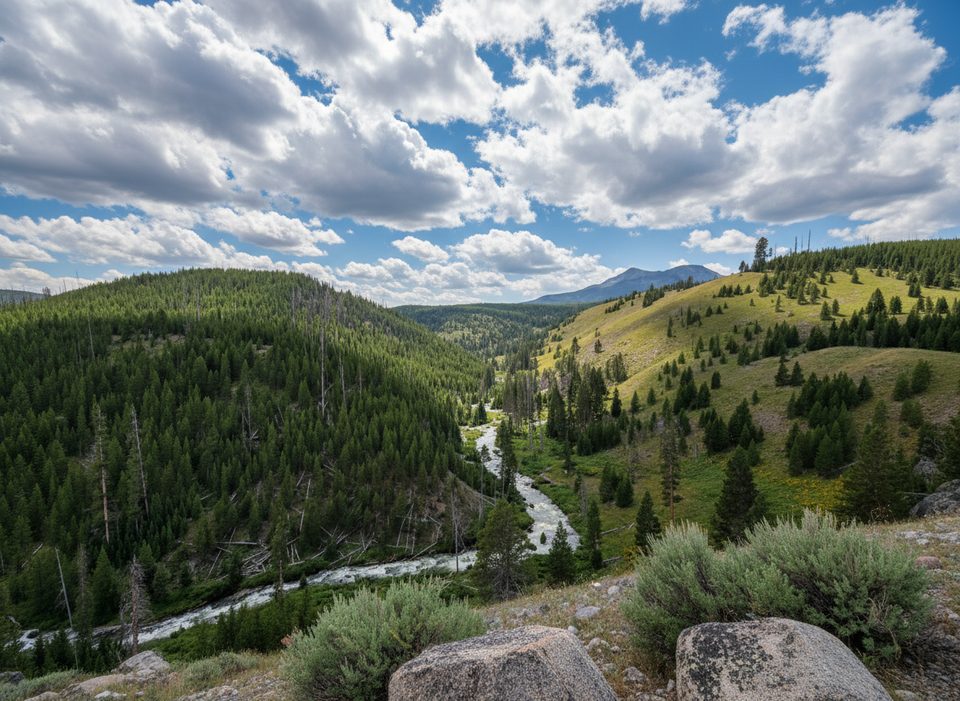
This is a long, committing out-and-back to a tucked-away alpine lake in a glacial cirque beneath Mount Holmes. Expect roughly 15.9 miles total and about 2,000 feet of gain, with the sting in the final couple miles. It’s beautiful and wild—but also wet, faint in places, and occasionally confusing. If you like your hikes tidy and obvious, this isn’t that. If you like map work and big country, you’ll love it.
Start from the signed Mount Holmes Trailhead south of Indian Creek Campground (between Norris Junction and Mammoth Hot Springs). The approach crosses broad meadow, passes under power lines, and reaches an unbridged crossing of Winter Creek—sometimes there’s a helpful downed log, sometimes you’re fording. Beyond, the trail rolls along Winter Creek through lodgepole, climbs a grassy slope, passes the Grizzly Lake junction, wraps a ridge with views, then drops back toward the creek.
Around a large, wet meadow with designated campsites, you’ll hit the signed junction for the Trilobite Lake Trail. Turn right. Here the character shifts: dense and burned lodgepole, big soggy meadows, and stretches where tread fades. Orange markers on trees/posts guide you, but expect some head-scratching. The route then climbs more steeply—erratic in spots—before leaving burn for cooler, older forest and finally delivering you to the cirque and shore of Trilobite Lake.
Trilobite Lake sits in an evocative bowl carved by ice, with views up to Mount Holmes and smaller tarns sprinkled deeper in the cirque. Keep an eye on the rocks for pikas, and scan the cliffs for occasional mountain goats. The lake holds brook trout. The area’s geology tells a story too: this corner of the Gallatin Range is sedimentary rather than volcanic, and trilobite fossils found on the nearby ridge gave the lake its name. Moisture pooled by the cirque and shelter from Mount Holmes even helped portions of forest here resist the 1988 fires.
June through September. Early season brings snow patches and high, cold creek flows; late summer is drier and calmer underfoot. Start early for cooler temps and to give yourself plenty of time for navigation pauses. Storms can build in the afternoon—be ready to turn around if weather goes sideways.
Park at the signed Mount Holmes Trailhead, just south of Indian Creek Campground between Norris Junction and Mammoth Hot Springs.
Expect an unbridged ford of Winter Creek, faint/erratic tread with orange markers through burn and wet meadows, lingering early-season snow, and active grizzly bear country—carry bear spray and strong navigation tools.
Place · 0 mi away
Place · 0.7 mi away
Place · 0.7 mi away
Place · 0.8 mi away
Challenging · 0 mi away
Moderate · 0 mi away
Moderate · 0 mi away
Easy · 0.9 mi away

Parkwolf Tour Guide
