
Place · 0.6 mi away
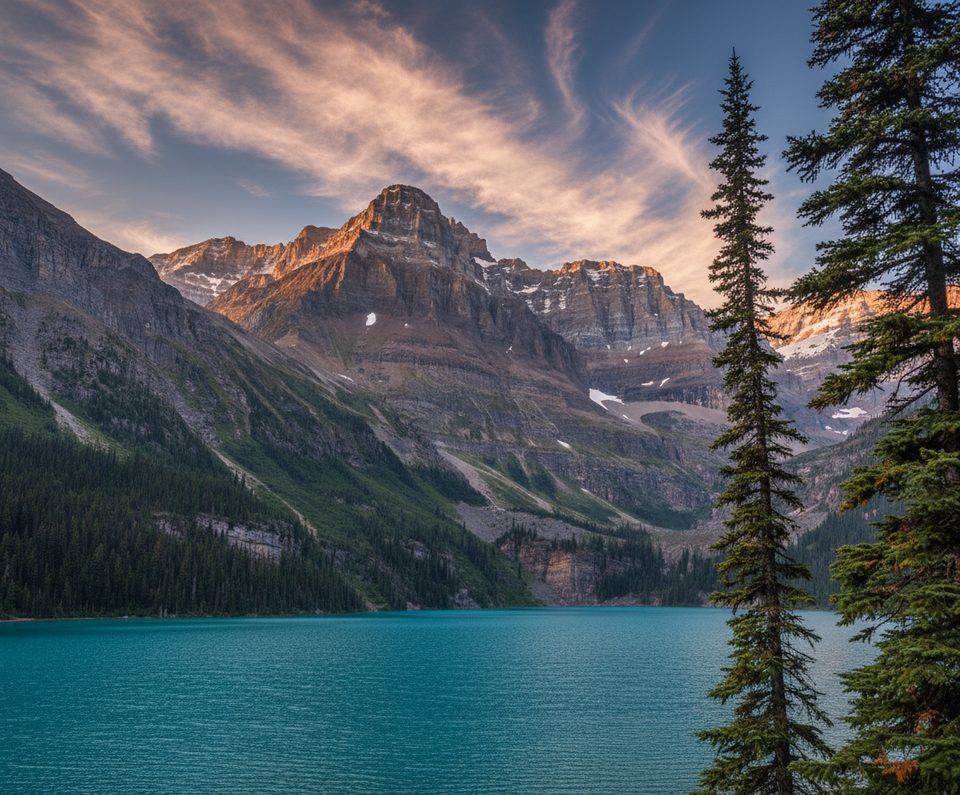
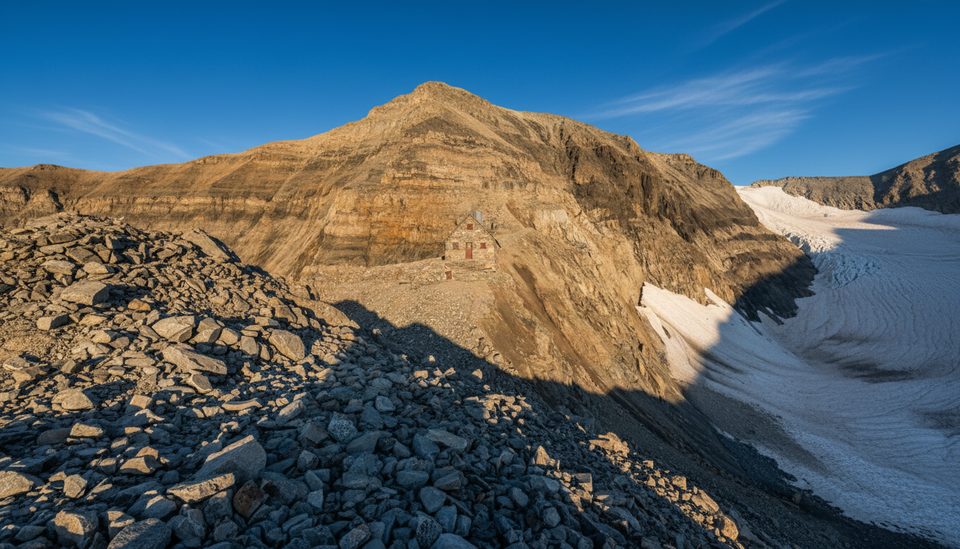
Mount Huber (3,348 m) rises like a sheer buttress above the Lake O’Hara basin, delivering huge alpine drama without the crowds. It’s the lowest of the area’s famed 11,000-foot peaks, but it looks anything but small from the lakes and plateaus below. Geologically, it’s built of ancient Cambrian limestone—think 500-million-year-old sea-floor rock that glaciers later carved into today’s cliffs and ledges.
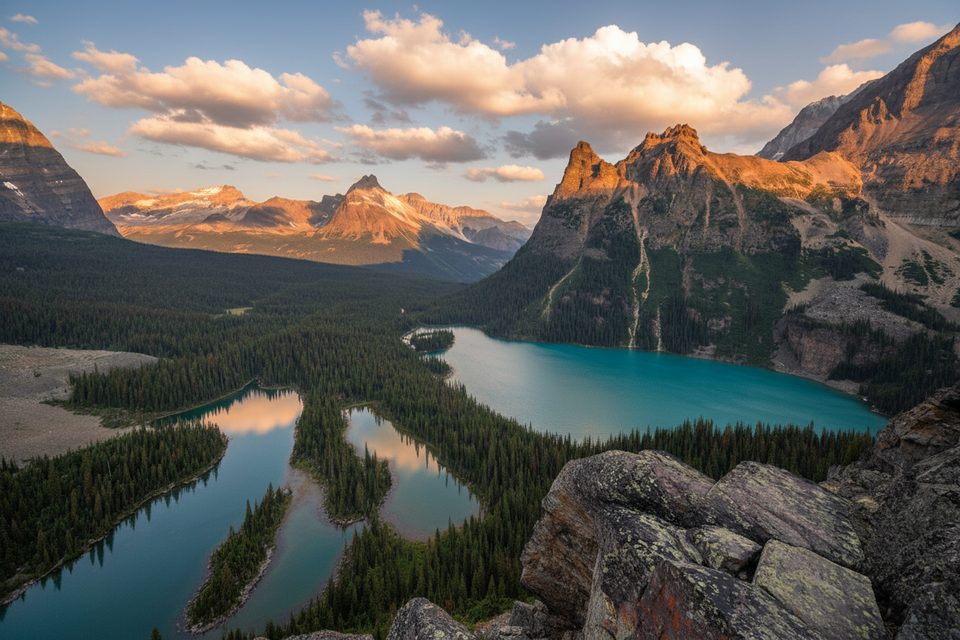
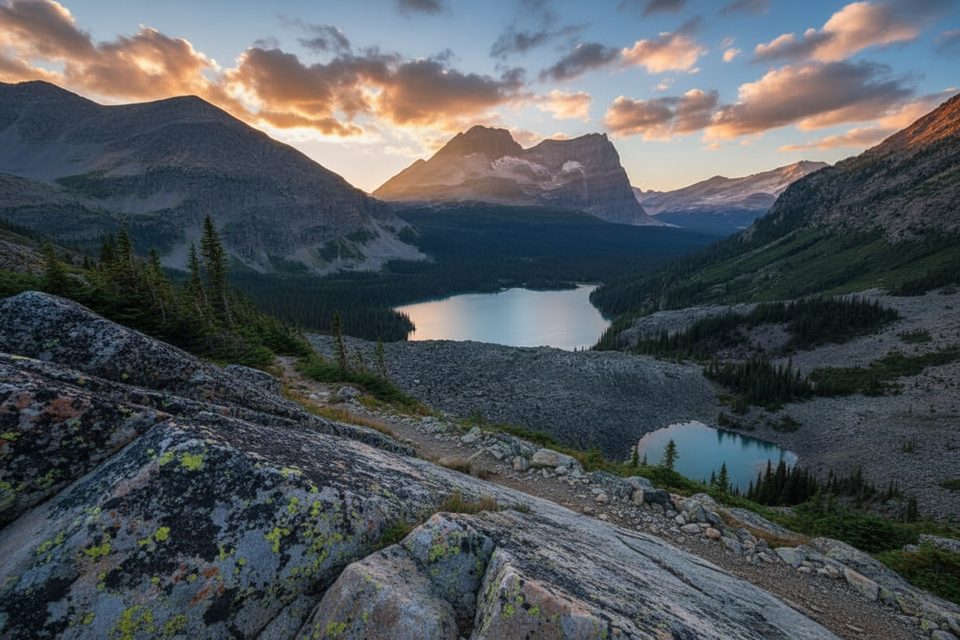
From Lake O’Hara and the Opabin Plateau, Huber pairs beautifully with Wiwaxy Peaks and mirror-still tarns—an iconic scene, especially when the larches turn golden in fall. For climbers, the mountain offers a storied route network and a satisfying high-col objective with real exposure and commitment.
This is not a hiking peak. The common approach is the Huber Ledges to the Victoria/Huber col, involving exposed ledge traverses (scrambling around Class 4) and a short glacier crossing with crevasse hazards. Parties report cairns, wet/ slick rock from seepage, and variable snow that can slow progress. When you’re on route, it goes; when you’re not, it gets serious fast.
You stage from the Lake O’Hara area—one of the most tightly controlled corners of the Rockies. Expect to secure shuttle reservations with Parks Canada well in advance or commit to a long foot approach. There’s no trailhead, signage, or facilities for Mount Huber itself; think full backcountry logistics from start to finish.
If you’re not climbing, Huber still steals the skyline from the Opabin Plateau’s larch meadows and lakes. Photographers seek reflections of Mount Huber and Wiwaxy Peaks in calm water—fall larch season can be sublime.
While not specific to the mountain, the broader O’Hara area supports mountain goats, marmots, pikas, and occasional black or grizzly bear encounters in approach valleys. Plan accordingly.
Named for Swiss climber Emil Huber, the mountain saw its first recorded ascent in 1903 (Collier, Tewes, C. Bohren, C. Kaufmann). Its routes remain classic, serious undertakings for experienced parties.
Bring a full alpine kit: helmet, harness, rope, ice axe, crampons, and crevasse rescue gear. Expect route-finding on exposed ledges, a glacier crossing with bergschrund and snow-bridge considerations, and rapidly changing weather. Early starts help with firm snow; late-day slush raises the risk.
Place · 0.6 mi away
Place · 0.6 mi away
Place · 0.7 mi away
Place · 1 mi away
Moderate · 1.3 mi away
Easy · 1.4 mi away
Moderate · 5.2 mi away
Moderate · 5.2 mi away

Parkwolf Tour Guide
