
Place · 0.5 mi away
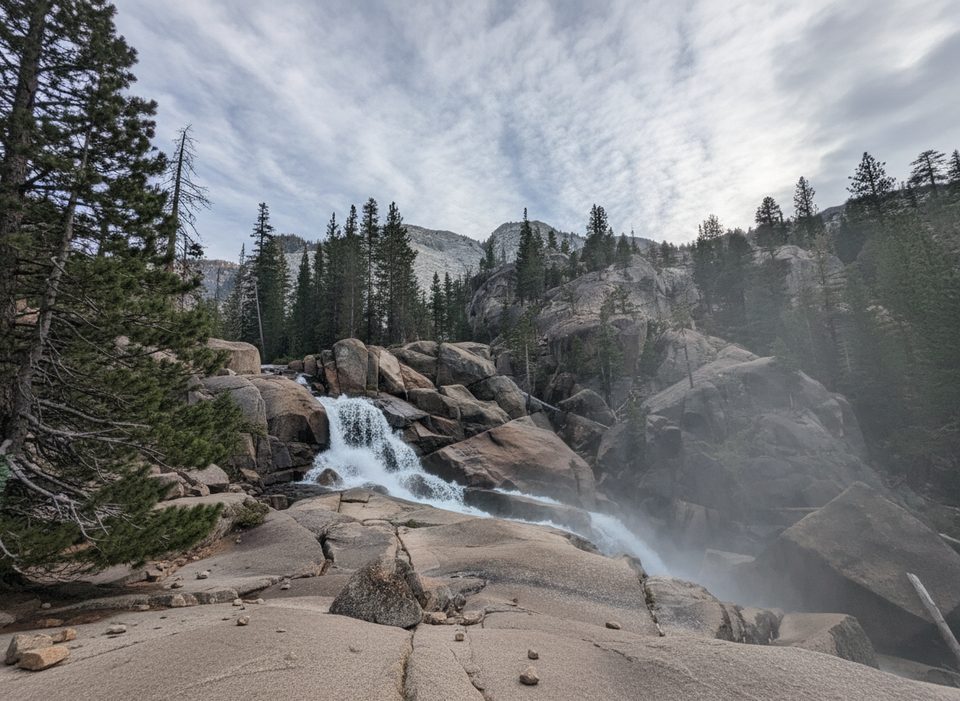
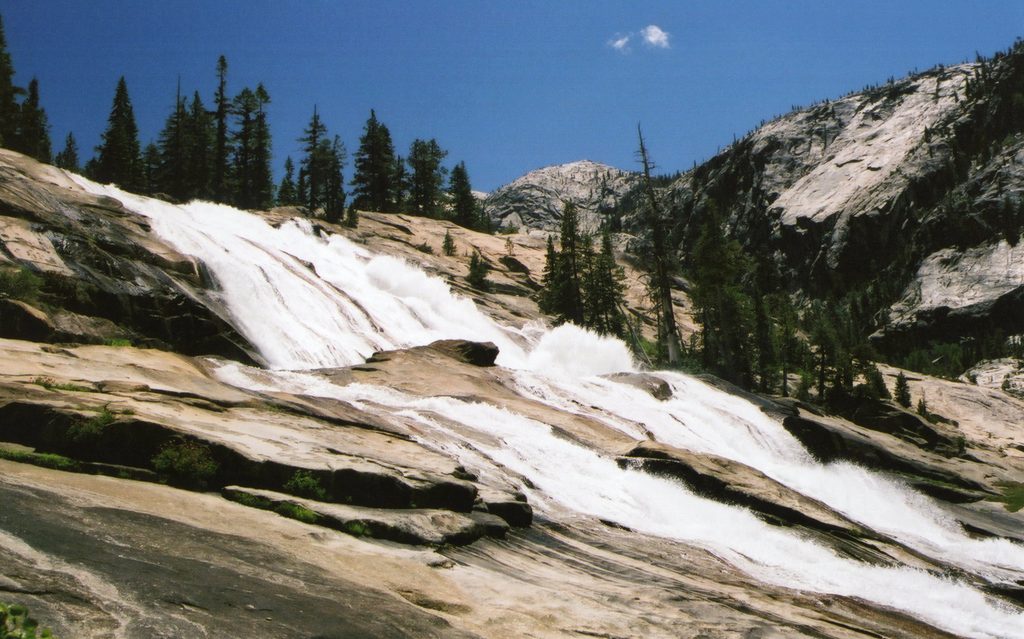
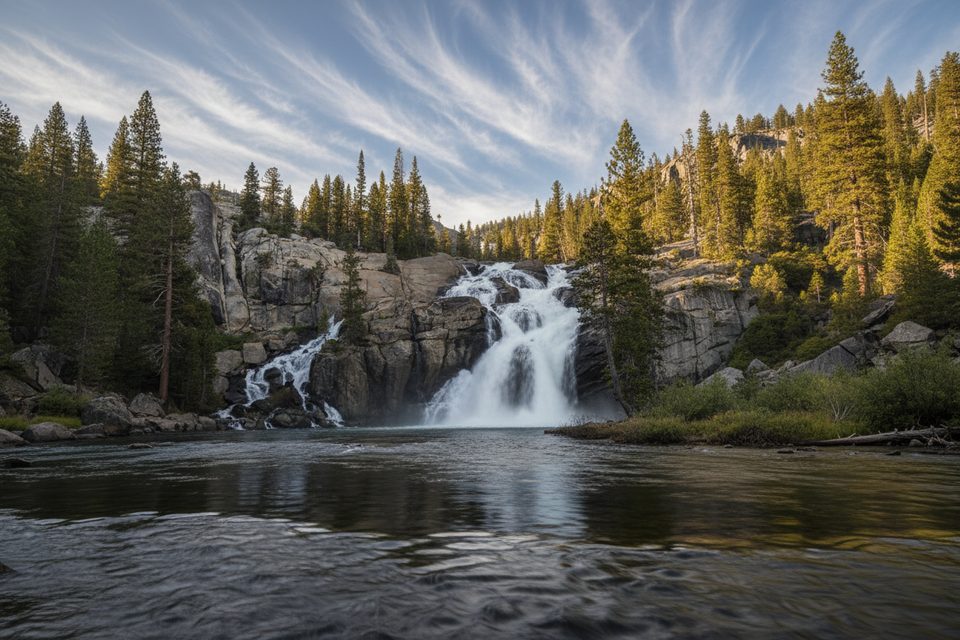
LeConte Falls is a long, sloping 229-foot cascade on the Tuolumne River, tucked into the Grand Canyon of the Tuolumne. In high flow, the river rockets over a roughly 50-degree granite apron and into potholes, throwing arcs of water back into the air—the classic “waterwheel” effect. It sits below California Falls and above Waterwheel Falls, and many hikers confuse the two because LeConte often shows particularly dramatic wheels.
Most hikers start at Tuolumne Meadows and take the Glen Aulin Trail. It’s about 4.5 miles to Glen Aulin, then continue downstream past California Falls. Roughly 2.7–3 miles beyond Glen Aulin, a faint spur leads left through trees onto smooth granite slabs with the best view of LeConte’s waterwheels. Expect a very long day if you’re doing this as an out-and-back; a recent round trip to nearby Waterwheel Falls (a bit farther downstream) clocked 18.6 miles with about 2,700 feet of elevation gain, and LeConte is slightly shorter.
This is one of the Tuolumne River’s signature cascades, a continuous sheet of water that morphs into jets as it slams potholes along the slope. When snowmelt is pumping, multiple wheels pop and arc—mesmerizing and surprisingly powerful. It’s easy to see why photos labeled “Waterwheel” so often turn out to be LeConte.
Tuolumne Meadows facilities and the Tioga Road corridor are seasonal. Start early to make the miles, and plan water, food, and layers accordingly. If you’re turning the trip into an overnight, secure the appropriate wilderness permit through the park.
Late spring to early summer (roughly May through early July, depending on snowpack) is when the waterwheel show peaks. As flows drop, the jets diminish. Go early in the day to comfortably fit the distance and to have more solitude on the slabs.
This isn’t a wildlife hotspot, but mosquitoes can be fierce as the season progresses—bring repellent and consider long sleeves/pants.
Place · 0.5 mi away
Place · 0.8 mi away
Place · 1.7 mi away
Place · 2.1 mi away
Challenging · 5.1 mi away
Moderate · 5.1 mi away
Challenging · 5.1 mi away
Moderate · 5.7 mi away

Parkwolf Tour Guide
