
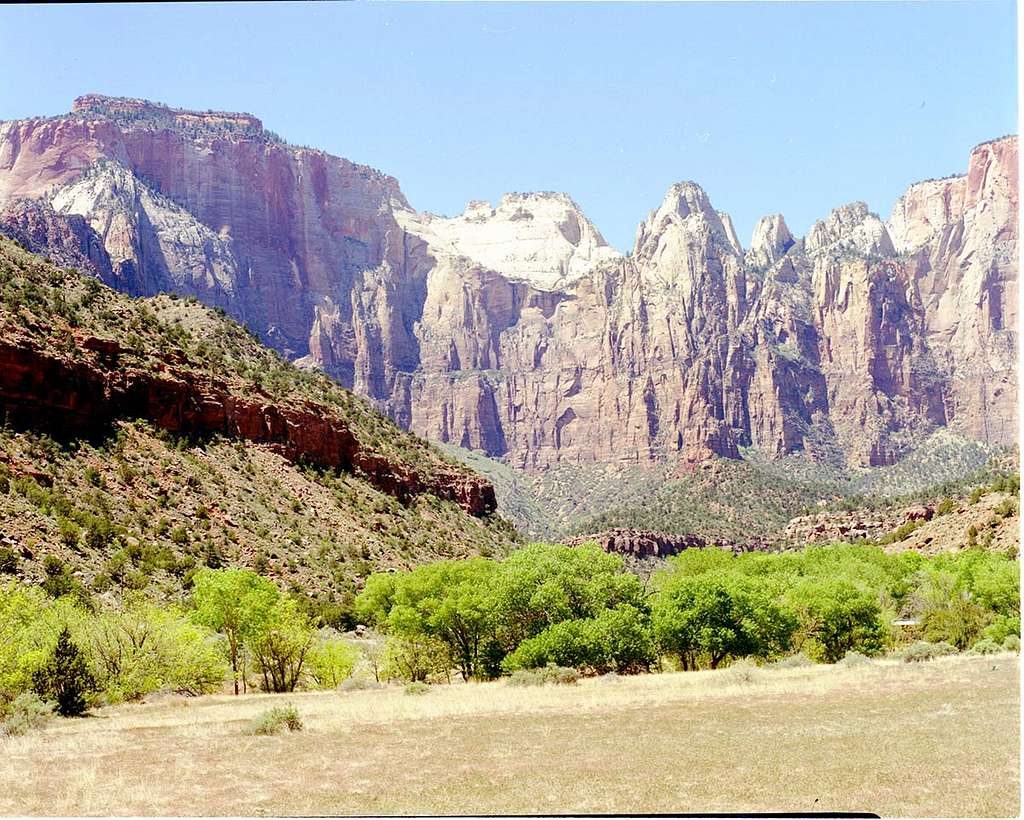
Place · 0.6 mi away
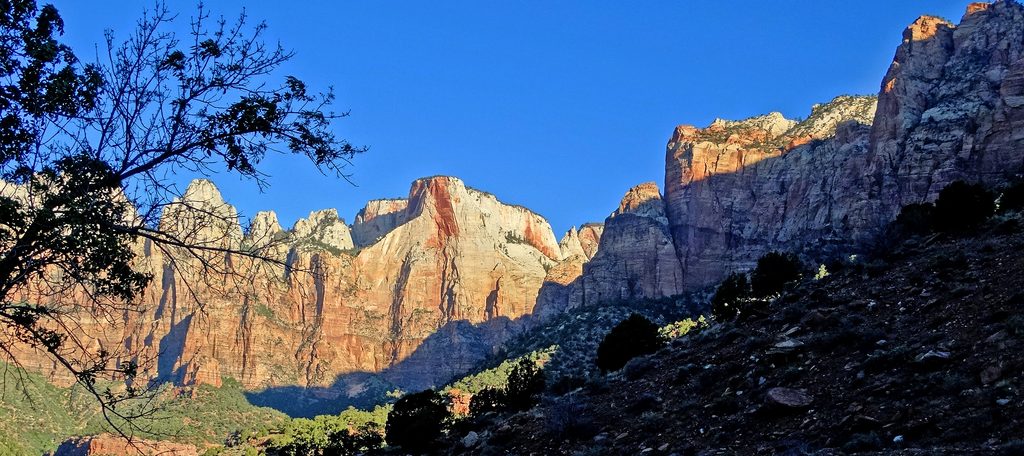
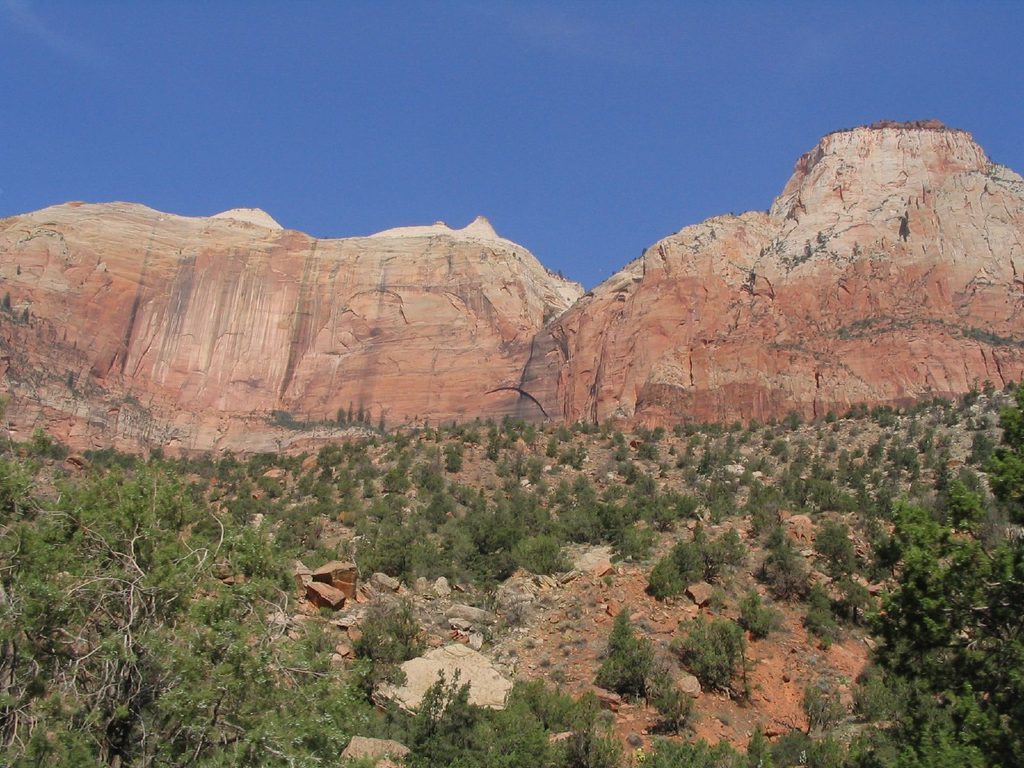
Altar of Sacrifice is one of Zion’s most dramatic cliff faces—pale Navajo Sandstone streaked with dark, blood-red stains that pour down the wall. It rises to about 7,505 feet and looms roughly 3,500 feet above the canyon floor, so it’s hard to miss when you’re looking up from lower Zion Canyon.
Those vivid red streaks aren’t paint—they’re iron oxide staining. Rainwater leaches iron from the younger rock layers above and drags it down the face, creating that unmistakable “altar” look. Geologically, you’re looking at a classic stack: massive Jurassic Navajo Sandstone walls capped by younger units. It’s part of the Towers of the Virgin group, making this whole skyline feel like a stone cathedral.
You don’t need to hike to enjoy it. Views are excellent from the lower canyon, especially near the Zion Human History Museum shuttle stop, and from various pullouts along the main canyon road when it’s open to private vehicles. There’s no official trail or signed viewpoint specifically for Altar of Sacrifice, so think of it as a look-up-and-enjoy landmark rather than a destination with a railing and a placard.
If you want a longer gaze, plan a shuttle stop and linger—watch how the light rakes across the face and makes the red streaks glow. Restrooms and other facilities are available at several shuttle stops elsewhere in the canyon (like The Grotto and Temple of Sinawava), but not at the formation itself.
There’s no NPS-maintained trail to the summit, and the peak is reached by serious, technical climbing. The rock is steep, the terrain is unforgiving, and it’s not an appropriate objective for casual hikers. Most visitors will (and should) enjoy it from the valley.
Keep an eye on the air above the cliffs—peregrine falcons and other raptors often ride the thermals here. On the benches and slopes you might spot desert bighorn sheep, while mule deer and lizards are common down along the canyon floor. Bring binoculars if you like wildlife watching.
Spring and fall are the sweet spots for comfortable temps and crisp views. For most of the year (typically early February through late November), the main canyon road operates with the park shuttle, so plan your viewing around shuttle stops. In the off-season you can drive the canyon road, but parking is limited and fills early on busy days.
Place · 0.6 mi away
Place · 1 mi away
Place · 1.8 mi away
Place · 2 mi away
Easy · 2.3 mi away
Moderate · 2.4 mi away
Easy · 2.4 mi away
Moderate · 3.7 mi away

Parkwolf Tour Guide
