
Place · 0.5 mi away
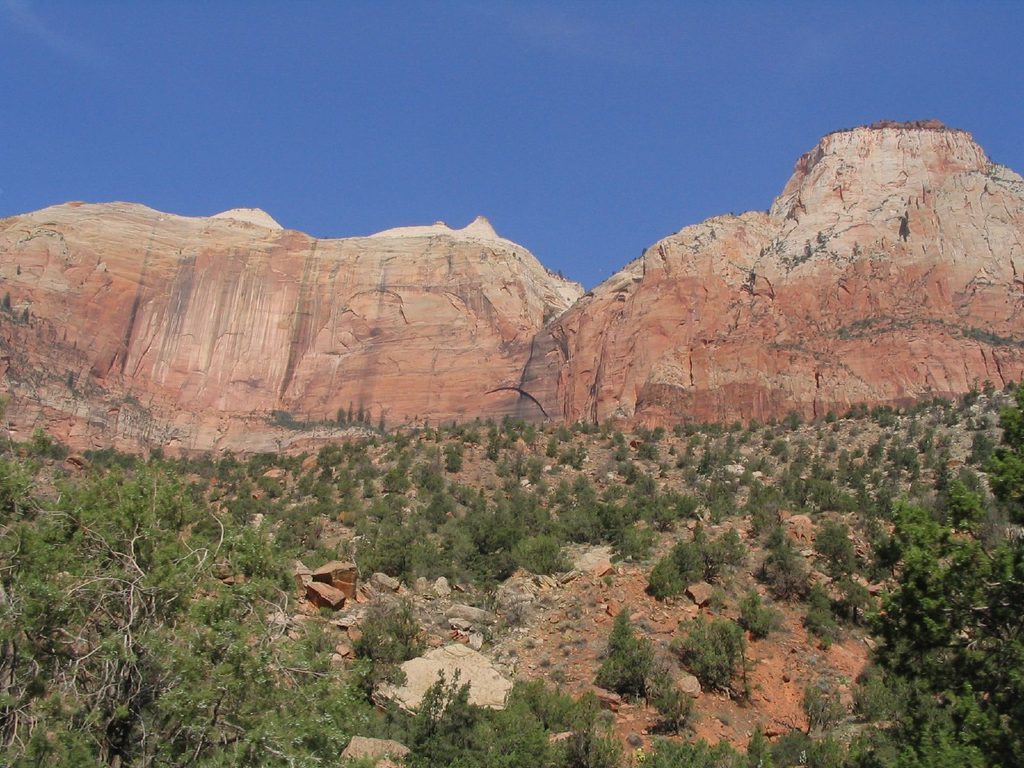
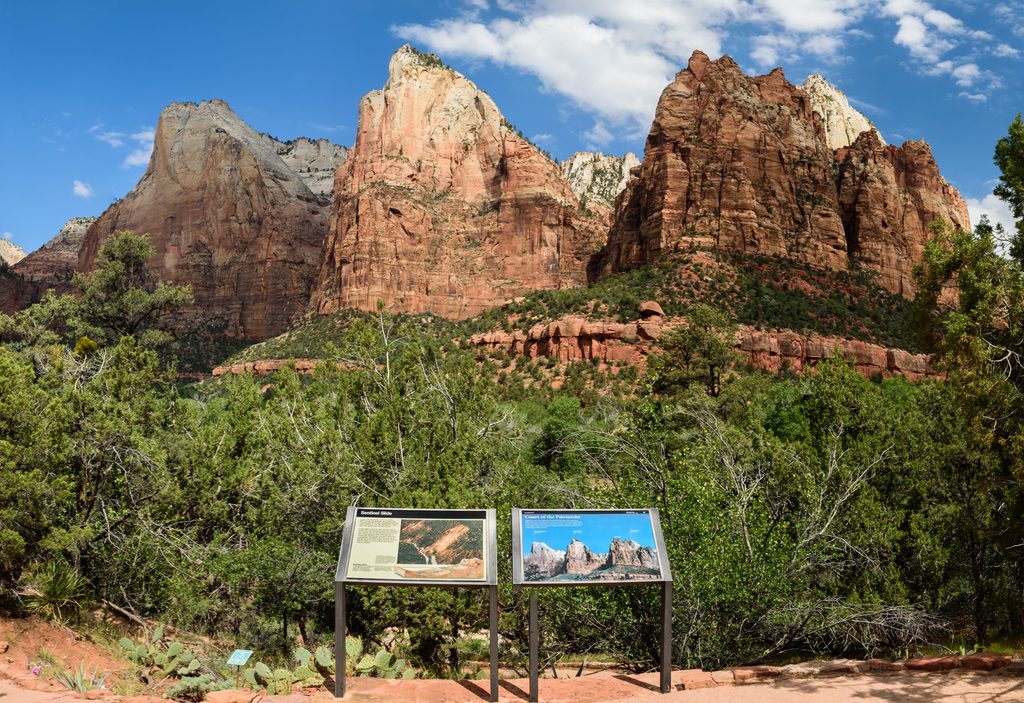
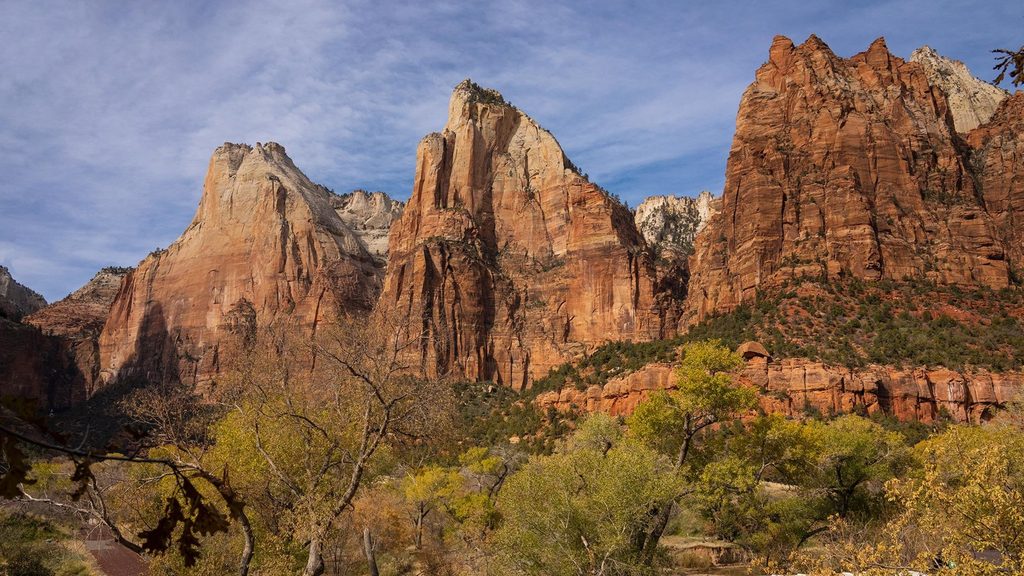
The Sentinel is the big, blocky Navajo Sandstone peak on the west wall of the main canyon, near the Court of the Patriarchs. It towers roughly 3,000 feet above the road and the Virgin River—impossible to miss as you ride the scenic drive. You’re not hiking this one (the summit involves technical class 5 climbing), but you will be staring at it a lot.
About 4,800 years ago, a colossal rock avalanche ripped off The Sentinel and thundered into the canyon. We’re talking on the order of 286 million cubic meters of debris that dammed the Virgin River, forming a lake roughly 2.5 miles long and nearly 400 feet deep. Over about 700 years the lake filled with sediment, leaving the flat, cottonwood-lined valley floor you see today. A much smaller slide in 1995 briefly blocked the river and damaged the road—a reminder that this landscape is still evolving.
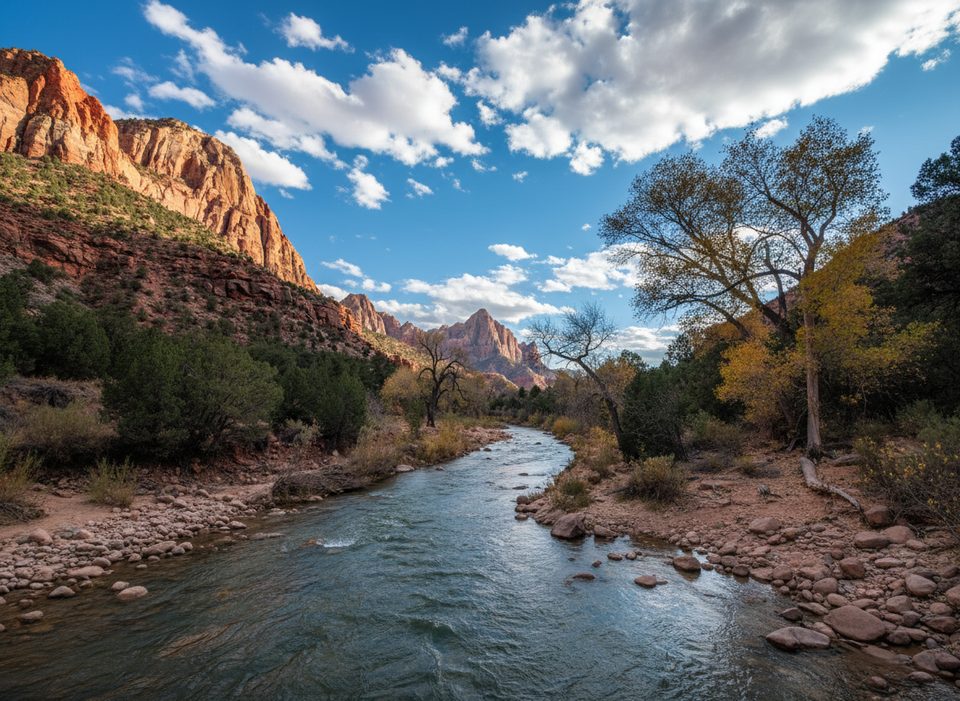
Ride the Zion Canyon Scenic Drive from Canyon Junction toward Zion Lodge and look left (west). As the road climbs, notice the hummocky, uneven ground—that’s landslide debris. The grade steepens as the road climbs onto the old deposit, then flattens on top. For straight-on views of the peak, use the Zion Lodge area and nearby pullouts when open, or frame it from popular hikes that offer clear sightlines. The Watchman Trail area also gives context with classic canyon vistas that include The Sentinel.
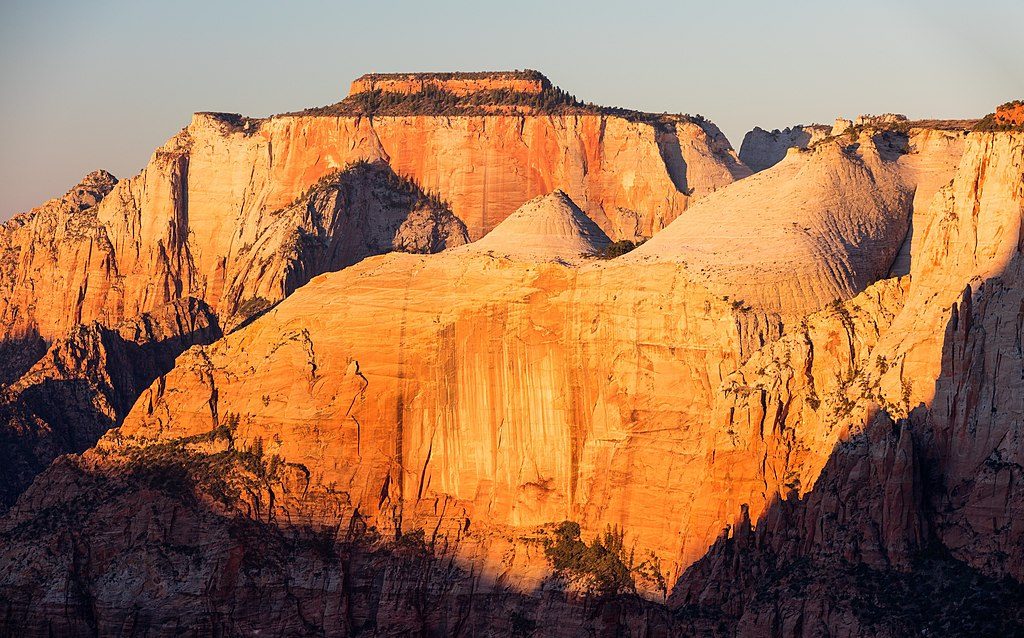
The Sentinel’s cliffs catch warm light early; morning is your best bet for glow on its face. After storms, low clouds drape the skyline and add scale. Compose with the Virgin River or cottonwoods in the foreground to emphasize the size of the landslide surface behind. A tripod helps at dawn and dusk.
Zion’s layers were born from ancient seas, rivers, and deserts that lithified into limestone, mudstone, shale, and sandstone. Regional uplift cranked up stream power, letting the Virgin River carve deeply and undercut slopes—setting the stage for big failures like the Sentinel Slide. Volcanic activity in the broader region over the last million years is part of this restless geologic neighborhood, even if the drama you’re seeing here is mostly about uplift and erosion.
Spring and fall are the sweet spots thanks to a cool, dry climate with under 10 inches of annual precipitation. Most of the year the canyon operates on a shuttle system; the first buses roll early and the last run around early evening. Parking at the Visitor Center can fill by mid-morning in peak months, so plan an early start. Morning light favors photographers; afternoons can rim-light the skyline and work well after storms.
Place · 0.5 mi away
Place · 0.9 mi away
Place · 1 mi away
Place · 1.1 mi away
Moderate · 1.9 mi away
Easy · 1.9 mi away
Moderate · 1.9 mi away
Moderate · 1.9 mi away

Parkwolf Tour Guide
