
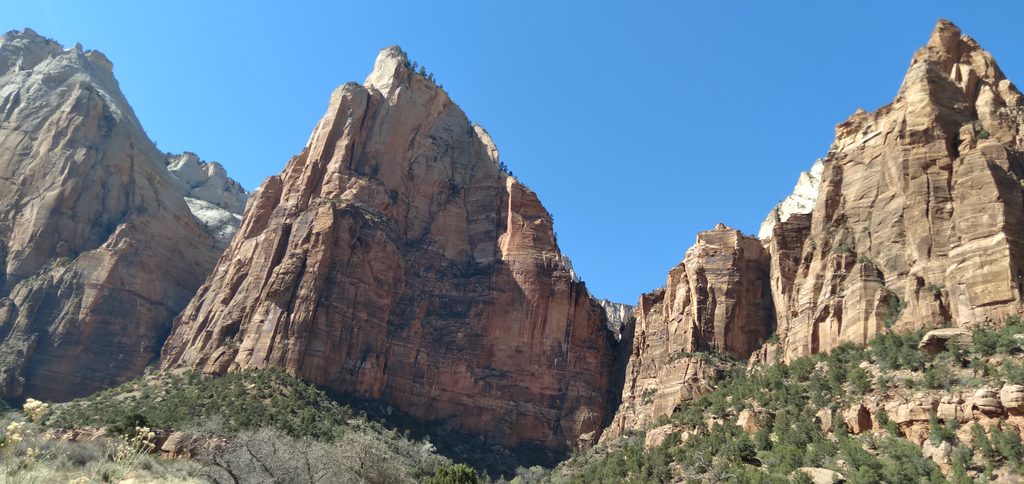
Place · 0.3 mi away
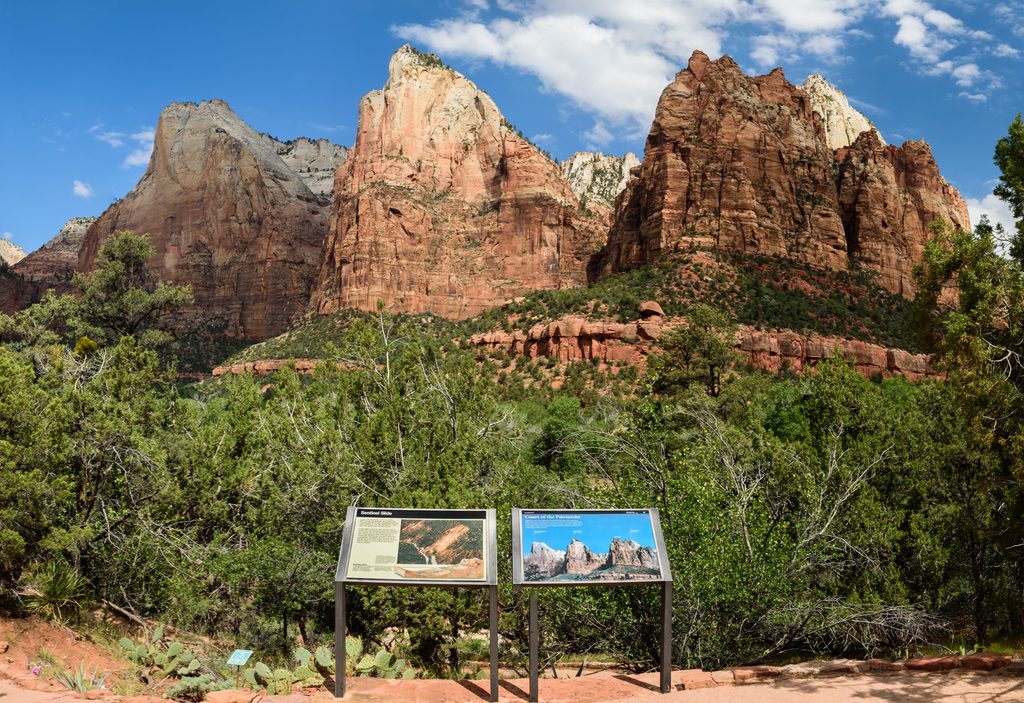
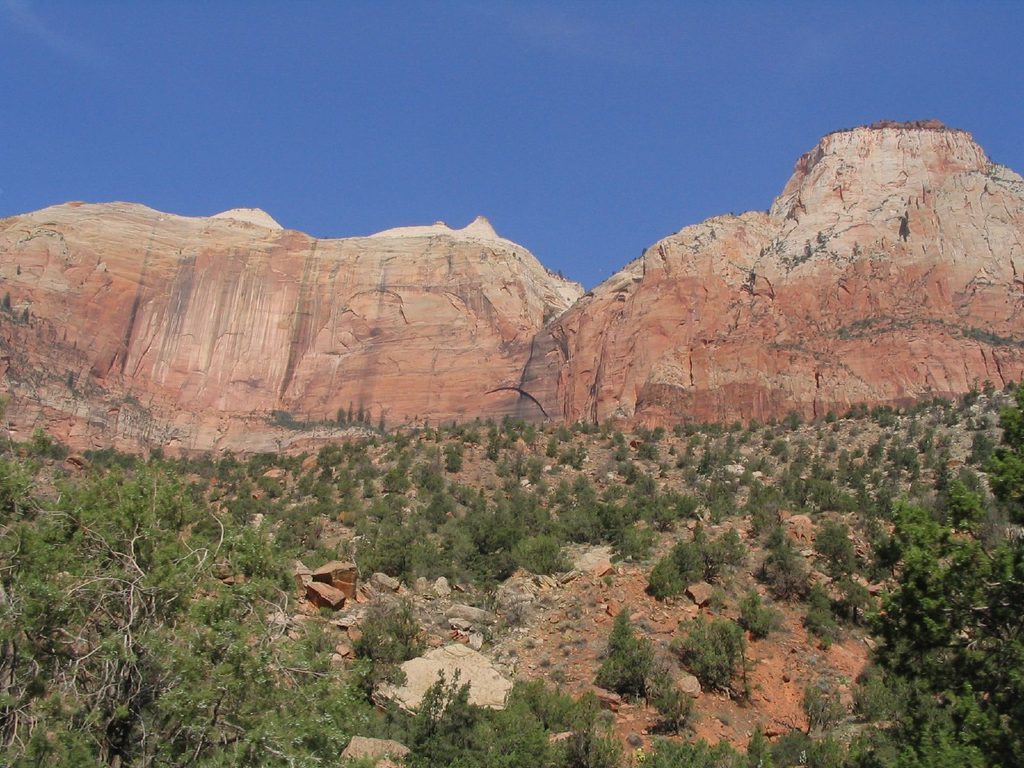
Abraham Peak is the tallest of the Three Patriarchs, the towering trio that dominates the heart of Zion Canyon. Rising to about 7,015 feet, it’s a classic Zion monolith that most visitors enjoy as a scenic landmark rather than a hikeable summit.
You’ll get the money shot from the Court of the Patriarchs area along the canyon road. In shuttle season, ride up-canyon and take the short but steep path to the official viewpoint—an easy detour for big rewards. The overlook frames Abraham alongside its companions Isaac and Jacob, making it a quick, must-do photo stop.
Abraham is carved from Navajo Sandstone—ancient windblown dunes that lithified into towering cliffs. Long after those deserts turned to stone, regional uplift raised the landscape thousands of feet while streams, led by the Virgin River, sliced the canyon you see today. The result: sheer, pastel-colored walls and clean faces that climbers dream about.
There’s no maintained trail to Abraham’s summit. Ascents are committing, technical undertakings on big sandstone walls, with long aid routes on the south face. If you’re not set up for big-wall climbing, enjoy it from below—it’s spectacular from the valley.
Morning is best for photography; the sun lights up the Patriarchs beautifully, and you’ll beat the biggest shuttle lines. Midday brings harsh light and heavier crowds. In shuttle season, start early; in the off-season, you may be able to drive the canyon road, but parking fills fast.
During most of the year the canyon is shuttle-only, so plan your timing around the first and last buses of the day. The immediate viewpoint has limited or no services—use restrooms and water at major stops like Zion Lodge or The Grotto before you head over. Rockfall is part of Zion’s active landscape; avoid lingering directly beneath cliff faces.
You’re in prime desert habitat. Keep a respectful distance from any animals you encounter and follow Leave No Trace—this area is more fragile than it looks.
Place · 0.3 mi away
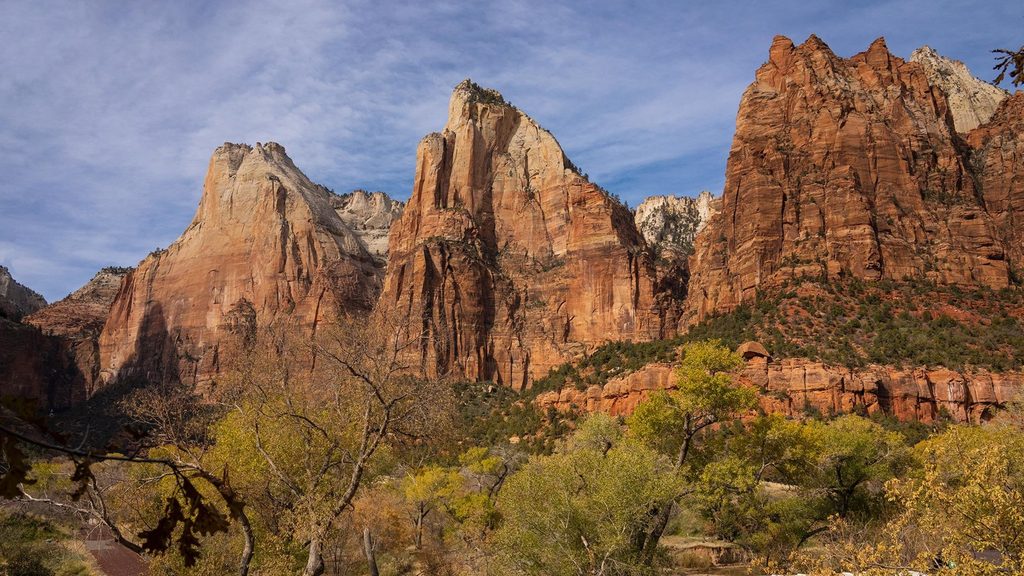
Place · 0.3 mi away
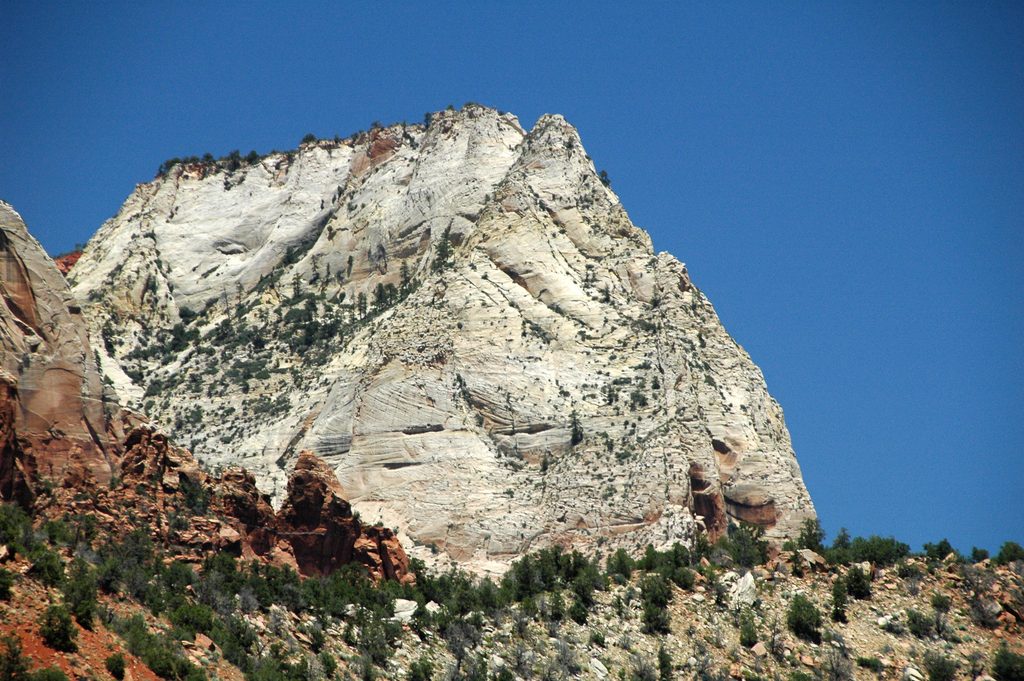
Place · 0.8 mi away
Place · 0.9 mi away
Moderate · 1.2 mi away
Easy · 1.2 mi away
Moderate · 1.2 mi away
Moderate · 1.2 mi away

Parkwolf Tour Guide
