
Place · 1.3 mi away
Challenging
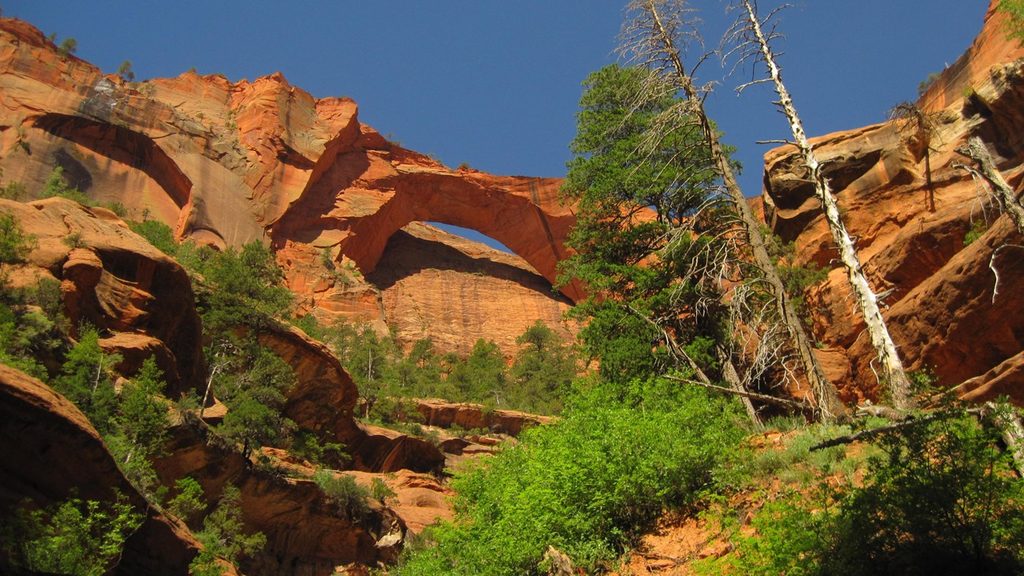
This out-and-back to Kolob Arch clocks about 14 miles total from the Lee Pass Trailhead in the Kolob Canyons district. It’s a classic flip of Zion’s usual script: you descend first, stroll a scenic creek corridor, then grind back up to finish. The payoff is one of the largest free‑standing arches in the country, viewed from a signed overlook. Expect fewer crowds than the main canyon and plenty of red Navajo Sandstone walls framing the “finger canyons.”
From Lee Pass, the path drops quickly toward Timber Creek before settling into rolling terrain along La Verkin Creek. Sandy stretches can slow your pace, and you’ll feel the cumulative ups and downs on the return. The junction for the Kolob Arch spur sits roughly 6–7 miles from the trailhead; the spur itself is about 0.5 mile and a bit rougher, with short ups/downs and obstacles. The official viewpoint is the best legal vantage—note that foliage can partially obscure the arch depending on season and light. Plan on 7–10 hours for the day, and save gas (and water) for the final climb back to Lee Pass.
La Verkin Creek runs much of the route, but toxic cyanobacteria advisories have affected Zion’s creeks at times. When advisories are in effect, do not filter from the creek; use springs like Beatty Spring instead, or carry what you need. Shade is limited, sand is tiring, and there’s no cell signal—pace conservatively and communicate your plan before you go.
No permit is required for day hiking. For backpackers, there are 13 designated sites along La Verkin Creek, and a wilderness permit is required. Some sites can be reserved in advance while others are first‑come; pick up permits in person as directed by park rules. Group size limits apply on wilderness trails. A popular strategy is to camp in the middle sites, tag the arch as a side trip, and, if you’re extending, continue toward the Hop Valley junction as part of the park‑spanning traverse. Beyond the arch junction, Beartrap Canyon makes a worthy add for backpackers, with a dramatic slot‑like feel and a waterfall a short distance up-canyon.
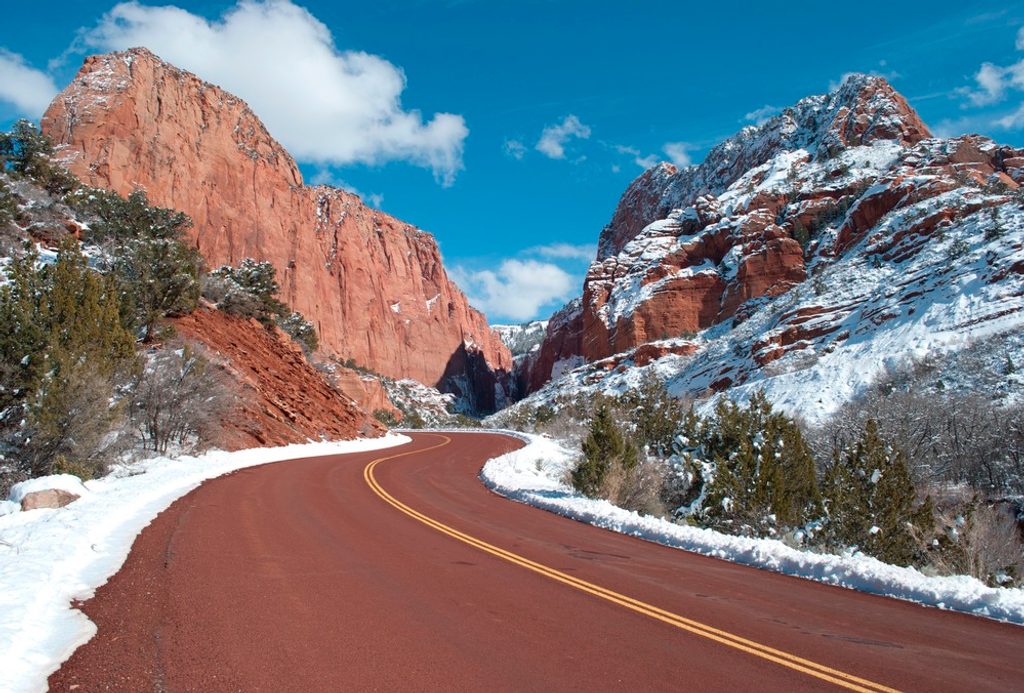
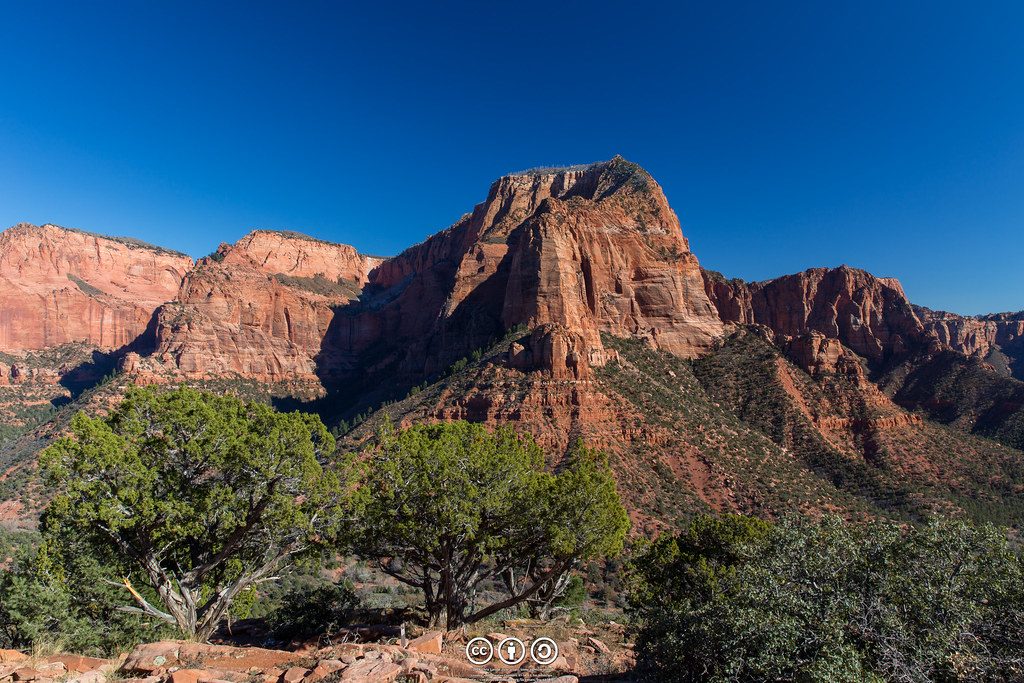
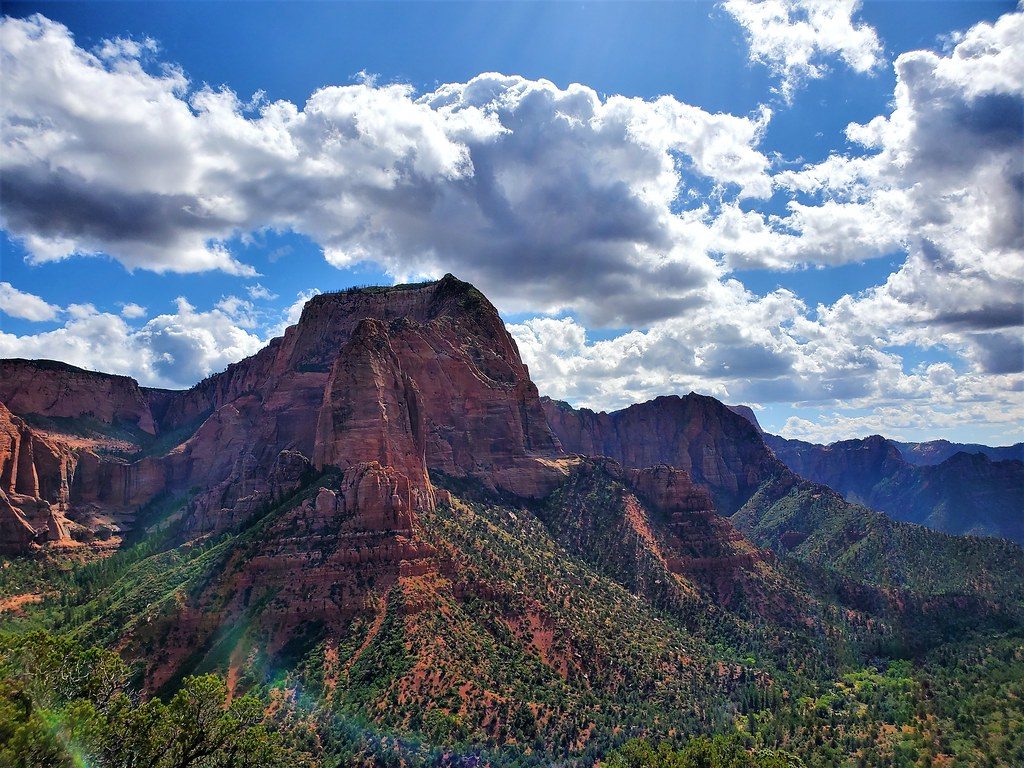
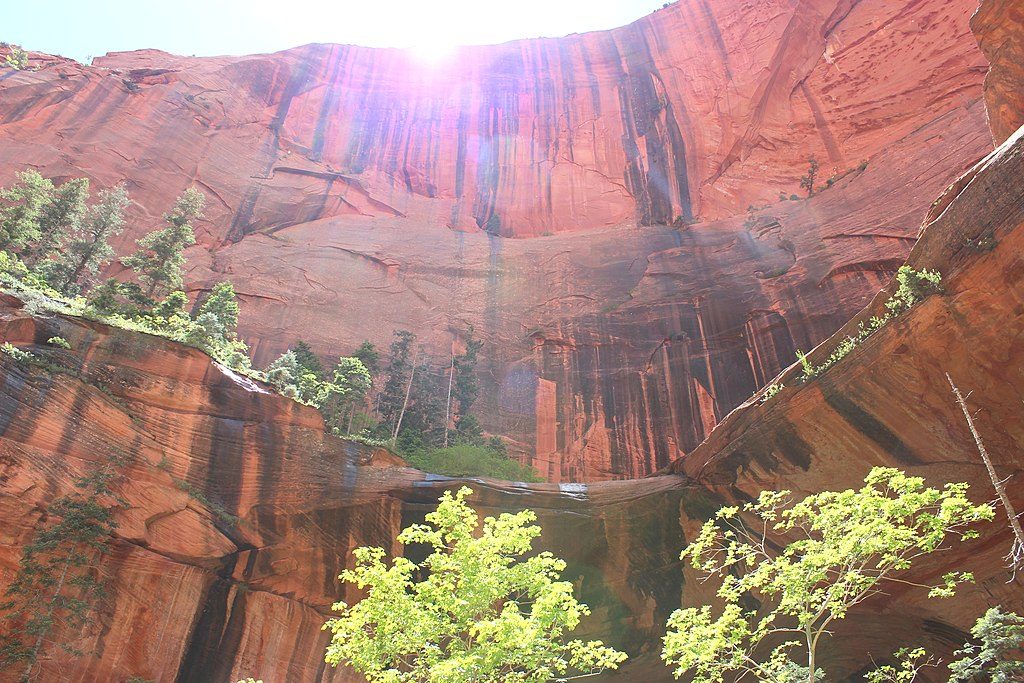
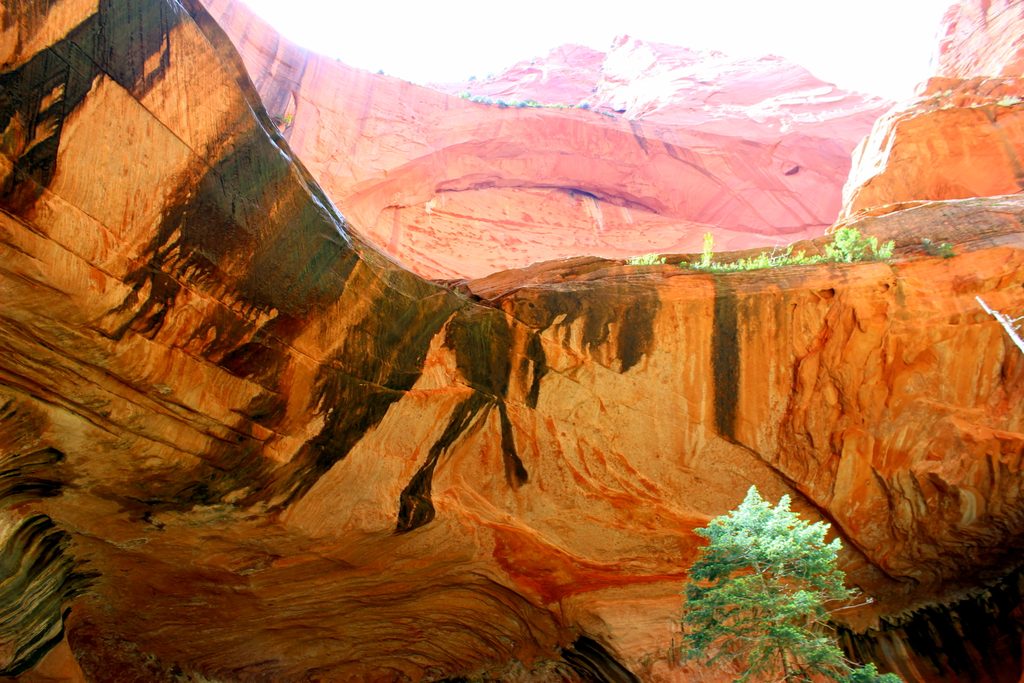
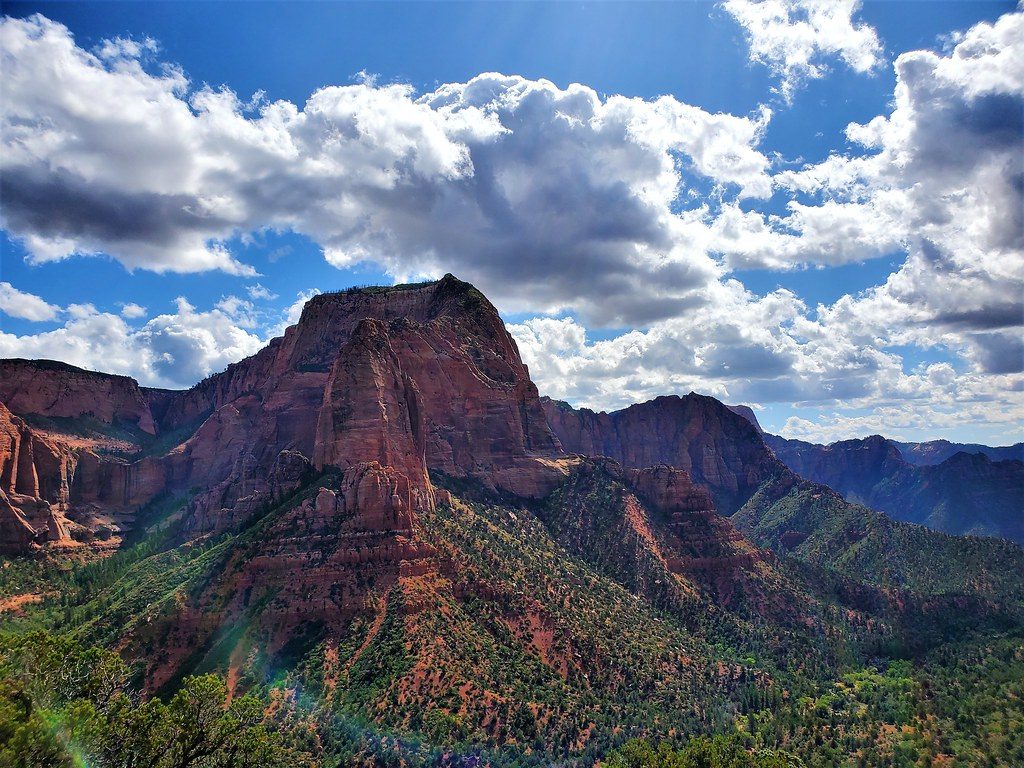
Expect soaring sandstone walls, cottonwoods and ponderosa near the creek, and the sweeping span of Kolob Arch from the overlook. The Kolob Canyons setting is quieter and more contemplative than Zion’s main canyon—great for hikers who value space and long-mile scenery over marquee crowds.
Spring and fall are the sweet spots: cooler temps, friendlier light, and fewer biting flies. Summer can be hot with intense “cedar gnat”/black fly seasons—early starts and head nets help. Snow and ice can linger into early spring, making the initial descent and final climb spicier. Weekdays further reduce crowds.
Park at Lee Pass Trailhead, about 3.8 miles up Kolob Canyons Road from the entrance station; limited roadside parking. Restrooms are at Kolob Canyons Visitor Center.
Expect limited shade, deep sand in places, no cell signal, and a strenuous climb back to the trailhead. Obey cyanobacteria advisories—use springs or carry all water. View Kolob Arch only from the signed overlook; no off-trail scrambling.
Place · 1.3 mi away
Place · 1.3 mi away
Place · 1.6 mi away
Place · 1.6 mi away
Challenging · 0 mi away
Moderate · 0.8 mi away
Moderate · 0.8 mi away
Easy · 1.3 mi away

Parkwolf Tour Guide
