Overview
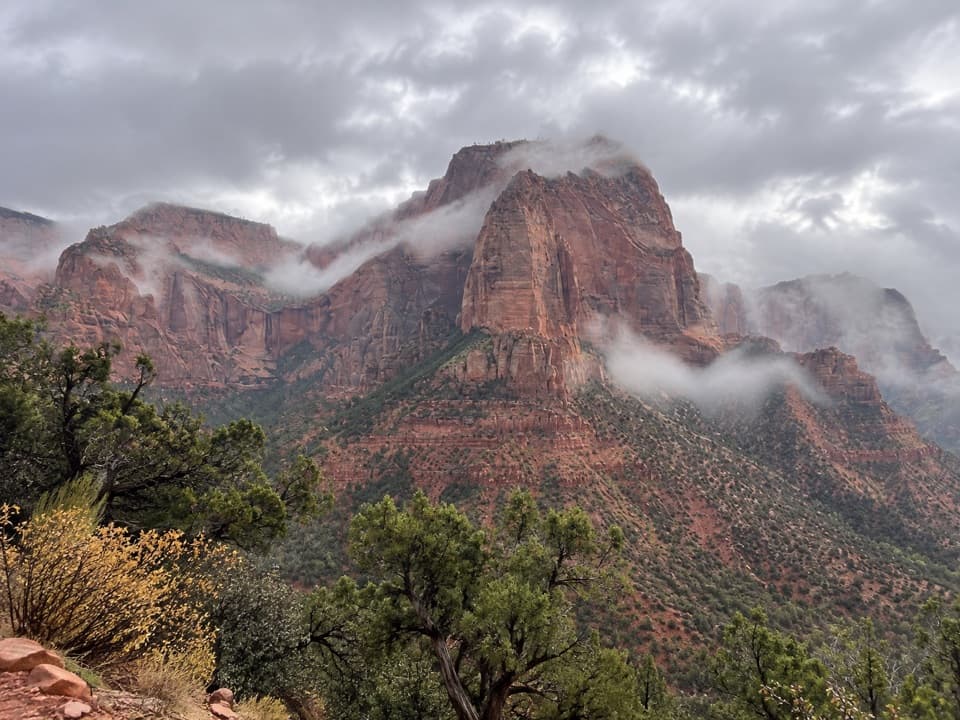
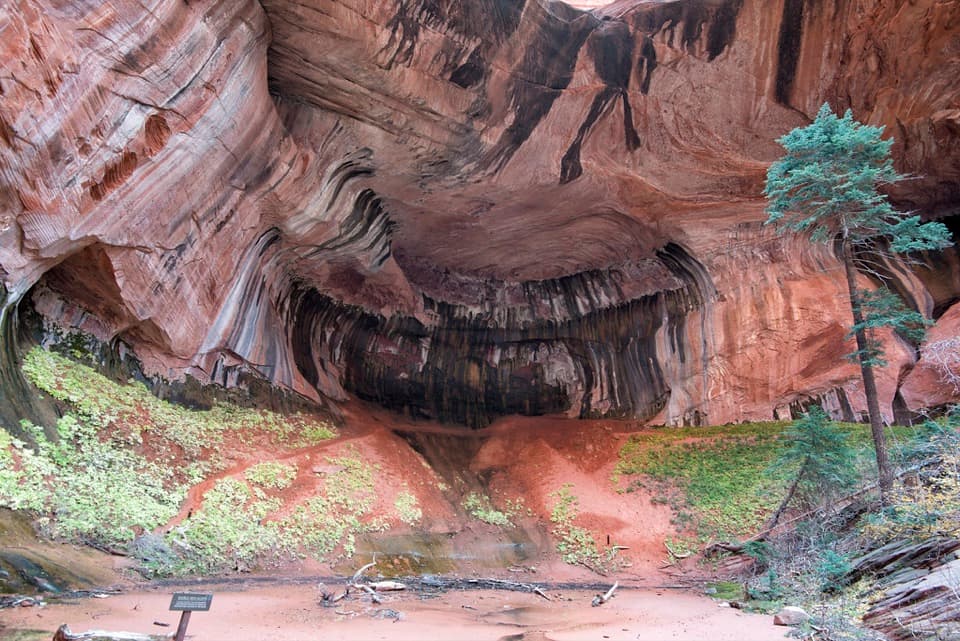
Tucked in the Kolob Canyons district, Double Arch Alcove is the spectacular finale of the Middle Fork Taylor Creek Trail. In about 5.2 miles round trip with roughly 450 feet of elevation gain, you’ll wind up a shaded box canyon and step into a glowing sandstone amphitheater—orange-red walls streaked with dark mineral varnish and a subtle, “blind” upper arch perched above the main alcove.
What You’ll See
- A broad, echoey alcove carved in Navajo Sandstone, with seeps that nurture ferns and other moisture-loving plants.
- Soft sand underfoot and towering, banded walls that catch early light beautifully.
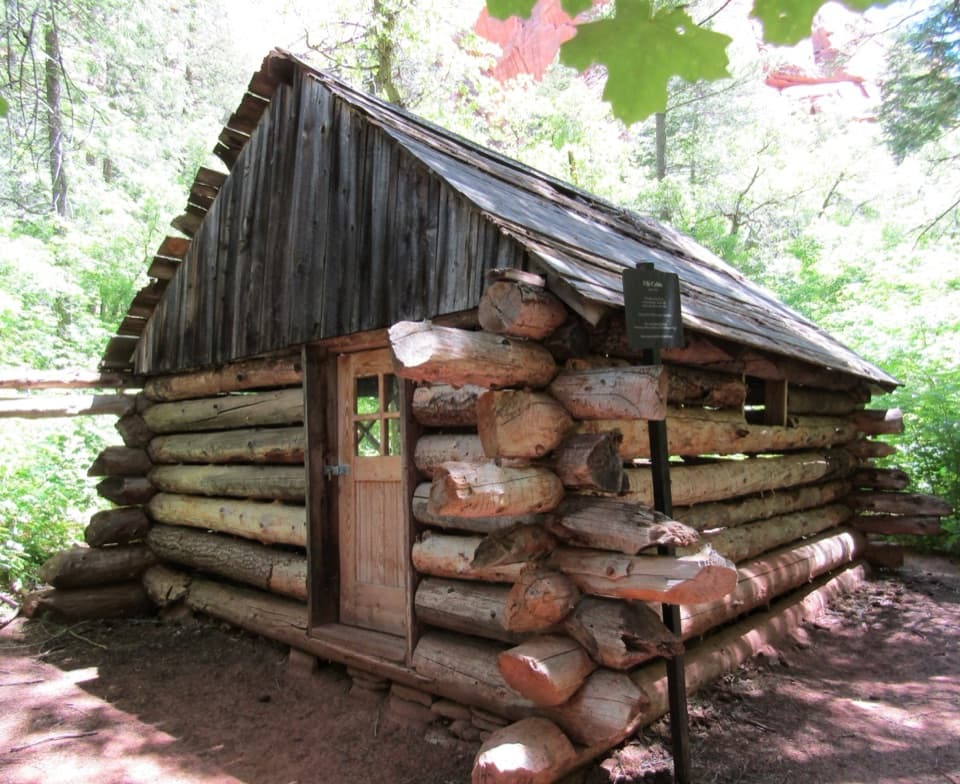
- Along the way: two preserved 1930 homestead cabins (Larson and Fife), a flowing creek, and classic canyon scenery.
Geology Highlights
This hike is a mini field course. You pass the Petrified Forest Member of the Chinle Formation, then Moenave (including the Kanarraville Fold and striking chevron folds tied to the Taylor Creek thrust-fault zone), up through the Kayenta Formation, and finally into massive Navajo Sandstone at the alcove. Keep an eye out for gray limestone with marine bivalve fossils in places. The alcove itself grows as groundwater seeps weaken sandstone cement, causing blocks to spall and wash away.
Trail Basics
- Distance/Gain/Time: About 5.2 miles round trip, ~450 feet gain, typically 3–4 hours.
- Character: Easy-to-moderate walking with over a dozen shallow creek crossings, sandy and rocky patches, and steady but gentle grades.
- Shade: The canyon’s east–west orientation keeps much of the route in shade for large parts of the day.
- Regulations: No pets; groups max out at 12 to protect the canyon’s character; no permit needed for the day hike.
Logistics
- Trailhead: Taylor Creek Trailhead on Kolob Canyons Road, roughly 2 miles past the Kolob Canyons Visitor Center. Parking is limited and can fill on busy days.
- Facilities: Vault toilet at the trailhead; flush restrooms and potable water at the Visitor Center. No water or services on the trail—fill up before you go and pack out all waste.
Best Time to Visit
- Light and crowds: Start early. The first sun reflecting off Tucupit and Paria Points throws warm, soft light into the canyon and alcove. Kolob Canyons is quieter than the main canyon, but this is the district’s most popular hike in peak season.
- Seasons: Fall is especially lovely. Spring brings higher creek flows; late summer monsoon storms can trigger flash floods; winter can be icy with potential road or trail closures—always check conditions.
Make the Most of It
- Wear footwear that can get wet; quick-dry socks and trekking poles make the many crossings a non-issue.
- At the alcove, admire without touching—those seeps and ferns are fragile. Stay on durable surfaces around the walls.
- Pause at the Larson and Fife cabins to appreciate a snapshot of canyon life from the 1930s.