
Place · 10.6 mi away
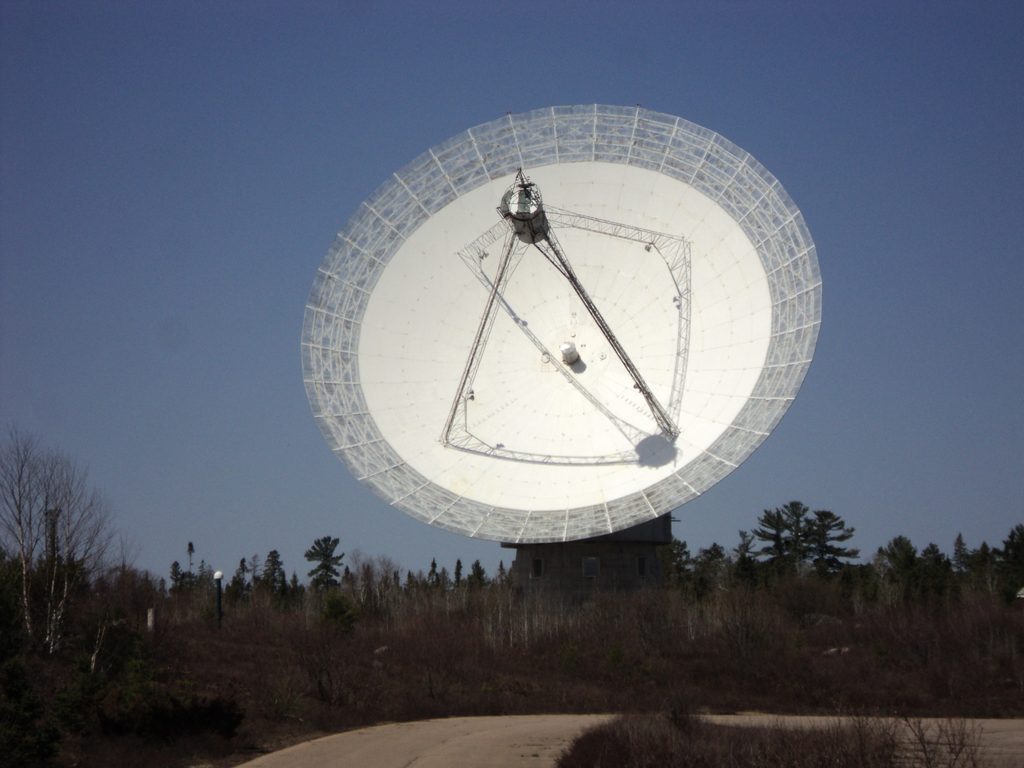
Tucked near Lake Traverse, this working research site is a true oddball in the forest—a colossal 46‑metre radio dish chosen for its radio‑quiet setting. It’s not a casual walk‑up attraction; most visits are pre‑arranged tours or educational programs. If you’re even a little space‑curious, it’s one of the park’s most distinctive stops.
Early work here tracked the Sun at a 10.7 cm wavelength, and the observatory played a role in the first successful very long baseline interferometry experiments—key to measuring astronomical positions with extreme precision. Long‑term solar flux monitoring later moved to British Columbia, but the big dish kept busy measuring subtle movements of the North American plate and supporting deep‑space network services. The site has been operated by Thoth Technology since the late 2000s and even contributed to modern discoveries, including a 2020 fast radio burst detection with a refurbished antenna.
The star is the 46 m antenna—an enormous, riveted sculpture of science—with supporting buildings and smaller instruments on site. Tours (when offered) focus on how radio telescopes work, why radio‑quiet surroundings matter, and how precision timing (think hydrogen maser clocks) underpins everything from geodesy to deep‑space tracking.
Access is by prior arrangement; programming and availability vary. Expect limited cell reception and minimal services once you’re off Highway 60, so plan fuel, food, and directions ahead. Because it sits within Algonquin Provincial Park, you’ll generally need a Daily Vehicle Permit if you’re parking to visit—these can be reserved in advance and typically cover daytime hours.
The best time is simply when tours are running—book early. Daylight makes the on‑site walk‑and‑talks easier, and you’ll have fewer navigation headaches. If you’re driving via park gates, confirm permit details for your date and timing before you set out.
Navigation apps can be misleading. Approach from the north; the southern approach has been reported as rough and effectively off‑road. Minimize radio interference when requested—airplane mode is your friend.
Place · 10.6 mi away
Place · 13.1 mi away
Place · 14.2 mi away
Place · 16.1 mi away
Easy · 21.5 mi away
Moderate · 28.2 mi away
Easy · 29.3 mi away
Easy · 29.9 mi away

Parkwolf Tour Guide
