
Place · 0 mi away
Easy
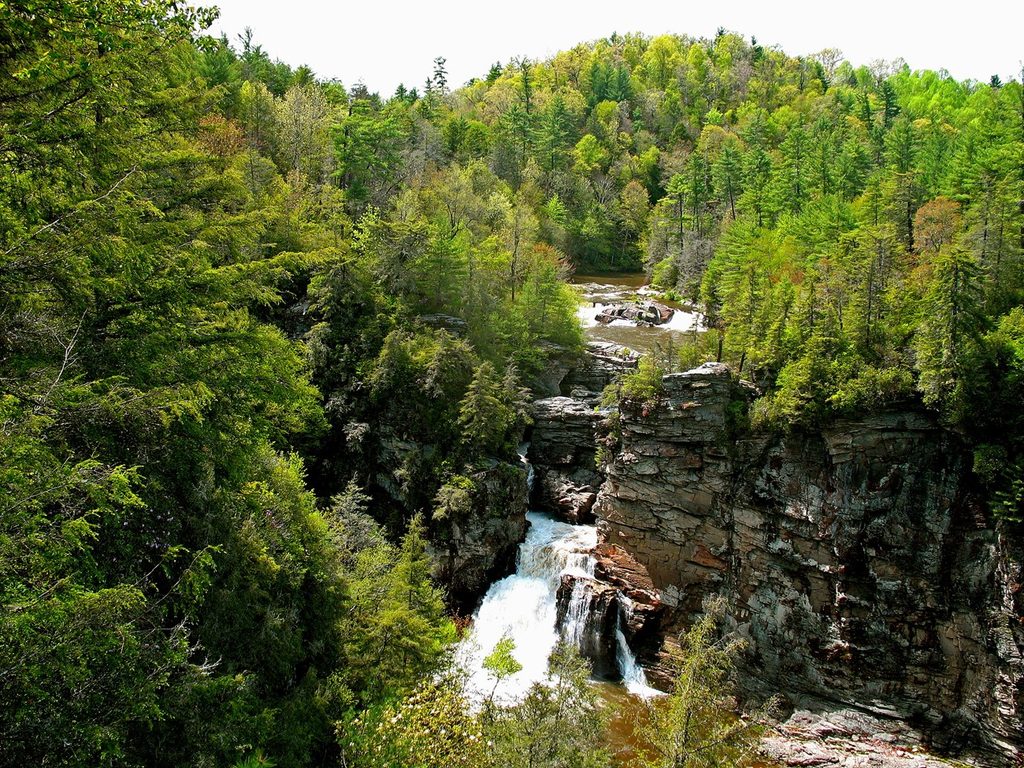
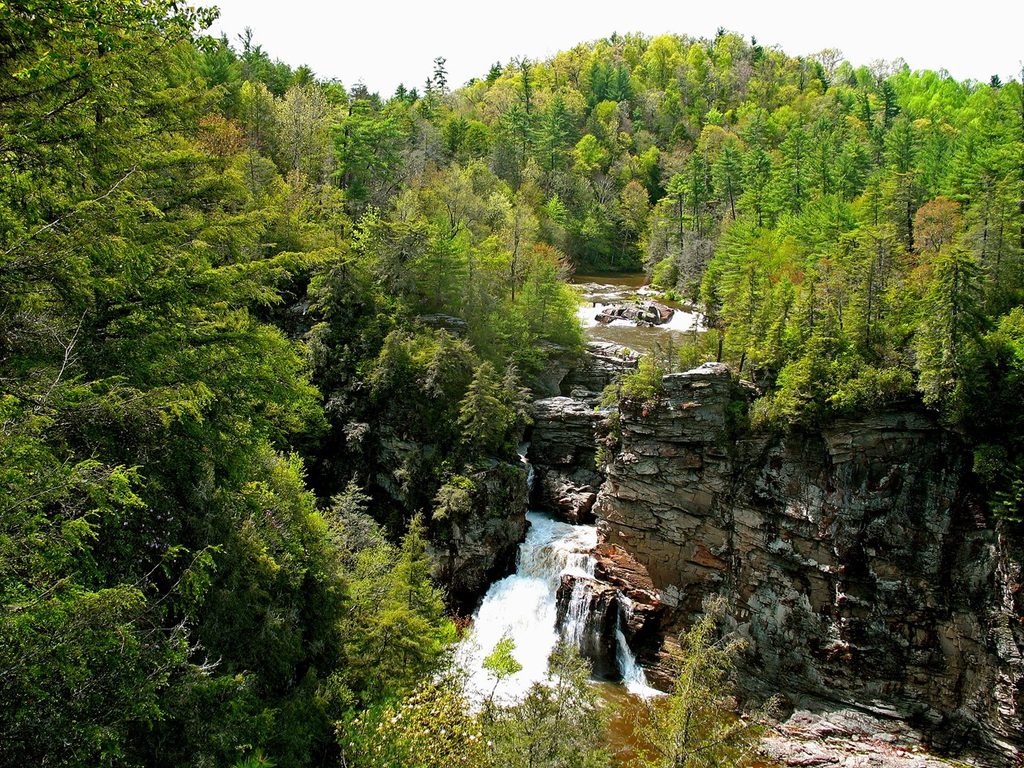
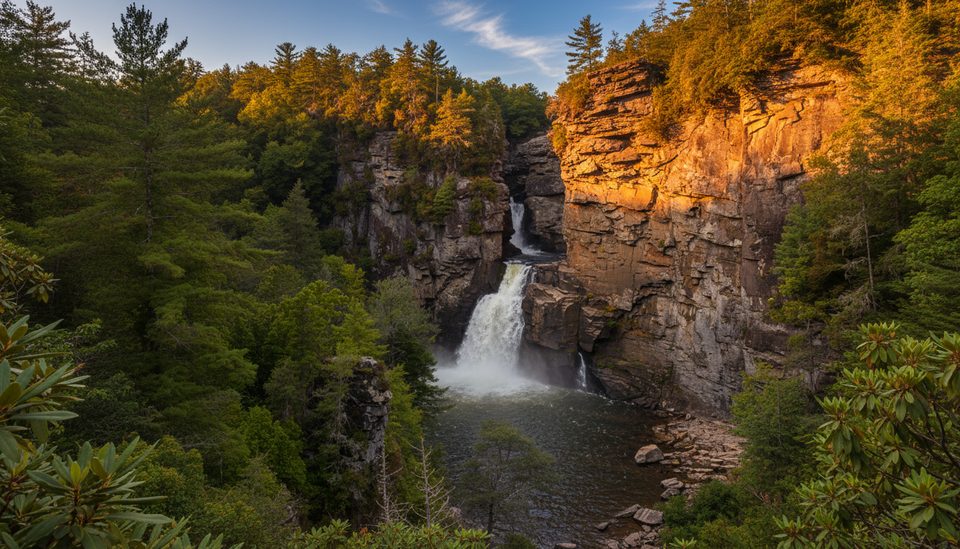
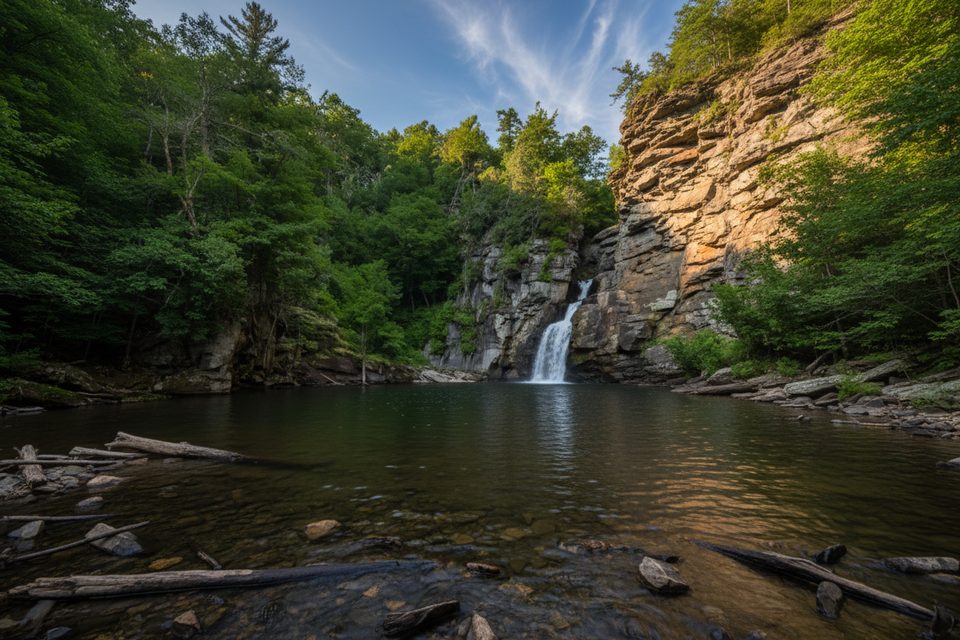
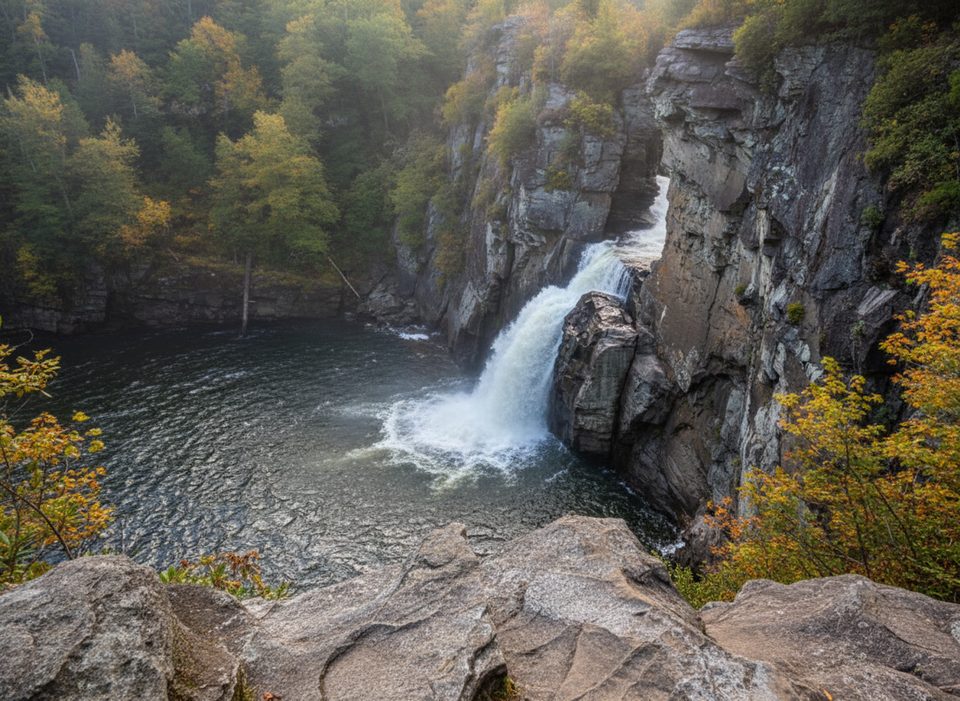
Starting at the Linville Falls Visitor Center (MP 316.4), this well‑traveled path threads through lush forest along the Linville River to multiple signed overlooks of Linville Falls and the rim of the rugged Linville Gorge. Expect wildflowers in spring and a tunnel of green in summer, with big‑screen color in fall. The waterfall drops roughly 90 feet in a dramatic three‑tiered cascade before plunging into the gorge—no wonder it’s one of the Parkway’s most photographed stops ([blueridgeparkway.org](https://www.blueridgeparkway.org/poi/linville-falls), [nps.gov](https://www.nps.gov/blri/planyourvisit/linville-falls-mp-316.htm)).
Most hikers do the Erwin’s View route—often labeled the main Linville Falls Trail—about 1.6 miles round‑trip with rolling grades. It visits several viewpoints along the way, including Upper Falls, Chimney View, Gorge View, and ends at Erwin’s View. The main path is easy to moderate; the spur to Chimney View gets steeper and rooty, and the Plunge Basin and Linville Gorge routes are the tougher options if you want closer, more dramatic angles into the gorge ([nps.gov](https://www.nps.gov/blri/planyourvisit/linville-falls-trails.htm), [blueridgeparkway.org](https://www.blueridgeparkway.org/poi/linville-falls)). Plan about 1–1.5 hours if you’re stopping at multiple overlooks.
This is the Parkway’s classic waterfall sampler: several distinct viewpoints in a short distance, sweeping gorge scenery, and constantly changing perspectives without committing to a long trek. It’s popular with a reason, and the geology—the river carving into ancient, resistant rock to form one of the deepest gorges in the East—is on full display ([blueridgeparkway.org](https://www.blueridgeparkway.org/poi/linville-falls)).
Crowds are real—parking and overlooks fill fast on summer weekends and during peak leaf season. Some overlooks require stairs and rocky, rooty steps. Swimming or climbing on rocks is strictly prohibited and dangerous; enjoy the power from behind the railings ([nps.gov](https://www.nps.gov/blri/planyourvisit/linville-falls-mp-316.htm)).
Spring and fall are prime—cooler temps, wildflowers in spring, and peak foliage in October. Summer is lush but busiest. Winter delivers solitude and clearer sightlines if you don’t mind the chill. For photography, early morning light and weekday visits beat the crowds and glare ([blueridgeparkway.org](https://www.blueridgeparkway.org/poi/linville-falls)).
Park at Linville Falls Visitor Center (Milepost 316.4); large lot with seasonal restrooms and picnic areas. Arrive early—lots fill on summer weekends and in October. In winter closures, use the secondary access lot.
Do not swim or scramble on rocks at the falls; steep drop‑offs and slick surfaces make it dangerous. Expect stairs, roots, and mud after rain—keep kids close and stay behind railings.
Place · 0 mi away
Place · 0.1 mi away
Place · 0.3 mi away
Place · 0.4 mi away
Moderate · 0 mi away
Moderate · 0 mi away
Moderate · 0 mi away
Challenging · 0 mi away

Parkwolf Tour Guide
